































WhatsApp has over two billion active users. For businesses operating across multiple markets, it has become the primary channel for customer communication, support, and even transactions. But there is a structural problem that every growing company eventually hits: WhatsApp enforces a strict one-number-per-account policy, and scaling beyond a single account requires a strategy most businesses have not planned for.
The result is a quiet operational shift. Companies that once relied on personal employee phone numbers for WhatsApp verification are now turning to virtual phone numbers for WhatsApp, provisioned through carrier-grade platforms that assign dedicated numbers on demand. The demand for a virtual number for WhatsApp verification has grown across every sector that depends on the platform for customer-facing communication. The shift is not driven by privacy concerns alone. It is driven by the fundamental mechanics of running a multi-market business on a platform that was designed for individual use.
This is what that shift looks like in practice, why it is accelerating, and what it means for businesses planning international expansion.
Join The European Business Briefing
New subscribers this quarter are entered into a draw to win a Rolex Submariner. Join 40,000+ founders, investors and executives who read EBM every day.
Subscribe
The Business Problem: Why Personal Numbers Cannot Scale
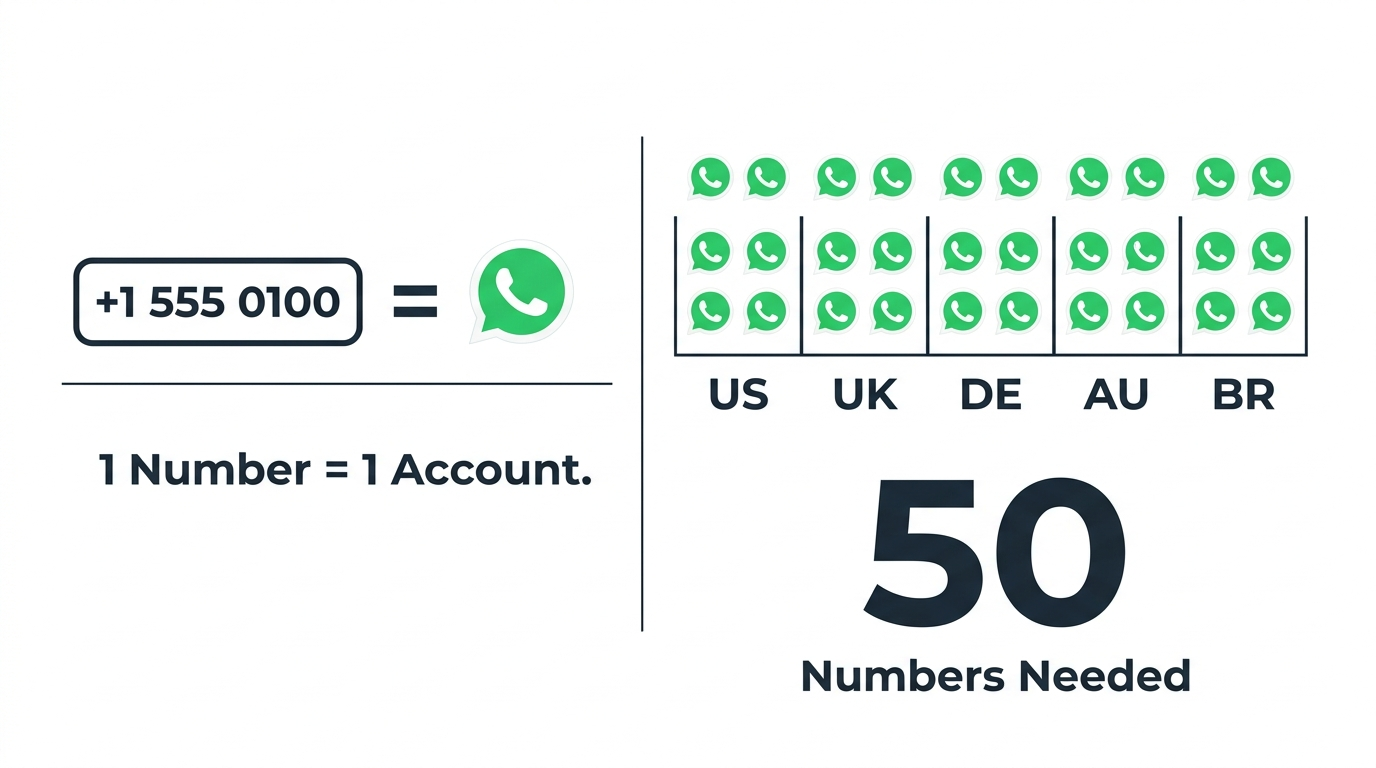
The constraint is simple. One phone number equals one WhatsApp account. There is no workaround, no enterprise exception, no bulk account creation. Every verified WhatsApp account requires a unique phone number, and that number must successfully receive an SMS verification code during setup.
For a solo entrepreneur, this is a non-issue. For a marketing agency managing 15 client accounts across WhatsApp, or an e-commerce brand running separate customer support lines in the United States, United Kingdom, Germany, and Australia, the constraint becomes an operational bottleneck.
The traditional solution was to buy physical SIM cards, one per account. In practice, this creates a management nightmare. SIM cards get lost. Employees leave the company and take their personal numbers with them, along with the WhatsApp accounts tied to those numbers. Monthly carrier fees accumulate across dozens of lines. And critically, staff personal numbers become exposed to customers, creating a privacy liability that most HR and compliance teams would prefer to avoid.
This is not a technology problem. It is a business operations problem. The demand for a virtual phone number for business verification has grown in direct proportion to the number of companies that depend on WhatsApp as a core communication channel.
What Is Driving the Shift to Virtual Numbers for WhatsApp
Three forces are converging to accelerate adoption.
WhatsApp’s Verification System Is Getting Stricter
WhatsApp has systematically tightened its number verification over the past two years. The platform now actively detects and blocks numbers from known VoIP providers, shared number pools, and recycled SIM services. Numbers that successfully verified WhatsApp accounts 12 months ago are now rejected during the same process.
This tightening has eliminated the workarounds that many businesses relied on. Google Voice numbers, once a popular shortcut, are now blocked by WhatsApp in most regions. Shared number websites, where anyone can use a publicly listed number, are flagged within hours. The only numbers that consistently pass WhatsApp’s verification are carrier-grade numbers, whether physical SIM or virtual number for WhatsApp verification provisioned through dedicated platforms. For any team that depends on WhatsApp, securing a reliable virtual phone number for WhatsApp has become a prerequisite, not an afterthought.
The Multi-Account Economy Is Expanding
The creator economy has matured into a multi-account economy. Social media managers routinely operate 5 to 20 accounts across platforms on behalf of clients. E-commerce businesses maintain separate WhatsApp lines for customer support in each market they serve. Recruitment agencies, real estate firms, and financial services providers all use WhatsApp as a client-facing channel, often with multiple agents each needing their own verified account.
Each of these accounts requires a unique phone number for WhatsApp verification. The math is straightforward: a 10-person customer support team covering 5 markets needs 50 verified WhatsApp accounts, which means 50 unique phone numbers. Procuring a virtual phone number for WhatsApp for each of those accounts through a centralized platform is the only operationally viable approach at that scale.
Platform-Agnostic Verification Is Now Table Stakes
The same teams that need WhatsApp accounts also need verified accounts on Telegram, Instagram, and other platforms. A virtual number provisioned for WhatsApp verification today can often be reused for Telegram or Google verification tomorrow. This interoperability has made carrier-grade virtual numbers a standard part of the business communication stack, not a niche workaround.
How Multi-Account Teams Verify WhatsApp at Scale
The operational workflow for large teams looks fundamentally different from individual account setup.
Country selection comes first. WhatsApp’s acceptance rates vary significantly by country code. A USA number for WhatsApp verification carries the highest acceptance rate globally, followed by UK (+44), Canadian (+1), and German (+49) numbers. Teams that need accounts for specific regional markets start by matching the country code to the market they are serving.
Number provisioning is centralized. Rather than distributing physical SIM cards to individual employees, operations teams provision virtual numbers through a centralized dashboard. Each number is assigned to a specific account and team member. When an employee leaves, the number stays with the company, not the individual.
Verification is documented. Every number, every verification code, and every account assignment is logged. This creates an audit trail that physical SIM-based verification cannot match. For regulated industries, this documentation is not optional.
Platforms like Quackr have built infrastructure specifically for this use case: dedicated carrier-grade numbers across 30+ countries, private dashboards where only the assigned user can view incoming verification codes, and rental options that keep numbers active for as long as the account needs them.
The difference between a temp phone number app approach and a physical SIM approach comes down to operational cost and flexibility. A virtual number provisioned in 30 seconds and managed through a web interface costs a fraction of a monthly carrier plan, and can be reassigned or retired without any physical logistics.
The Numbers: What Verification Success Looks Like by Country
Not all virtual numbers perform equally on WhatsApp. The country code attached to a number significantly affects whether verification succeeds.
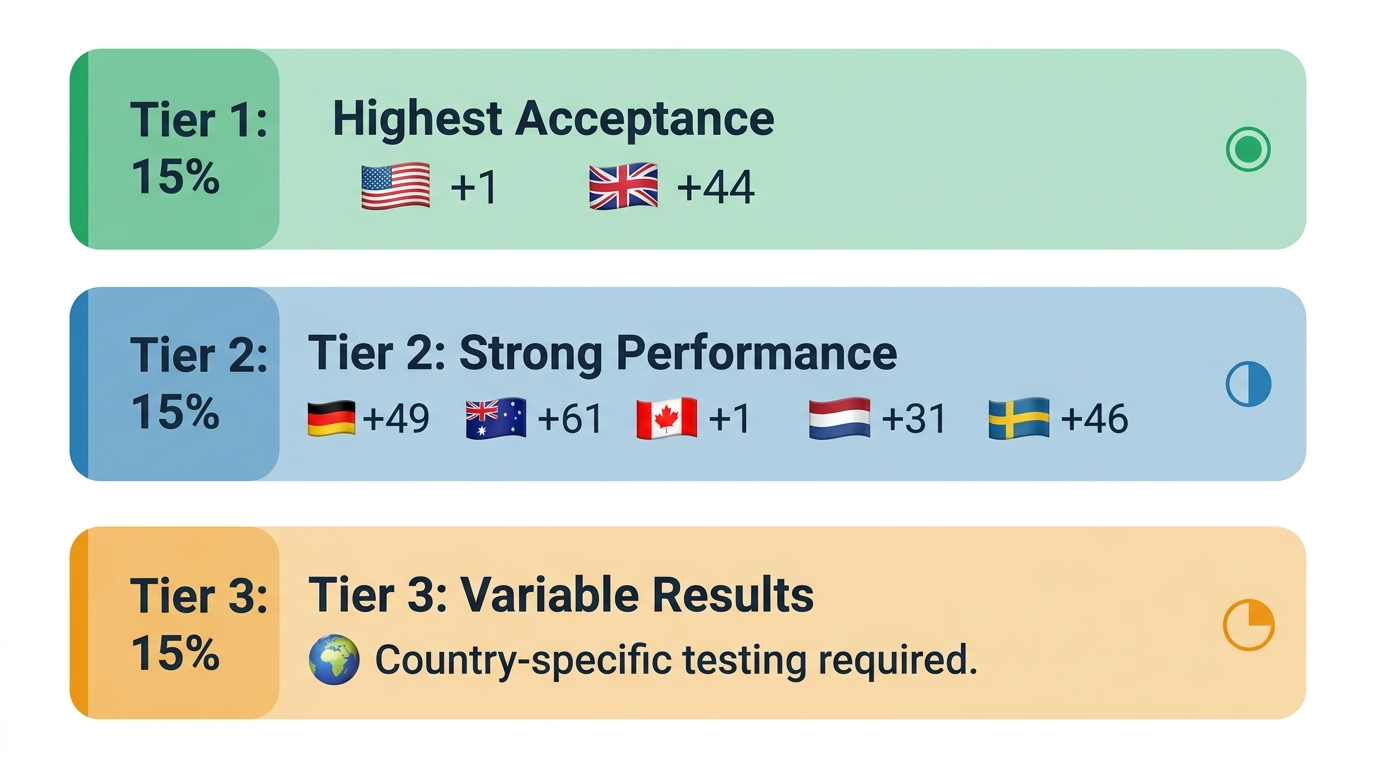
Tier 1: Highest acceptance. US (+1) and UK (+44) numbers pass WhatsApp verification at the highest rates. These are the two largest WhatsApp markets in the English-speaking world, and the platform’s fraud detection systems are calibrated to allow high volumes of legitimate verification traffic from these prefixes. For businesses that do not need a specific regional number, a virtual phone number for WhatsApp from the US or UK is the default choice.
Tier 2: Strong performance. Germany (+49), Australia (+61), Canada (+1), Netherlands (+31), and Sweden (+46) numbers also perform well. These are established markets with mature carrier infrastructure, and WhatsApp’s verification systems treat them favorably. Businesses expanding into European or Commonwealth markets typically start with these country codes.
Tier 3: Variable results. Numbers from smaller markets or countries with higher rates of verification abuse face stricter screening. Some are accepted, some are rejected outright, and the acceptance rate can change from month to month as WhatsApp updates its detection algorithms.
The practical takeaway for operations teams: start with Tier 1 numbers for critical accounts, use Tier 2 for regional expansion, and test Tier 3 numbers before committing to them for production accounts.
What This Means for Businesses Entering New Markets
WhatsApp is not just a messaging app. In Latin America, India, Southeast Asia, and much of Africa, it is the default business communication channel. A company entering the Brazilian market without a local WhatsApp presence is functionally invisible to its target customers.
This reality makes virtual phone number for WhatsApp verification a market-entry requirement, not an optional tool. The ability to provision a virtual number for WhatsApp, verify a WhatsApp Business account, and begin customer communication within minutes rather than weeks (the typical timeline for procuring local SIM cards through a distributor) compresses the go-to-market timeline in a way that matters for competitive positioning.
The operational model is also shifting toward what might be called “number infrastructure as a service.” Instead of treating phone numbers as physical assets tied to hardware, businesses are beginning to treat them as software-defined resources that can be provisioned, assigned, monitored, and retired through a dashboard. This mirrors the broader trend toward cloud-based infrastructure across every other business function.
For companies already operating at scale on WhatsApp, the question is no longer whether to adopt virtual numbers. The question is how to manage the transition from a fragmented, SIM-based approach to a centralized, platform-managed approach without disrupting existing accounts.
FAQ
How many WhatsApp accounts can a business run simultaneously?
There is no platform-imposed limit on how many accounts a business can operate, as long as each account is verified with a unique phone number. The practical limit is determined by your number provisioning capacity. Businesses running 50 to 100+ accounts typically use virtual number platforms rather than physical SIMs because the logistics of managing that many physical cards become unworkable.
Do virtual numbers work with WhatsApp Business API?
WhatsApp Business API has its own verification requirements that are separate from standard WhatsApp verification. The API typically requires a phone number that can receive either an SMS or voice call, and the number must not be currently registered to an existing WhatsApp account. Carrier-grade virtual numbers can meet these requirements, though the API verification process involves additional steps including Facebook Business Manager approval.
What happens to a WhatsApp account if the virtual number expires?
If a virtual number is not renewed and expires, you lose the ability to re-verify the WhatsApp account tied to it. The account remains active as long as you stay logged in, but any re-verification prompt (which WhatsApp triggers periodically) will fail. For business-critical accounts, using a virtual phone number for WhatsApp with a long-term rental ensures the number stays active for months or years, which is the recommended approach rather than single-use temporary numbers.
Conclusion
The shift from personal phone numbers to virtual number for WhatsApp verification is not a consumer trend. It is an operational response to a structural platform constraint that affects every business scaling beyond a single market or a single team member.
The companies that have already made the transition report simpler onboarding, cleaner account management, and faster market entry. The companies that have not are managing a growing pile of SIM cards, dealing with departed employees who took their numbers, and navigating WhatsApp’s increasingly strict verification requirements with tools that were never designed for scale.
The infrastructure exists. The question is whether the operational model catches up.