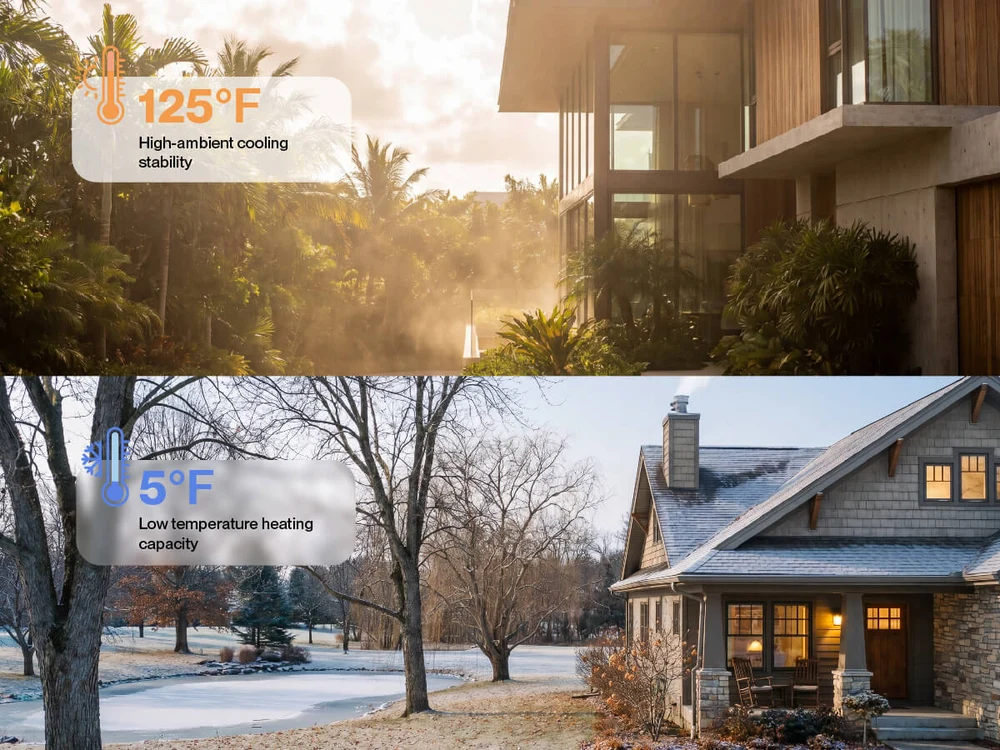
You can keep a working gas furnace when you add a heat pump. Some homes pair the two in one ducted system. Others install a mini split heat pump in a few rooms and leave the furnace in charge of the original ductwork. The approach depends on what you want the heat pump to do and which parts of your existing equipment can stay in service.
Picture a house where the furnace heats the bedrooms well, yet the back addition stays cool every morning. Adding a mini split air conditioner with a heating mode in the addition solves a different problem from replacing a central AC with a ducted heat pump. Tell the contractor whether your priority is that one cold room, summer cooling throughout the house, or shifting most winter heating away from gas.
Two Ways to Keep Your Gas Furnace
In a ducted dual-fuel installation, the heat pump and furnace generally share the supply and return ducts. The outdoor heat pump works with a compatible indoor coil and controls, and the furnace can provide heat when the controls call for it. This setup suits a home that already gets reasonably even temperatures from its ducts and wants both heating sources to serve those same rooms.
Join The European Business Briefing
New subscribers this quarter are entered into a draw to win a Rolex Submariner. Join 40,000+ founders, investors and executives who read EBM every day.
SubscribeA ductless add-on gives one room or a group of rooms its own indoor unit or units. The furnace remains a separate system. Each has its own temperature sensing and controls unless the installer provides an approved way to coordinate them. Think about how those controls will behave in your house. A furnace thermostat near the new indoor unit may warm up before bedrooms farther away.
Will Your Furnace Work With Dual Fuel?
Gather the furnace model number and the details of the existing indoor coil and thermostat, if accessible from labels or paperwork. Ask the contractor to list the matched outdoor unit, indoor coil, furnace, and controls in writing. A furnace that still runs well may have a blower or control board that needs a particular equipment match. The proposal should say which components stay and which will be replaced.
Airflow deserves its own conversation. Ask how the contractor will verify that the existing ducts can move the air the proposed heat pump needs. A bedroom with weak airflow today is a useful clue to share before the quote. The installer can assess whether the ductwork needs changes and whether those changes are included in the price.
When Does the Furnace Take Over?
Controls can be configured around heating capacity, operating cost, or both. On the capacity side, the contractor compares how much heat your home needs as the weather gets colder with what the heat pump can deliver. The temperature where those quantities meet can inform when the furnace should take over. On the cost side, electricity and gas rates can make one source cheaper at a different outdoor temperature.
Ask the contractor to explain the actual control logic on the proposed system. Find out where the controller gets outdoor temperature, what conditions switch heating sources, and whether there is a homeowner setting for an unusual situation. Ask for a demonstration at startup. A label in a thermostat menu is easier to interpret once you’ve watched the installer show what each setting does.
Where Ductless Heating Can Supplement the Furnace
Rooms built after the original duct system often make good candidates. Think about a converted porch, a garage bonus room, or a home office that’s occupied while the bedrooms are empty. Heating those rooms separately can give you control over their schedule. Mark the doors you typically close and the rooms you still expect the furnace to cover.
Watch for interactions after installation. Say the ductless unit keeps the living room warm and the furnace thermostat is in that same room. The thermostat may stop calling for heat while a closed bedroom cools down. Record room temperatures during a cold evening and show the installer the pattern. The readings give the installer something concrete to work with when discussing control placement or settings.
Questions to Ask About Your Installation Quote
Get the scope in writing before signing. The equipment list should show what stays, what comes out, and who is responsible for any changes to wiring, controls, ducts, or drains. For shared ductwork, request the equipment match and an explanation of the switchover settings. For independent equipment, ask how the contractor expects the two systems to divide the heating work on a cold weekday.
Ask how the new setup will handle summer cooling, too. If the heat pump replaces an aging central AC, confirm that the quote includes removing the old outdoor equipment and identifies the indoor components that remain. When the heat pump serves only an addition, find out which equipment will keep cooling the rest of the house. Those answers affect how much of the existing system you still need to maintain.
The handoff matters as much as the equipment list. Ask who will test both heating sources, how to reach the service team if one fails, and which maintenance each system still requires. A quote tied to the rooms you need to heat and the way you want the furnace to operate gives you a concrete basis for comparing bids.