































A rough patch of pavement can make suspension sound like an obvious purchase. Then you reach a smooth bike path, ride comfortably for several miles and wonder whether you need it after all.
For mostly smooth roads, suspension may be optional. On broken pavement or uneven tracks, it can make a meaningful difference. The harder question is how much suspension suits the riding you actually do, and whether its benefits justify the extra weight, maintenance and cost.
A suspension fork, rear shock and wide tires all affect ride comfort, but they do different jobs. Buying more of them does not automatically produce a better bike.
Join The European Business Briefing
New subscribers this quarter are entered into a draw to win a Rolex Submariner. Join 40,000+ founders, investors and executives who read EBM every day.
SubscribeStart With the Rough Part of Your Route
Think about where your current ride becomes uncomfortable.
Is it a short stretch of patched asphalt? Repeated cracks along an otherwise paved route? A gravel road with shallow ruts? Those conditions ask different things of a bike.
When comparing electric bikes, it helps to describe the surface rather than simply calling the route “off-road.” A maintained gravel path is a different proposition from a trail with roots, rocks and sharp drops.
A rigid bike has no suspension fork or rear shock. It can be a practical choice for smooth surfaces, with fewer suspension components to maintain. Tire choice, fit and riding position still matter, so rigid does not necessarily mean uncomfortable.
A hardtail has front suspension but no rear suspension. The fork can help absorb impacts at the front wheel, reducing some of the jolts reaching the handlebars. The rear wheel still transmits bumps through the frame.
Full suspension adds movement at the rear. On a well-designed, properly adjusted system, that can improve comfort and help the wheels follow uneven ground. Whether you need it depends on how often you encounter those conditions.
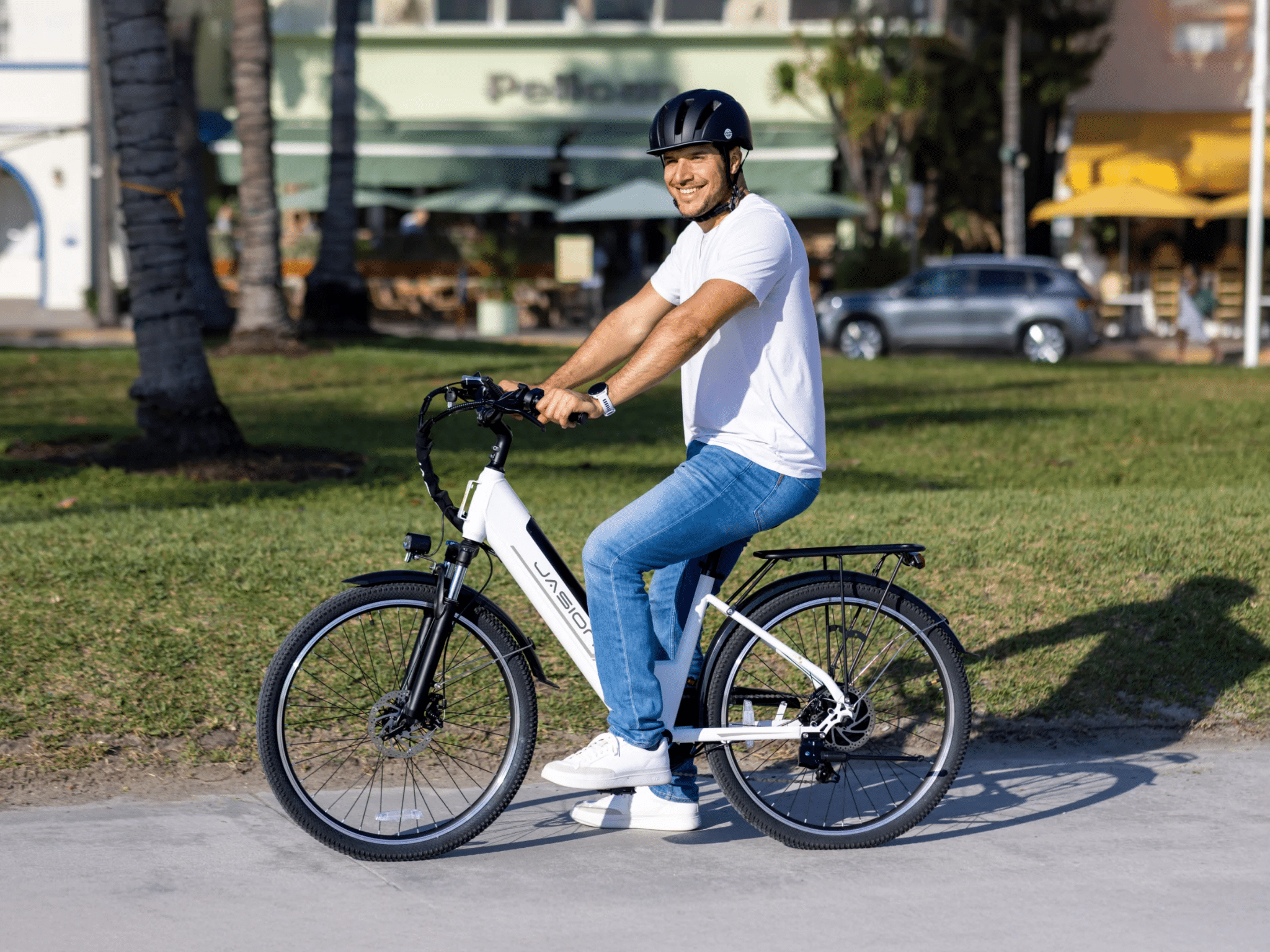
Jasion ebike on a city ride.
What Wide Tires Can—and Cannot—Do
A wider tire gives the bike a larger volume of air to work with. At an appropriate pressure, it can soften some road chatter and small irregularities.
That is one reason riders looking for comfort consider fat tire ebikes. But tire width alone tells you little about how the complete bike will feel.
Tire construction, pressure, rider weight and the load on the bike all influence the result. A wide tire inflated too firmly may feel surprisingly harsh. Letting out too much air introduces other problems, including excessive tire movement and the risk of rim impacts.
Suspension provides controlled wheel movement beyond the tire’s own deformation. A tire does not become a suspension fork just because it looks substantial.
Nor does combining wide tires with front and rear suspension make every bike suitable for mountain-bike trails. The frame, wheels, brakes and other components must also be designed for the intended use. Follow the manufacturer’s riding restrictions rather than judging capability from appearance.
More Suspension Means More to Consider
Full suspension can be worth paying for when repeated bumps are a regular part of your rides. It deserves a closer look when comparing two otherwise suitable bikes, but it should not win by default.
There is more hardware to carry and maintain. Depending on the design, that may include a rear shock, pivots, bearings and additional mounting hardware. Service requirements vary, and a general bicycle tune-up may not include suspension work.
Setup matters as well. Some components offer adjustments for rider weight and damping; others offer much less control. A system that moves easily when pressed in a showroom is not necessarily well matched to you.
When browsing ebikes, compare suspension alongside bike weight, fit, braking equipment and service information. A feature list is more useful when you know what each feature changes—and what it will ask of you later.
For an occasional rough section, you may prefer a simpler bike and a slower pace. For long rides over consistently uneven ground, the comfort benefit may matter much more.
Neither decision needs to be justified by having the most equipment.
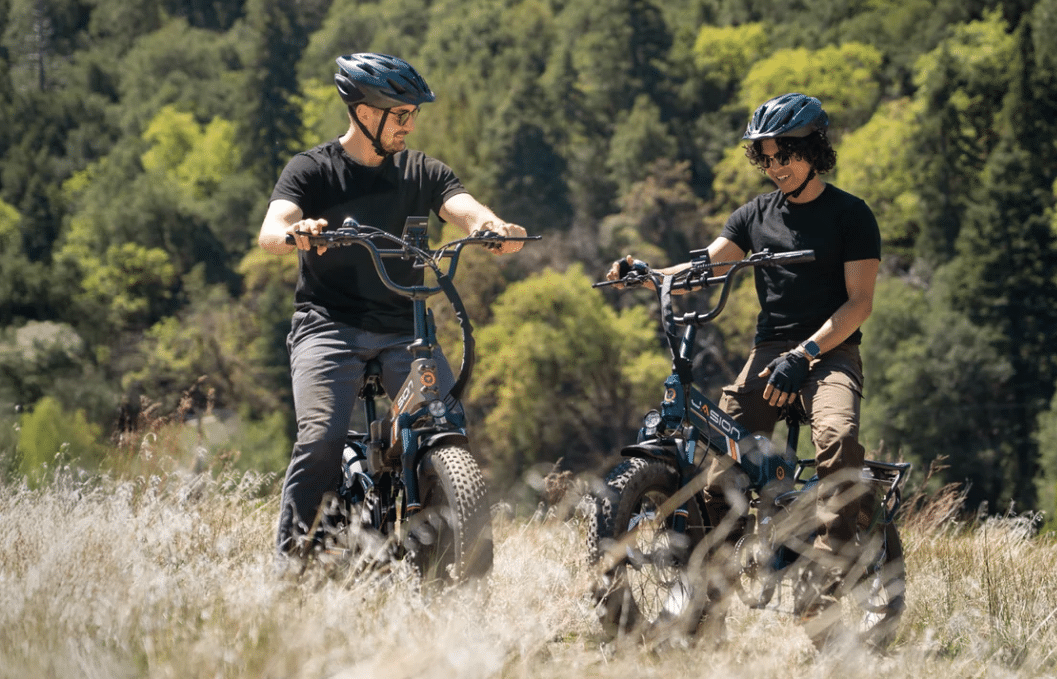
Jasion Hunter Pro ebikes.
Check the Source of the Discomfort Before Buying
Suspension is not a reliable fix for every sore wrist or uncomfortable ride.
Too much weight on your hands can come from a riding position that does not suit you. Saddle discomfort may relate to fit, adjustment or the saddle itself. Incorrect tire pressure can make a capable bike unpleasant on ordinary pavement.
Before replacing a bike or paying for a different suspension package, check those basics. A qualified shop can help separate an equipment problem from an adjustment problem.
A useful test ride should include the sort of surface that bothers you, provided it is within the bike’s intended use. A few circles on a smooth parking lot will tell you something about fit and handling, but very little about comfort on broken pavement.
Notice the front and rear of the bike separately. Are repeated bumps tiring your hands? Does the rear wheel deliver a sharp kick through the saddle? Does the bike feel controlled over successive bumps, or keep bouncing afterward? These observations are more useful than asking whether the suspension feels “soft.”
Also try the ordinary parts of ownership: stopping, turning slowly and moving the bike by hand. You may appreciate the extra comfort on a rough road and still find the complete bike awkward to manage.
If your route is mostly smooth and your bike already feels comfortable, suspension may solve a problem you do not have. If uneven surfaces regularly shorten your rides, it is worth investigating. Choose for the stretches you actually ride, not the trail pictured beside the product.






