






























The quarterly form that decides most payroll tax trouble
The first employee changes a business in a dozen ways, and one of the least visible is a federal return that comes due four times a year. IRS Form 941, the Employer’s Quarterly Federal Tax Return, reports the income tax withheld from paychecks plus Social Security and Medicare tax, both the employee’s share and the employer’s match. Get it right and it is a short quarterly chore. Fall behind on it and it produces some of the most aggressive collection the IRS does.
This guide covers what Form 941 reports, the 2025 and 2026 due dates, the deposit rules that catch most owners out, the penalties, how to fix a mistake, and what to do when payroll taxes have already gone unpaid. Figures were checked against the March 2026 Form 941 instructions and Publication 15 (2026).
What Form 941 reports
Every quarter, the form reconciles two numbers: the payroll tax the business owed for those three months and the deposits it made. The gap between them is a balance due or an overpayment.
Join The European Business Briefing
New subscribers this quarter are entered into a draw to win a Rolex Submariner. Join 40,000+ founders, investors and executives who read EBM every day.
SubscribeWhat goes into the liability:
- Federal income tax withheld from employees’ wages
- Social Security tax at 6.2% from the employee and 6.2% from the employer, on wages up to $184,500 for 2026
- Medicare tax at 1.45% each, with no wage limit
- Additional Medicare Tax of 0.9%, withheld from the employee only, once a person’s wages pass $200,000 for the year
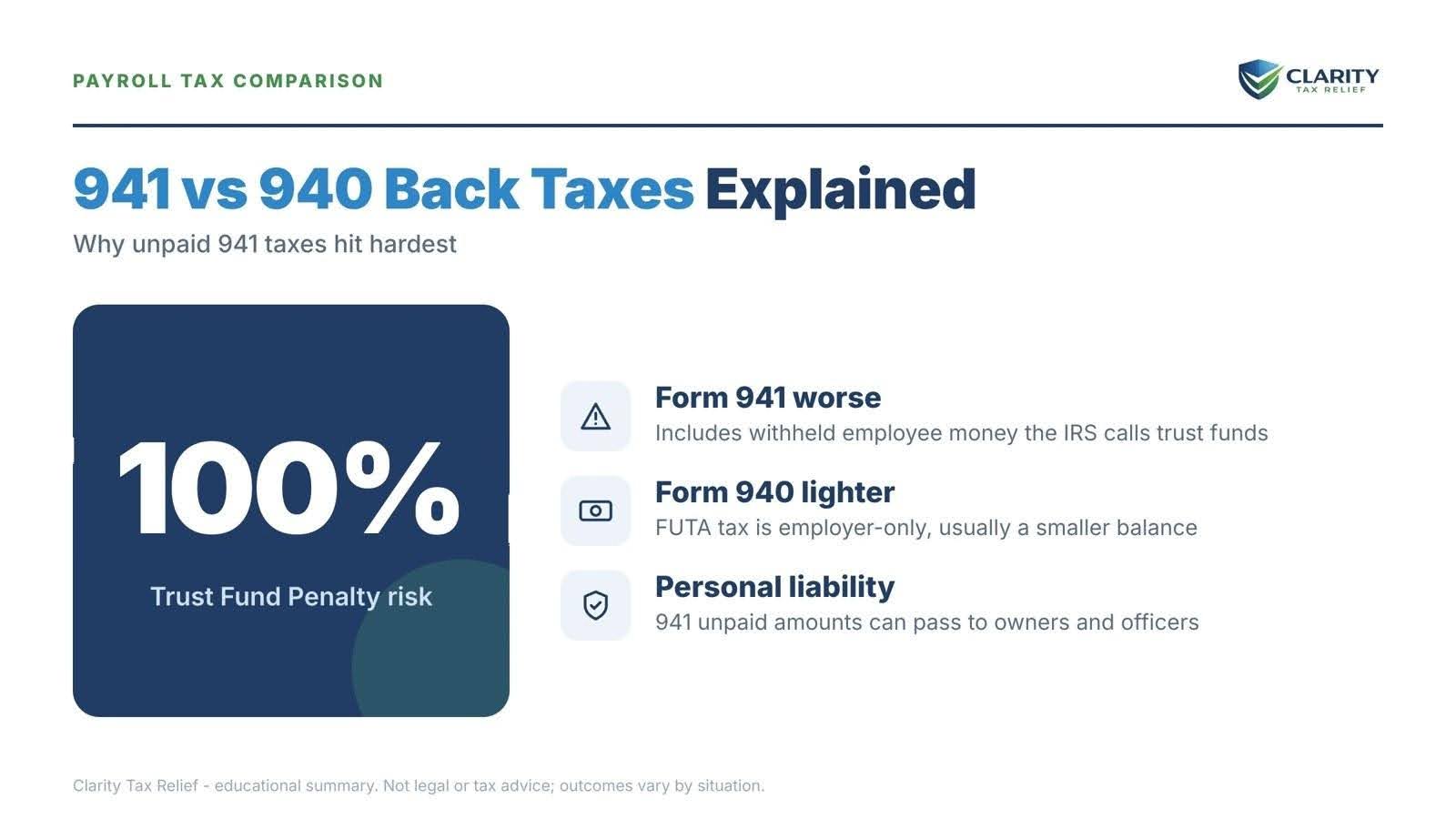
What it does not cover: federal unemployment tax, which goes once a year on Form 940 and is paid by the employer alone.
A business files every quarter, including a quarter with no payroll, until it files a final return or qualifies as a seasonal employer. A skipped quarter looks to the IRS like a missing return, and the system treats it that way.
The current form is the March 2026 revision, used for every 2026 quarter. Anyone searching “941 form 2026” or “form 941 for 2026” is looking for that one document. There is no separate 2026-only version beyond the current revision, and filings for earlier quarters, such as the fourth quarter of 2025, use the revision in effect for that period.
Form 941 due dates for 2025 and 2026
The rule is fixed: the return is due on the last day of the month after each quarter ends. When that day falls on a weekend or legal holiday, the next business day counts.
| Quarter | Wages paid | Due date |
| Q4 2025 | October to December 2025 | February 2, 2026 (January 31 is a Saturday) |
| Q1 2026 | January to March | April 30, 2026 |
| Q2 2026 | April to June | July 31, 2026 |
| Q3 2026 | July to September | November 2, 2026 (October 31 is a Saturday) |
| Q4 2026 | October to December | February 1, 2027 (January 31 is a Sunday) |
Each quarter is a separate return with its own penalty clock. Filing the third quarter on time does nothing for a first quarter that was never filed, because the IRS keeps every quarter as its own account.
The deposit rule most owners get wrong
The Form 941 deadline is not the deadline for the money. Payroll taxes are deposited during the quarter, on either a monthly or a semiweekly schedule, and the quarterly return mostly confirms what was already paid in.
Which schedule applies comes from a lookback period. For 2026, the lookback runs from July 1, 2024 through June 30, 2025. Add up the total tax reported on the four Forms 941 for those quarters.
| Schedule | Applies when | Deposit due |
| Monthly | $50,000 or less of tax in the lookback period | By the 15th of the following month |
| Semiweekly | More than $50,000 in the lookback period | Wages paid Wednesday to Friday by the next Wednesday; Saturday to Tuesday by the next Friday |
| Next-day | $100,000 accumulated on any day | By the next business day, and a monthly depositor becomes semiweekly from the following day |
| With the return | Quarterly liability under $2,500, with no $100,000 day | With Form 941 itself |
Deposits go electronically, usually through EFTPS. Semiweekly depositors also file Schedule B with the return, which shows the liability day by day. Leaving it off can lead the IRS to average the quarter’s liability and charge deposit penalties on paydays that were covered on time.
This is where most payroll tax debt starts. When cash is tight mid-quarter, the deposit is the payment that slips, often with every intention of catching up before the return is due. By then the shortfall has usually grown.
Filing Form 941
The IRS encourages electronic filing and sends an acknowledgment within 24 hours of an e-filed return. There are two routes: file through approved software, signing with a 94x Online Signature PIN (allow about 45 days to receive one) or Form 8453-EMP, or have an authorized e-file provider such as a payroll service submit it. Paper returns go to the address in the Form 941 instructions, which depends on the state and on whether a payment is enclosed. Paper gets no acknowledgment, so keep proof of mailing.
Any balance can be paid through EFTPS, IRS Direct Pay or the business tax account, and an e-filed return can carry an electronic funds withdrawal.
Penalties on a late or unpaid Form 941
Three separate penalties can attach to one late quarter.
| Penalty | How it is figured |
| Failure to file | 5% of the unpaid tax per month or part of a month, up to 25%. More than 60 days late carries a minimum, $525 for returns due after December 31, 2025 |
| Failure to pay | 0.5% of the unpaid tax per month, up to 25%. In a month when both run, the filing penalty is reduced so the two total 5% |
| Failure to deposit | Tiered by how late each deposit was, separate from the other two |
Interest runs on top of all of it. The pattern that hurts most is a quarter that is both unfiled and undeposited, because every penalty runs at once.
Fixing a mistake: Form 941-X
An error on a filed return is corrected with Form 941-X, the Adjusted Employer’s Quarterly Federal Tax Return or Claim for Refund. It is never fixed by filing a second Form 941 for the same quarter or by folding the change into the next quarter’s return. Each quarter being corrected gets its own 941-X, and the form handles both directions: additional tax that was underreported, or a refund of tax that was overreported.
When Form 941 taxes have gone unpaid
Unpaid payroll tax is treated differently from almost any other tax debt, for one reason: part of it is the employees’ own money. The withheld income tax and the employees’ share of Social Security and Medicare are held in trust by the employer. When that trust fund portion goes unpaid, the IRS can assess the Trust Fund Recovery Penalty against the individuals responsible for paying it, which can include owners, officers and anyone with authority over which bills get paid. The debt can follow a person even after the business closes.
That is why the order of steps matters:
- File every missing quarter, even where the business cannot pay the balance yet. Unfiled returns block every relief option.
- Make current-quarter deposits on time from here on. The IRS generally will not consider a payment arrangement while new payroll debt keeps building.
- Get a full account of what is owed, quarter by quarter, from the business tax account or transcripts.
- Choose a resolution. Many businesses can use an installment agreement, and an IRS payment plan calculator shows what a monthly plan looks like before anything is filed. Penalty relief may apply where there is a clean history or a reasonable cause.
Businesses that are still open and still running payroll are in the strongest position to fix this, because staying current is itself what makes an arrangement possible.
Keeping it simple from here
Most Form 941 trouble comes down to treating the quarterly date as the payment date. Deposit on schedule, file every quarter even when payroll is zero, keep Schedule B with the return if the business is a semiweekly depositor, and correct errors with Form 941-X. A payroll service handles most of this, though the business remains legally responsible for the deposits either way.
For a fuller reference with every 2026 deadline, rate and penalty in one place, the IRS Form 941 guide from Clarity Tax Relief walks through the form line by line, and the related employment forms are collected in its IRS forms library.
Common questions
When is Form 941 due for the third quarter of 2026? October 31 falls on a Saturday, so the return is due Monday, November 2, 2026. The deposits for that quarter were due earlier, on the business’s monthly or semiweekly schedule.
Do I file Form 941 if I paid no wages this quarter? Yes. A business files every quarter until it files a final return or qualifies as a seasonal employer.
What is the difference between Form 941 and Form 940? Form 941 is quarterly and covers withheld income tax plus Social Security and Medicare. Form 940 is annual and covers federal unemployment tax, which only the employer pays.
Can I be personally liable for unpaid 941 taxes? Yes. The Trust Fund Recovery Penalty can be assessed against the people responsible for paying the withheld portion, which can include owners and officers.
This guide is general information, not tax or legal advice. Results vary based on individual facts and circumstances. Clarity Tax Relief is a California tax resolution firm and is not affiliated with the IRS.






