


























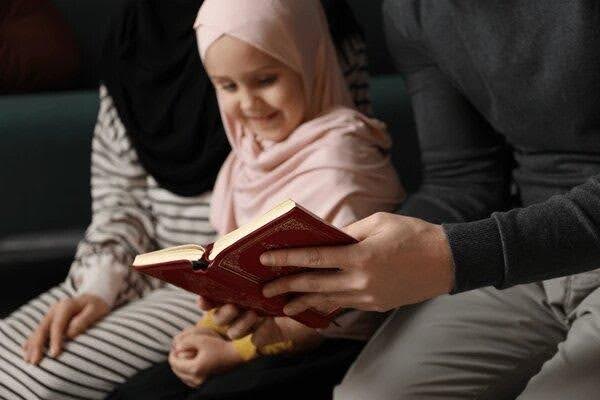
Noorani Qaida is often the starting point for children who are learning to read the Quran. It introduces the basic Arabic letters, their sounds, vowel marks, joining rules, and other reading skills needed for Quranic recitation. A child who develops these basics properly can find later Quran reading much easier.
What Noorani Qaida Teaches
Before supporting a child, parents should understand what the Qaida is designed to do. It is not simply a book for memorizing Arabic letters. It gradually teaches children how letters sound individually and how their sounds change when different signs or combinations are introduced.
Depending on the version being used, lessons may cover Arabic letters, Harakat, Tanween, Sukoon, Madd, Shaddah, and other basic reading rules. Children also practice recognizing letters in different forms and reading combinations smoothly.
Join The European Business Briefing
New subscribers this quarter are entered into a draw to win a Rolex Submariner. Join 40,000+ founders, investors and executives who read EBM every day.
SubscribeGive Children Regular Practice Time
Noorani Qaida skills develop through repetition. A child may understand a lesson during class but struggle to remember it after several days without practice. Short practice sessions at home can strengthen what was taught during the lesson.
Practice does not always need to take a long time. For a young learner, a focused session of around 10 to 15 minutes may be more useful than a long session where attention starts to fade.
Parents can choose a regular time when the child is normally alert. Keeping practice at roughly the same time can also make it easier to turn reading practice into a normal part of the daily routine.
Focus on Correct Pronunciation From the Start
One of the most important parts of Noorani Qaida course is learning the correct sound of Arabic letters. Some Arabic letters have sounds that may be unfamiliar to children who mainly speak English or another language.
For this reason, parents should avoid teaching pronunciation based only on how a letter sounds in another language. Similar-looking letters can also have very different sounds.
A qualified Quran teacher can demonstrate the correct pronunciation and listen to the child’s reading. Parents can then encourage the child to repeat the teacher’s examples instead of trying to create their own pronunciation rules.
Help Children Notice Similar Letters
Young learners may confuse letters that look or sound similar. This is a normal part of early Arabic reading.
Parents can gently draw attention to differences without making the child feel that every mistake is serious. For example, the child can be asked to identify the letter first and then produce its sound. Repeated exposure gradually improves recognition.
Practice Harakat Step by Step
Harakat are short vowel marks that help learners understand how Arabic letters are read. Children commonly begin with basic signs such as Fathah, Kasrah, and Dammah before moving to more complex combinations.
Parents can support this stage by asking children to read small groups of examples rather than rushing through an entire page. The purpose is to help the child connect the letter, the mark, and the resulting sound.
Do Not Rush Through Difficult Lessons
Every child learns at a different pace. Some children recognize letters quickly but struggle when letters are joined. Others may read combinations well but need more time to become comfortable with vowel marks.
Moving to a new lesson before the previous skill is understood can create problems later. Parents should therefore avoid measuring progress only by the number of pages completed.
A better approach is to look for signs of understanding. A child should gradually become able to recognize examples without depending on constant prompts.
Parents can watch for these signs:
- The child recognizes familiar letters without hesitation.
- Basic vowel marks are read correctly.
- Previously learned examples remain familiar after a short break.
- The child can read simple combinations with less help.
If a particular area remains difficult, the teacher can be informed so that extra practice can be added.
Support Letter Joining Practice
Arabic letters can appear differently depending on their position in a word. Children eventually need to understand how letters connect and how their written forms change.
This stage can feel very different from learning isolated letters. A child who confidently recognizes individual letters may suddenly need more time when several letters appear together.
According to Quran Grace, parents can help by allowing children to read joined examples slowly. There is no need to demand speed at this stage. Accuracy should come before fluency.
Stay Connected With the Quran Teacher
Parents and teachers have different roles. The teacher provides structured instruction and can assess pronunciation and reading. Parents provide reinforcement between lessons.
Regular communication can help both sides understand the child’s progress. Parents can ask which lesson needs more practice and which mistakes should receive attention at home.
A simple progress system can be useful:
| Learning Area | Parent Support |
| Arabic letters | Short recognition practice |
| Letter sounds | Repeat the teacher’s examples |
| Harakat | Read small groups regularly |
| Joined letters | Practice slowly for accuracy |
| Reading fluency | Repeat familiar exercises |
| Pronunciation | Seek teacher feedback on difficult sounds |
Final Words
Parents can make Noorani Qaida learning easier by supporting the skills being taught rather than trying to replace the teacher. Regular short practice, attention to pronunciation, patience with difficult lessons, and communication with the teacher can help children build a reliable foundation.