






























September 7, 2026 | By EBM Newsdesk- Anthony Gill
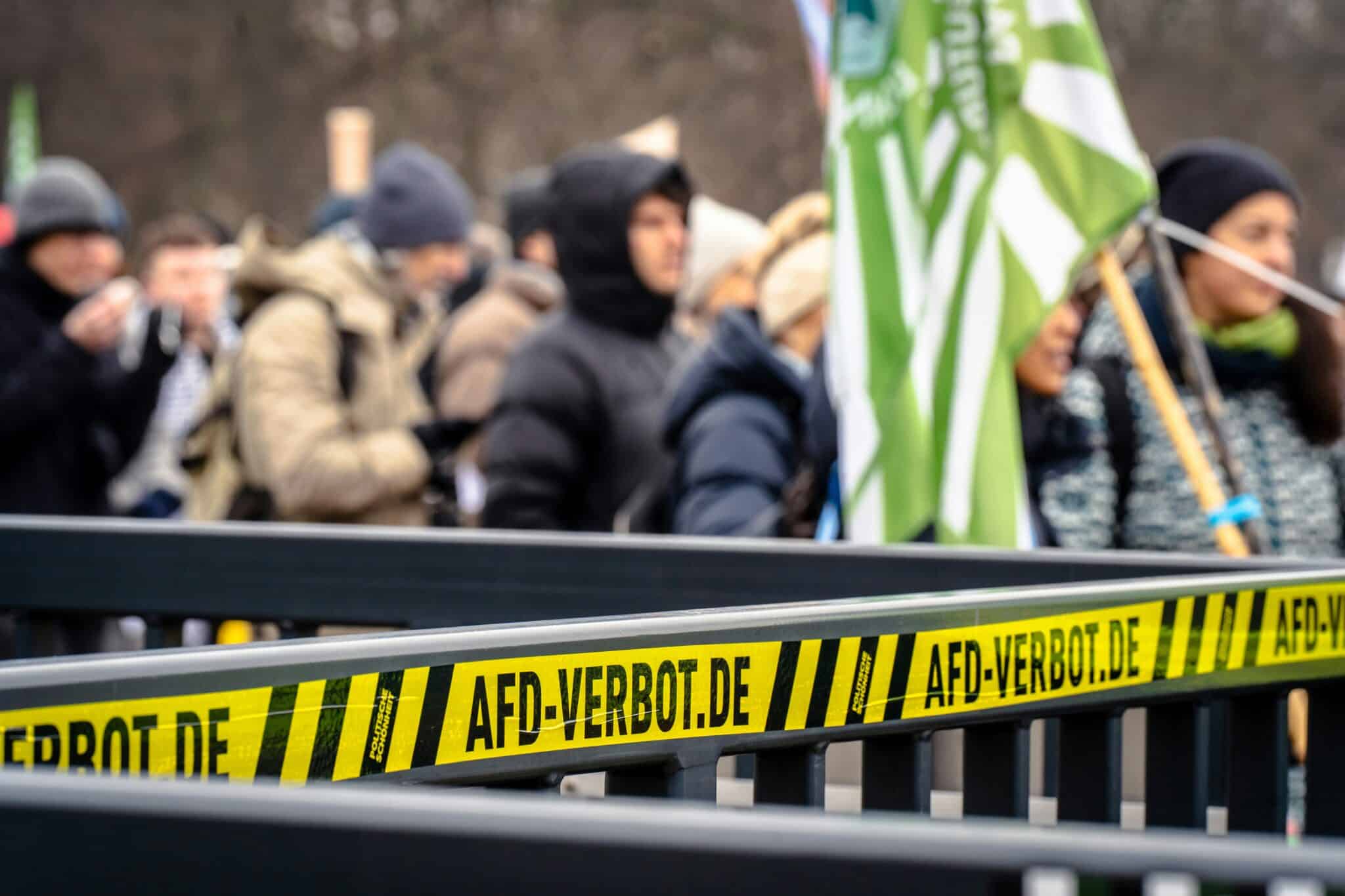
Germany has crossed a political threshold that would have seemed almost unthinkable a decade ago. The Alternative für Deutschland won 43.8% of the vote in Saxony-Anhalt, taking 39 of the state parliament’s 83 seats and finishing more than 26 points ahead of Chancellor Friedrich Merz’s CDU, which fell to 17.2%. It is the strongest result ever achieved by the AfD and the first time since the Second World War that a far-right party has come within touching distance of governing a German state. The party fell three seats short of an outright majority, so it cannot simply take power without support elsewhere, while the CDU and other mainstream parties continue to reject formal cooperation. But politically, the result is enormous. The question now is not whether the AfD has entered Germany’s political mainstream. It plainly has. The question is why so many voters have decided that it should be there.
This Was About More Than Immigration
Migration was unquestionably central. Polling before the election identified immigration and integration as the most important issues for many voters, while the AfD was trusted more than its rivals on asylum policy and, crucially, crime. Yet the election is harder to explain as a simple anti-immigration revolt. Infratest dimap data found the AfD was now regarded as more competent across a much wider range of subjects, including economic policy, jobs, education, energy and pensions. Thirty percent of voters said the AfD offered the best economic solutions, slightly ahead of the CDU and dramatically above the party’s 8% rating in 2021. The party also won substantial support from people who had stayed home in the previous election and took votes from the CDU. This is what makes the result more significant than a protest vote: a portion of the electorate is no longer simply voting against Berlin. It is beginning to believe the AfD could actually run the place.
Join The European Business Briefing
New subscribers this quarter are entered into a draw to win a Rolex Submariner. Join 40,000+ founders, investors and executives who read EBM every day.
SubscribeThat is also where the phrase “wanting their country back” becomes politically useful, provided it is understood carefully. There is clearly a desire among some voters for greater control over borders, stronger public order, less bureaucracy, more national decision-making and a political class that appears to understand the frustrations of eastern Germany. Ulrich Siegmund, the AfD’s successful candidate, campaigned heavily on security, identity and the idea of restoring confidence in a region that has spent decades feeling economically and politically secondary. But that does not make the AfD something other than the far right. The party is classified by German domestic intelligence as right-wing extremist at state level in Saxony-Anhalt, while its programme goes substantially beyond conventional conservative politics on immigration, national identity, European integration and cultural policy. Its supporters may vote primarily because they want safer streets or lower energy costs; the political organisation they are voting for still has a much broader ideological project.
Is the AfD Really as Far Right as Le Pen?
The comparison with Marine Le Pen is inevitable, but it needs nuance. France’s National Rally has spent years trying to move from political outsider to governing party, softening some of its presentation and positioning itself as a mainstream nationalist force. The AfD has attempted a similar electoral expansion, but its political programme remains more confrontational in several areas. It advocates far tighter restrictions on migration, promotes a stronger conception of national sovereignty and remains deeply sceptical of the EU. In Saxony-Anhalt its proposed policies include accelerated deportations, restrictions on immigration, nationalist changes to education and culture, and a much more openly traditionalist social agenda. It is also considerably more sympathetic towards Moscow than Germany’s established parties, favouring a restoration of closer relations with Russia and opposing continued support for Ukraine. That makes comparisons with Le Pen legitimate, although National Rally has been more deliberate in trying to moderate its image and preserve a route into government.
There is another uncomfortable point that Germany’s political establishment needs to confront. Voters can be worried about immigration without being ideological extremists. They can be angry about illegal migration, concerned about public safety or frustrated by the pressure on housing and public services without subscribing to every position of the AfD. That distinction matters because dismissing all AfD voters as extremists is probably one of the most effective ways of guaranteeing that the party continues to grow. At the same time, it would be equally misleading to pretend the party’s policies are simply ordinary conservative preferences. The question is not whether every AfD voter is far right. Clearly they are not. The question is whether a party classified as extremist can convert genuine public dissatisfaction into governing power without carrying its more radical agenda with it.
The Security Question Is Real — But So Is the Data Problem
The argument around crime and violence deserves similar care. Security was one of the AfD’s strongest areas of perceived competence: 40% of voters credited it with the best solutions to combating crime, slightly ahead of asylum and refugee policy at 38%. There is plainly a public appetite for tougher enforcement. But saying Germans are responding to a simple, continuous surge in violence against women would overstate the evidence. Germany recorded about 5.5 million offences in 2025, down 5.6%, while violent crime fell 2.3%. At the same time, the government recorded 65,075 female victims of offences against sexual self-determination, 263,974 female victims of bodily harm and 160,404 victims of offences against personal freedom. The underlying concern is therefore real, but the political story is more complicated than simply saying crime is rising everywhere.
For business, however, the AfD surge could matter far more than the immediate state government arithmetic suggests. Saxony-Anhalt represents less than 2% of German economic output, so an AfD victory there does not suddenly rewrite Germany’s national tax, labour or industrial policy. What matters is the political signal being sent to Berlin. Germany is already struggling with weak productivity, expensive energy, labour shortages and an industrial base under pressure. Volkswagen is now pursuing the largest restructuring in its history, while Germany’s car industry has lost tens of thousands of jobs as Chinese competition intensifies. EBM has already examined how Volkswagen’s 50,000 additional job cuts expose the deeper problem facing German manufacturing, and how Germany’s automotive employment decline is becoming structural rather than cyclical.
That creates an extraordinary contradiction for the AfD. Its voters want cheaper energy, stronger domestic industry and better-paid jobs, yet some of the party’s proposed economic solutions would create new problems. Its rejection of much of Germany’s energy transition, hostility to renewable policy and scepticism towards skilled immigration sit awkwardly beside the practical needs of an economy facing ageing demographics and a shortage of workers. Germany cannot simultaneously demand reindustrialisation, rebuild its defence industry and reduce its dependence on foreign supply chains while making it harder to attract the people and capital needed to deliver that transformation. EBM has previously argued that Germany’s return to modest growth will depend on exactly this question: whether the country can translate massive investment in infrastructure and defence into genuine industrial renewal.
What the AfD Win Really Means
The biggest danger for Germany’s mainstream parties is therefore not that the AfD immediately takes control of Saxony-Anhalt. It is that the party has demonstrated that voters are willing to trust it with questions far beyond immigration. It now has credibility on crime, energy and even the economy, while the CDU’s collapse suggests that traditional conservatism is failing to satisfy voters who want much more dramatic change. For business, investors and multinational companies, that creates a second-order risk: prolonged political fragmentation could make difficult reforms harder to pass just when Germany most needs to reduce energy costs, modernise infrastructure, solve labour shortages and regain industrial competitiveness. And for Europe, an AfD that becomes capable of influencing German national policy would represent something much larger than an immigration dispute. It would challenge the assumptions behind the EU’s political centre, Germany’s foreign policy and the country’s postwar relationship with Europe.
The EBM View
It is tempting to describe the Saxony-Anhalt result as Germany “turning far right”. That is true in one sense, but inadequate in another. Forty-four percent of voters did not suddenly become extremists overnight. They voted for a party that has successfully captured a mixture of anger, insecurity, economic frustration, national identity and distrust of established politics. Some want tighter borders. Some want safer streets. Some want cheaper energy. Some want Germany to stop apologising for wanting national control. Others genuinely support the AfD’s harder ideological positions. Treating all of them as one political species misses why the party has become so powerful.
The uncomfortable reality for Berlin is that the AfD does not need every German to become far right. It only needs enough ordinary voters to conclude that the alternatives no longer work.
And after 44% in Saxony-Anhalt, that argument has become much harder to dismiss.