































Madrid -30th August-EBM Weekend Read-Brad Adams
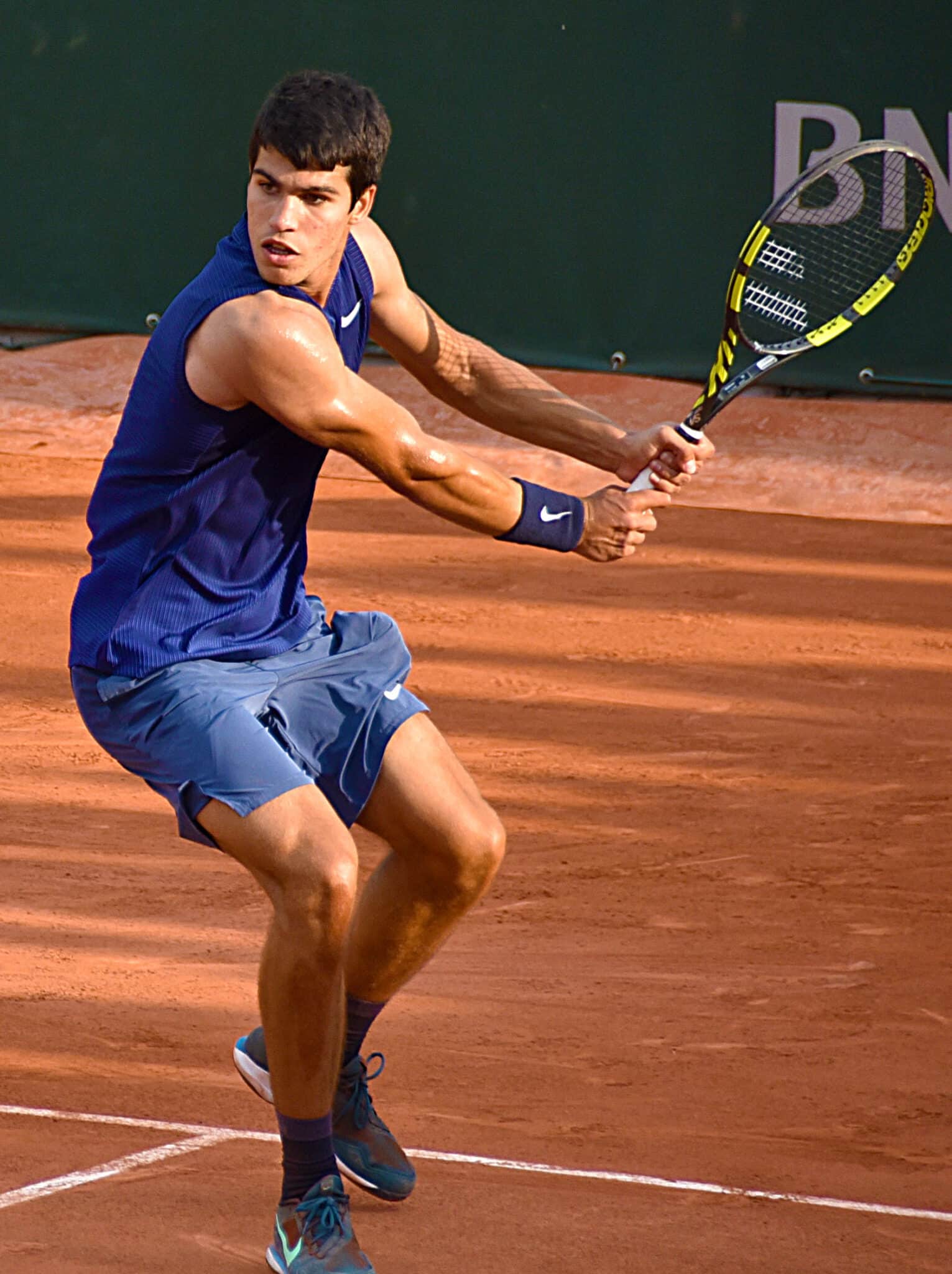
There is a particular moment in the career of an exceptional athlete when sporting success begins to raise a more interesting question than whether they can continue winning. The question becomes how much larger the individual might become than the sport itself. Carlos Alcaraz, still only 23, appears to have reached that point with extraordinary speed. His achievements have already placed him among tennis’s defining figures, but the bigger commercial story is now unfolding around him: the emergence of an athlete who has the potential to become not simply a champion, but one of the most valuable and recognisable sporting brands of his generation.
Alcaraz’s victory at the Australian Open in 2026 completed the Career Grand Slam and made him the youngest man in the Open Era to achieve the feat. By that stage, however, his importance to the modern sports economy had long ceased to depend solely on the number of trophies he collected. With major sponsorship agreements, a rapidly expanding international profile and the kind of appeal that travels easily between sport, fashion and popular culture, Alcaraz has become part of a much larger shift in the economics of elite athletes.
Join The European Business Briefing
New subscribers this quarter are entered into a draw to win a Rolex Submariner. Join 40,000+ founders, investors and executives who read EBM every day.
Subscribe
The modern sporting superstar is no longer simply paid to perform. He or she is expected to function simultaneously as a broadcaster’s attraction, a sponsor’s ambassador, a social-media property and, increasingly, a business in their own right. The most successful athletes are not merely individuals with endorsement deals attached to them; they are increasingly managed as global enterprises, capable of generating value in markets far removed from the stadium or court where their reputations were first established.
Alcaraz is now moving decisively into that territory.
The Business of Sporting Stardom
Forbes has estimated that Alcaraz’s earnings have placed him among the highest-paid figures in tennis, with an increasingly substantial proportion of his income generated away from the court. His commercial relationships with major international brands reflect something more significant than the conventional sponsorship model that has surrounded elite sport for decades: companies are not simply buying access to a successful tennis player. They are investing in a personality they believe can remain relevant to consumers long after a particular tournament has ended.
That distinction is crucial. Plenty of athletes win championships; far fewer become institutions.
Roger Federer achieved it by creating a remarkably coherent identity around elegance, precision and longevity. Rafael Nadal represented a different set of values — endurance, humility and an almost relentless competitive intensity. David Beckham moved beyond football altogether, transforming himself into a global commercial property with interests stretching across fashion, media and sport. Serena Williams has similarly used sporting achievement as a platform from which to build influence in business and investment.
Alcaraz has not yet reached that level, nor should anyone assume that sporting brilliance automatically produces commercial longevity. But he possesses something that is increasingly difficult to manufacture in the carefully managed world of modern celebrity: he appears authentic.

The Value of Being Likeable
There is a growing tendency within professional sport to treat personality as something that requires management before it requires expression. Young athletes are surrounded by advisers, commercial representatives and communications specialists almost from the moment they become successful, and the inevitable result can be a public image that is technically flawless but strangely anonymous.
Alcaraz has largely avoided this problem.
His appeal rests partly on the sense that the enthusiasm viewers see on court has not been constructed in a boardroom. He smiles, celebrates and occasionally appears genuinely astonished by what he has achieved. That spontaneity has become one of his greatest commercial assets because it distinguishes him from a generation of athletes whose public identities can sometimes feel interchangeable.
The challenge, of course, is preserving that quality as the commercial machine surrounding him grows larger. The temptation for a young superstar is to accept every opportunity, particularly when global brands are competing for association with someone at the height of their powers. Yet the history of celebrity suggests that ubiquity can quickly become a liability. The most valuable brands are often those that understand scarcity.
Federer’s commercial empire worked because it appeared selective. His partnerships gradually became part of a recognisable world rather than a collection of unrelated advertisements. Alcaraz would be wise to learn from that approach. The objective should not be to become visible everywhere, but to become memorable wherever he appears.
Why Rivalry Is Good Business
If individual brilliance creates a star, rivalry can create an industry.
The emergence of Alcaraz alongside Jannik Sinner has given men’s tennis something it desperately needed as the era of Federer, Nadal and Novak Djokovic began to draw towards its conclusion: a compelling new story. Tennis had spent almost two decades benefiting from the extraordinary commercial power of three players competing against one another at the highest level, and the concern was always that their eventual departure would leave a vacuum that younger players might struggle to fill.
Alcaraz and Sinner have ensured that this transition has been considerably smoother than many expected.
Their rivalry is valuable not merely because of the quality of the tennis it produces but because it gives audiences a reason to keep returning. Great sport depends upon unfinished narratives. One player wins, the other responds; dominance is established, then challenged. Every major meeting becomes part of a longer story rather than an isolated event.
For broadcasters, sponsors and tournament organisers, this is exceptionally valuable. Sporting audiences are not built solely around individual moments; they are built around anticipation. The question is not simply whether Alcaraz will win his next match, but whether Sinner can stop him, whether their respective careers are beginning to define an era and how the balance of power will change over the next decade.
From Champion to Global Property
Nationality still matters in the commercial world of sport, and Alcaraz’s Spanish identity gives him a particularly powerful foundation. Spain has produced a succession of global sporting figures, from Nadal to Fernando Alonso and Pau Gasol, but Alcaraz represents a new generation with the potential to appeal to audiences who consume sport in very different ways.
The modern fan is not confined to television coverage or the sports pages. They encounter athletes through streaming platforms, social media, fashion campaigns, documentaries and increasingly through the wider culture surrounding major sporting events. This creates enormous opportunities, but it also means that athletes must think differently about their careers.
The most successful will increasingly be those capable of crossing industries without appearing to abandon the sporting excellence that made them famous in the first place.
Alcaraz is already beginning to demonstrate that potential. His growing presence in fashion and popular culture is not simply a collection of lucrative side projects. It is part of the construction of a global profile that can eventually extend beyond tennis. Yet this is also where the greatest danger lies.
The Problem With Becoming a Brand Too Soon
The paradox of modern elite sport is that commercial success can threaten the very achievement upon which it depends.
Every sponsorship appearance makes sense individually. Every media commitment can be justified. Every invitation to expand into another commercial sector looks like a sensible opportunity. Taken together, however, they can gradually consume the time, energy and concentration required to remain among the world’s best athletes.
Tennis is particularly unforgiving because there is nowhere to hide. A footballer can have an indifferent afternoon and still be part of a winning team; an individual tennis player carries the entire burden alone. Form, fitness and concentration remain the foundations of everything.
That is why the most important principle behind the business of Carlos Alcaraz should remain remarkably simple: the tennis comes first.
His commercial value is not independent of his sporting success. It is amplified by it. No advertising campaign can replicate the value of winning Wimbledon, and no carefully constructed social-media strategy can generate the emotional connection created by an extraordinary five-set match watched by millions.
The business empire works because the athlete remains exceptional.
Playing the Long Game
Perhaps the most interesting aspect of Alcaraz’s future is that he does not need to hurry.
At 23, he has time to build a sporting legacy before deciding precisely what kind of commercial empire he wants to create. The temptation in modern celebrity is always to diversify immediately, but there is considerable value in patience. Federer did not become one of the world’s most commercially powerful athletes because he attempted to launch businesses at the earliest possible opportunity. His commercial influence developed alongside, and was ultimately strengthened by, an extraordinary sporting career.
The same may prove true for Alcaraz.
The next decade could give him opportunities in investment, media, fashion, entertainment and sports ownership. But the smartest business decision he may make is to ensure that those opportunities remain secondary to the pursuit of greatness.
Because greatness is the asset that cannot be easily replaced.
There will always be younger athletes. There will always be new commercial platforms and brands willing to spend money on sporting personalities. But the ability to produce moments that capture the imagination of a global audience remains extraordinarily rare.
Alcaraz has already demonstrated that ability.
The Beginning of Something Bigger
It is too early to know precisely how large the Carlos Alcaraz business will become. Sport is unpredictable, careers can change suddenly and history is filled with young superstars who appeared destined for permanent dominance before injury, competition or circumstance intervened.
But what makes Alcaraz so commercially compelling is precisely that his story is still being written.
He has already achieved enough to guarantee his place among the great players of his generation. Yet his sporting career and commercial identity are still developing at the same time. He is learning what it means to be a global star while continuing to compete for the titles that created his fame in the first place.
That combination creates enormous potential.
The greatest sporting brands are rarely built after retirement, when advisers sit around a table attempting to convert an old reputation into a new business. They are built gradually, while the athlete is still creating the moments that give the brand meaning.
Carlos Alcaraz is not simply preparing for a future beyond tennis.
He is building that future in real time.
And if he can maintain the balance between commercial ambition and sporting obsession, the trophies he wins may eventually represent only one part of a much larger achievement: the creation of one of the defining global sports businesses of his generation.