
































EBM Weekend Read — By Nick Staunton, Editor-in-Chief
Updated August 2026
The NBA played two regular season games in Paris in January 2025. Both sold out in under four minutes. The waiting list for the London games at the O2 Arena ran to tens of thousands. European broadcast rights have more than doubled in value over five years. And in March 2026, Commissioner Adam Silver confirmed what had been an open secret in sports investment circles for some time — the league is in active internal discussions about European expansion.
Join The European Business Briefing
New subscribers this quarter are entered into a draw to win a Rolex Submariner. Join 40,000+ founders, investors and executives who read EBM every day.
SubscribeThe question that was politely speculative three years ago is now being stress-tested by people with cheque books. Whether the NBA should expand to Europe is no longer the interesting question. The interesting questions are where, when and who gets to own it.
The Broadcast Data That Started the Conversation
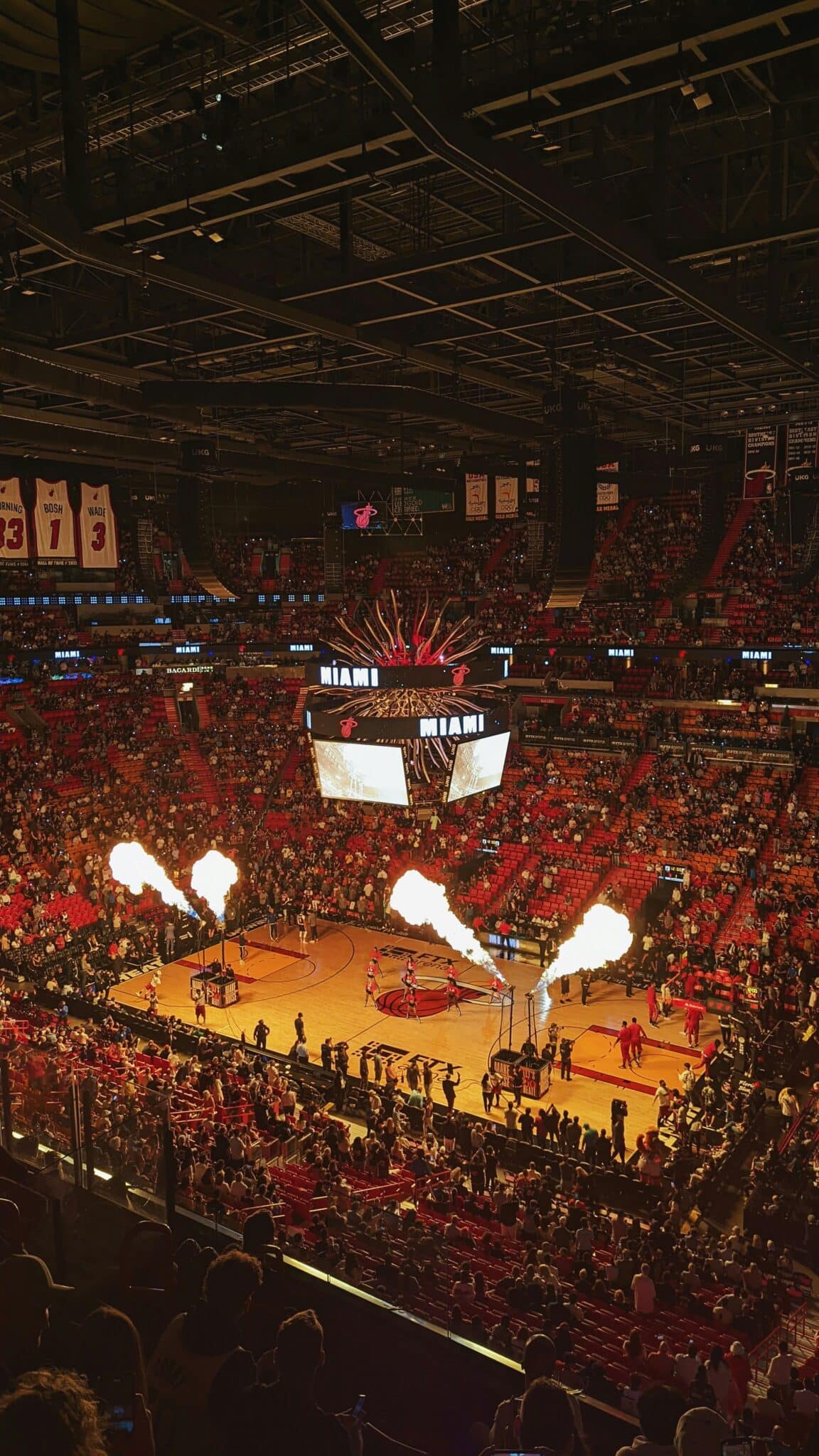
Every serious commercial conversation about European NBA expansion begins in the same place: the broadcast numbers. The NBA’s global media rights deal, signed in 2024, was valued at approximately $76 billion over eleven years. The international segment of that deal is the fastest-growing component, and Europe accounts for a disproportionate share of that growth.
The driver is not abstract interest in American basketball. It is specific attachment to European players who have become the league’s defining stars. Luka Dončić. Nikola Jokić. Victor Wembanyama. Giannis Antetokounmpo. According to Bloomberg, these four players collectively generate more European media impressions than any US-born NBA player in the league’s history. They have created something the NBA’s marketing department could not manufacture: a natural, organically developed European audience that follows the league because it contains people who look, speak and play like them.
That audience is currently being monetised through broadcast deals, merchandise and the occasional showcase game. A permanent European franchise would convert it into something structurally more valuable — a local team with local identity, local season ticket holders and local commercial partnerships compounding over decades.
As we explored in our analysis of how the Champions League has built a commercial infrastructure that rivals American sports leagues in total revenue, European sports audiences have consistently demonstrated willingness to pay premium prices for premium product. The NBA product quality is not in question. The structural framework for delivering it permanently in Europe is.
The Player Pipeline Makes the Case
The structural argument for a European franchise is reinforced by where NBA talent is actually coming from. In the 2025-26 season, over 30% of active NBA rosters were born outside the United States, with European players comprising the majority of that international cohort.
The Euroleague has become a genuine feeder system — not a developmental backwater but a competitive league producing players who arrive in the NBA ready to contribute immediately. Wembanyama’s emergence from Metropolitans 92. Dončić’s development at Real Madrid. The consistent production line from clubs including Fenerbahçe, Olympiacos, Anadolu Efes and Barcelona’s basketball academy.
A European NBA franchise would sit at the centre of this pipeline rather than at its end. It would have natural access to talent, natural connections to European club basketball and a home market that already understands the product at a sophisticated level. No marketing investment required to explain what basketball is. No cultural translation needed. The audience arrived years ago.
As we reported in our analysis of how Michael Jordan’s early franchise investment generated returns that no subsequent buyer could replicate, the compounding advantage of early ownership in a growing league is the most reliable wealth creation mechanism in professional sport. European investors who understand this are not waiting for a formal expansion announcement before beginning their positioning.
The Logistical Problem Nobody Has Fully Solved

The honest version of this analysis requires confronting the genuine difficulty at the centre of European expansion — one that the NBA has not yet publicly resolved.
The NBA regular season runs from October to April with approximately 82 games per team. A European franchise playing half its home games in Paris or London creates transatlantic travel demands for visiting teams that have no precedent in American professional sport. A team flying from Phoenix to Paris for a Tuesday night game and back for a Thursday fixture represents a competitive and commercial challenge that cannot be wished away.
The solutions under internal discussion involve schedule modifications — a reduced regular season game count for the European franchise, clustered road trips that minimise individual transatlantic crossings and extended home blocks that keep visiting teams in Europe for multiple games per trip. None of these is simple. All require negotiation with existing franchise owners who have legitimate concerns about competitive balance, travel costs and the integrity of the regular season format.
The time zone question cuts differently. A Paris game tipping off at 8pm local time airs at 2pm on the US East Coast — a commercially attractive window for American broadcast partners that the league has flagged as a potential advantage rather than a complication. It is the West Coast audience, three hours further behind, for whom a European game creates genuine scheduling difficulty.
These are solvable problems. The NFL has demonstrated that a major American league can operate meaningful European fixtures — now including permanent franchises in London — without compromising its domestic product. The NBA’s challenges are more complex given the daily game schedule, but the NFL precedent removes the argument that it cannot be done.
Paris vs London — The Location Decision
If expansion proceeds, the choice of city is simultaneously a commercial decision and a political signal about what the NBA believes Europe is.
Paris has the operational advantage. The league has played games there, the logistics are proven, the Accor Arena has the technical specification required and the city’s sports infrastructure was significantly upgraded for the 2024 Olympics. France has produced basketball talent at elite level — Tony Parker’s legacy has left a deep participatory base — and the French sports media market is large enough to sustain a franchise commercially without relying solely on pan-European broadcast distribution.
London’s case is different in character but arguably stronger in aggregate. English-language content from a London franchise would feed directly into the NBA’s largest international market without translation or cultural mediation. The depth of private equity, sovereign wealth and institutional capital available in London for a sports asset of this profile is unmatched in Europe. As we reported in our analysis of how London’s financial infrastructure is being reconfigured around mega-scale sports and entertainment assets, the capital to acquire and operate a London NBA franchise already exists and is actively looking for deployment opportunities.
The O2 Arena, which has hosted NBA games to consistently strong reviews from players and broadcasters, provides a ready venue. The challenge for London is political — the complexity of a post-Brexit sports labour market and the visa framework for players and staff adds friction that a Paris operation would not face.
Madrid and Berlin are periodically mentioned but neither city has the existing NBA relationship, broadcast market depth or investor infrastructure to compete seriously with Paris or London in the near term. The decision, when it comes, will almost certainly be between those two.
The Franchise Valuation Arithmetic
Strip away the logistical complexity and the commercial proposition for a European NBA franchise is extraordinary by any conventional sports investment metric.
The most recently valued NBA franchises — the Golden State Warriors at $7.7 billion, the New York Knicks at $6.6 billion — derive their valuation primarily from media rights participation, market size and brand equity. Apply that framework to Paris — a metropolitan area of 12 million people, one of the world’s most visited cities and natural access to a European sports media market of 450 million — and the valuation arithmetic produces numbers between $4 billion and $6 billion at launch.
That would represent one of the most valuable new franchise grants in the history of professional sport. And it would almost certainly appreciate rapidly. The NFL’s London franchises — Jacksonville Jaguars games at Wembley, the Commanders and Bears games at Tottenham — have demonstrated that American sports franchises operating in European cities can build genuine local fanbases within three to five seasons rather than decades.
As we explored in our analysis of how private equity and sovereign wealth funds are reshaping European sports valuations, the appetite for premium sports assets among institutional investors is structurally robust and shows no signs of moderating. A European NBA franchise would attract Gulf sovereign wealth, US private equity and European institutional capital simultaneously. The investor queue would be exceptionally long.
The Commercial Ecosystem Around a European Franchise
The franchise itself is only the beginning of the commercial story. An NBA team in Paris or London anchors an entire ecosystem — arena naming rights, practice facility development, youth academy infrastructure, merchandise licensing across the continent, digital content rights in every European language market and a corporate hospitality proposition that would command significant premiums from multinationals headquartered in both cities.
The shirt sponsorship opportunity alone — at a moment when European football’s shirt sponsor market is being repriced downward following gambling and crypto restrictions, as we reported in our analysis of the €2 billion gap opening in European football’s commercial model — would attract exactly the category of financial services, technology and consumer brand sponsors looking for alternative premium sports placements.
The youth development angle is commercially underappreciated. NBA academies in Europe already operate across multiple countries. A permanent European franchise would anchor those academies more formally, building long-term audience development that compounds over a generation. The children attending an NBA academy in France today are the season ticket holders of 2040.
The Commercial Verdict
According to Reuters, Adam Silver’s working assumption is that any European franchise would not begin play before the 2029-30 season at the earliest. That timeline gives investors, cities and the league itself three years to resolve the logistical, regulatory and commercial frameworks that expansion requires.
Three years sounds like a long time. In sports franchise acquisition, it is not. The window between a credible expansion announcement and formal ownership decisions typically compresses quickly once momentum builds — and the NBA has demonstrated, repeatedly, that once Adam Silver decides something is going to happen, it happens faster than external observers expect.
The NBA’s European moment is not coming. It is already here. The broadcast data, the ticket demand, the player pipeline and the investor appetite confirm it. What has changed in the past twelve months is that the conversation has moved from possibility to probability — and probability, in sports investment terms, is where the most significant capital positioning decisions get made.
As we explored in our Weekend Read on how the athlete economy is reshaping the commercial architecture of global sport, the European players who are already the NBA’s biggest global stars would become the commercial anchors of a European franchise in ways that no American expansion market has ever had available from day one. Dončić in Paris. Wembanyama at home rather than 5,000 miles away. The commercial proposition writes itself.
For European capital, the message is the one it always is at these inflection points: the investors who move early capture the majority of the long-term appreciation. The NBA does not expand often. When it does, the ground floor does not stay available for long.
Related Analysis
The Champions League Is the World’s Most Valuable Sports Business — Here’s How the Money Works — The commercial benchmark any European NBA franchise would need to compete with for audience attention, sponsorship and broadcast revenue — and why the comparison is closer than most people realise.
Michael Jordan Didn’t Retire — He Built a $3.8 Billion Empire — How early franchise ownership creates compounding returns that later investors cannot access — and what it means for the European capital now circling NBA expansion.
The Athlete as Hedge Fund — Ronaldo, LeBron and Mbappé — The European players who are already the NBA’s most commercially valuable assets, and how a European franchise would transform their brand economics overnight.