





























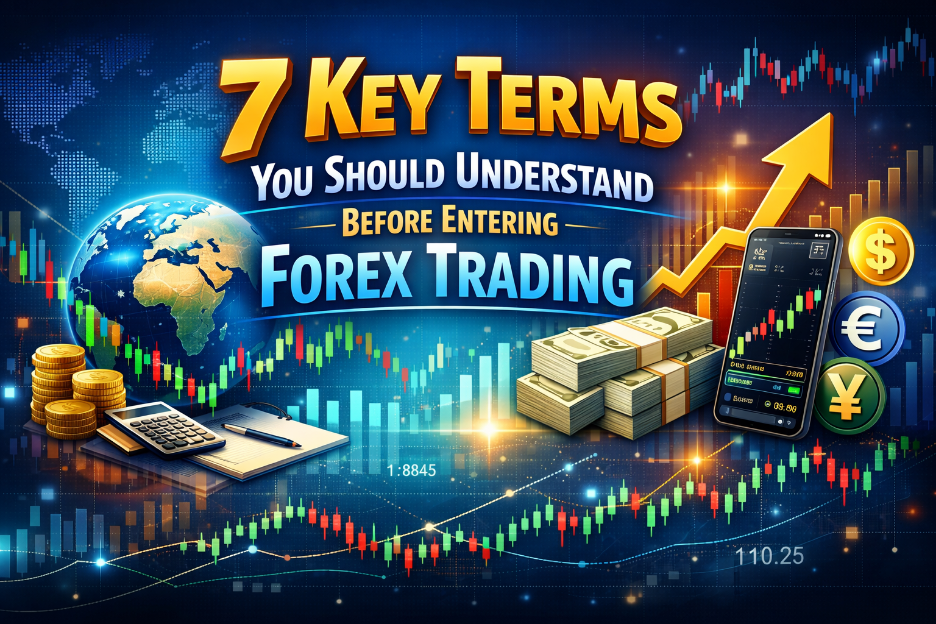
The world of forex trading might be overwhelming to enter.
Initially, the new traders commonly get brushed off with confusing charts and complicated platforms. As a result, even without having a clear understanding of the terminologies used at the very basic level, one can easily commit an error that will cause unforeseen losses or poor decision-making. In addition, calculation of risk, interpretation of price variations, and leverage management are also problems faced by many beginners, which makes the market look scary and unpredictable.
The solution to this is simply to study the necessary terminology before making actual trades. Once gained, the understanding of the basic terms such as pips, spreads, leverage, and currency pairs of the foundations allows one to make wise decisions. In practice, knowing these terms enables merchants to measure the risk, agendas, and respond, thereby responding to the market trends in the most suitable manner.
Join The European Business Briefing
New subscribers this quarter are entered into a draw to win a Rolex Submariner. Join 40,000+ founders, investors and executives who read EBM every day.
SubscribeThis article describes seven major forex terms that every trader ought to know to navigate the market.
1. Pip
The smallest price movement a currency pair can undergo is one pip, which is an abbreviation for “percent in point”. Most currency pairs have a pip size equal to 0.0001 of the quoted price. Understanding pips allows traders to measure gains, losses, and risk accurately in forex trading.
According to educational market analysis, pip values are a fundamental part of calculating both profit and risk in currency markets.
For example, if EUR/USD moves from 1.1000 to 1.1005, it has moved five pips. Traders often calculate position size and stop-loss levels in pips. Misjudging pip values can lead to unexpected losses, especially when leverage is involved or when traders do not align risk per trade with their strategy.
2. Spread

The difference between the buying (ask) and selling (bid) prices of a currency pair is referred to as the spread. Brokers make profits on the spread, which is also an indication of liquidity in the market. Closely traded pairs such as EUR/USD tend to get tight spreads, whereas the exotic pairs have wider spreads.
Spreads influence trading costs directly. For example, if the EUR/USD bid is 1.1000 and the ask is 1.1002, the spread is 2 pips. Traders often factor spreads into scalping and day trading strategies to maintain profitability. Studies suggest that understanding spread behavior during high-volatility periods can significantly improve execution outcomes.
- Leverage
Leverage allows traders to control larger positions than their actual capital. For example, a 1:100 leverage ratio enables a trader to control $100,000 with just $1,000. While leverage can amplify profits, it also magnifies losses, making risk management essential.
Most beginners fail to realize the rapid nature of losses when leverage is abused. Lower leverage enables traders to deal with drawdowns better and have greater control of their account balance. With a disciplined leverage approach, traders can remain in the market longer and decide more rationally about trading.
- Margin

Margin is the sum of money that is necessary to enter and hold a leveraged position. It is more of a security deposit than a cost of trading. When the account equity becomes lower than the necessary level of the margin, positions might be shut down automatically to avoid further losses.
Understanding margin is essential for managing risk. Traders who miscalculate margin requirements may unintentionally overextend their accounts. Proper margin planning helps maintain stable trading conditions and avoids forced liquidations during unfavorable price movements.
- Lot
A lot represents the standardized trading size of a currency pair. A standard lot equals 100,000 units of the base currency, while mini and micro lots represent smaller trade sizes. Lot sizing determines how much a trader gains or loses per price movement.
The proper selection of the lot size is one of the decisional aspects of risk management. The ability to place a smaller lot size enables traders to contain exposure and capitalize on it. A lot of newcomers start with micro lots to acquire some experience and ensure that risk is kept under control.
- Stop Loss and Take Profit

Stop loss and take profit orders automatically close the trades in case a particular price level is attained. A stop loss limits potential losses, while a take profit locks in gains once a target is achieved.
These tools help remove emotion from trading decisions. Without predefined exit points, traders may hold losing positions too long or exit profitable trades too early. Consistent use of stop loss and take profit orders supports disciplined and structured trading.
- Currency Pair
A currency pair shows how much of one currency is required to buy another. The first currency is the base, and the second is the quote. Price movements reflect changes in the relative value between the two currencies.
Major currency pairs typically offer higher liquidity and tighter spreads, making them more suitable for beginners. Understanding how currency pairs move helps traders analyze trends, manage risk, and select appropriate trading opportunities.
Conclusion
Understanding key forex terms is essential before placing your first trade. Concepts like pips, spreads, leverage, margin, lot sizes, stop loss, take profit, and currency pairs shape every trading decision. Without clarity on these fundamentals, even well-planned strategies can fail due to poor execution or unmanaged risk.
Taking time to learn these terms helps traders approach the market with structure and confidence. It allows for better risk control, clearer trade planning, and more disciplined decision-making. Before focusing on advanced strategies or indicators, mastering these basics creates a strong foundation for long-term participation in the forex market and supports more consistent trading outcomes over time.