





























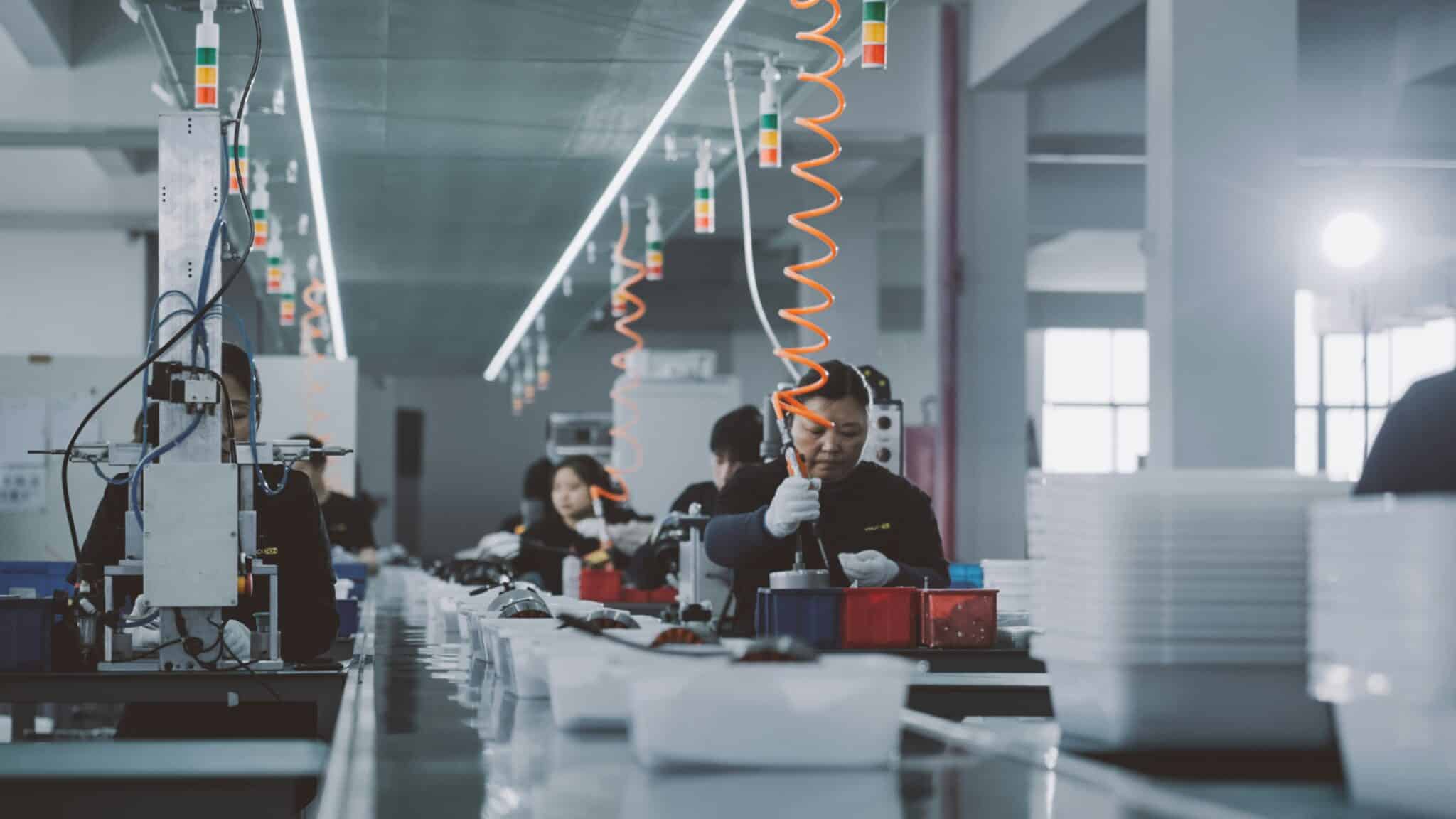
European manufacturers are now embracing a new mode of production driven by data analytics, advanced technologies, and automation. Smart manufacturing is changing how factories operate, allowing businesses to reduce waste and improve efficiency. They can also respond more quickly to changing market demands.
Across Europe, industries, including automotive, aerospace, consumer goods, and electronics, are shifting toward connected systems, artificial intelligence, and real-time monitoring. These innovations are helping companies stay competitive while meeting quality and regulatory standards. Read on to discover how this is happening.
Virtual Simulation
Smart manufacturing is revolutionizing mass production in Europe by replacing physical trial-and-error with virtual simulation, which is often more precise. With companies embracing smart manufacturing, they now use three-dimensional digital twins and virtual commissioning to simulate complete assembly lines before the physical setup is done. This strategy creates a more efficient and sustainable production scale by:
Join The European Business Briefing
New subscribers this quarter are entered into a draw to win a Rolex Submariner. Join 40,000+ founders, investors and executives who read EBM every day.
Subscribe- Minimizing operational errors
- Optimizing workflows
- Reducing material waste
AI-Powered Quality Control
The increasing popularity of smart manufacturing in Europe means manual inspections are now obsolete and getting replaced by AI-driven quality control. Through machine vision and deep learning algorithms, factories in Europe assess production lines in real time. This way, they can catch defects instantly, prevent costly process drift, and slash waste by up to 50%. It also means that they can achieve a consistent, high-volume precision.
Agile and Flexible Production Lines
In Europe, smart manufacturing is contributing to mass production by replacing rigid assembly lines with a more efficient layout. European factories can instantly reconfigure their systems by using modular automated guided vehicles (AGVs) and plug-and-play robotics.
The result is that manufacturers can switch smoothly between different products on a single line. For instance, packaging and printing companies can also use innovative products, such as rubber covered rollers, to ensure consistency during manufacturing.
Predictive Maintenance
Smart manufacturing is redefining mass production in Europe by replacing costly, reactive machines with AI-powered predictive maintenance. These systems continuously monitor equipment vibration, temperature, and wear. Since they analyze these data in real time, factories anticipate machinery failures before they occur. This type of maintenance reduces downtime by up to 45% and improves the efficiency of the assembly line.
Sustainable Manufacturing
Smart manufacturing is also driving sustainable mass production across Europe by adding eco-friendly designs and circular economic principles. Supported by AI-driven energy management systems, factories can track the movement of raw materials and optimize energy use in real time. This helps by:
- Reducing carbon emissions
- Cutting energy consumption
- Meeting the European Green Deal
Industrial IoT Ecosystem Expansion
Another way through which smart manufacturing is transforming mass production is by expanding industrial Internet-of-Things ecosystems across factory floors. By connecting thousands of traditional machines to advanced smart sensors, these facilities achieve end-to-end operational visibility.
This seamless flow of data connects entire supply chains while coordinating automated assets in real time. They also dramatically maximize the overall effectiveness of equipment at larger scales, especially in mega manufacturing companies.
Endnote
Smart manufacturing is actively changing how companies in Europe handle mass production. Techniques such as virtual simulation, AI-powered quality control, and predictive maintenance are increasingly adopted. Flexible production lines, sustainable manufacturing, and the expansion of the IoT ecosystem are also contributing to mass production capabilities in Europe.






