





























By Ann Keefe, Regional Director – UK and Ireland at Kingston Technology EMEA.
In recent months, AI PCs have dominated technology headlines, with hardware manufacturers announcing new models at an unprecedented pace. The emergence of this new type of hardware reflects broader AI trends, but the speed of innovation begs the question: Are AI PCs truly revolutionary, or simply the latest tech industry hype?
Looking beneath the hood
Join The European Business Briefing
New subscribers this quarter are entered into a draw to win a Rolex Submariner. Join 40,000+ founders, investors and executives who read EBM every day.
SubscribeAI PCs represent a significant evolution in computing, featuring dedicated Neural Processing Units (NPUs) within their System on Chip (SoC). These NPUs are specifically designed to handle AI applications and experiences, offering enhanced computational power for language models, focused tasks, security, and privacy. The key advantage of AI PCs lies in their ability to provide low latency and greater personalisation, meeting the growing demand for more independent computing experiences.
Essentially, AI PCs enable computation to occur at the edge, closer to the data source or end-user, rather than relying solely on cloud processing. This approach combines the strength of cloud computing for intensive tasks with the speed and privacy advantages of local processing. By utilising local hardware like GPUs and NPUs to enable AI tasks, AI PCs can reduce latency, conserve bandwidth, and improve data security by minimising the amount of sensitive information transferred to the cloud.
The Chips Driving AI PCs
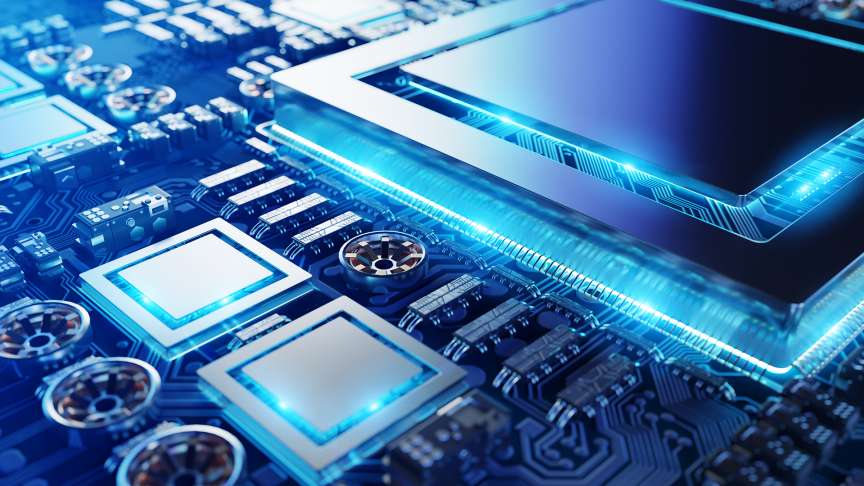
The evolution of AI PCs has been closely tied to advancements in chip technology. Early examples of this approach can be traced back to the iPhone’s A11 bionic processor. However, recent innovations like Intel’s Ultra Core processor have introduced a new CPU design tailored for multiple purposes. This tile-based CPU architecture allows for dedicated allocation of resources to the GPU (for compute tasks), the main processor, and the SoC (which includes the NPU) to support local AI functions.
The combination of CPU, GPU, and NPU is crucial for modern computing tasks. While the CPU handles general-purpose processing and runs the operating system, the GPU excels at parallel computations ideal for AI and deep learning. The NPU, designed specifically for AI tasks, accelerates neural network computations while maintaining low power consumption. This trio allows for flexibility, with each processor type fully optimised for specific tasks, leading to significant improvements in both performance and energy efficiency.
Memory and Storage Considerations
As AI PC technology advances, questions arise about the memory and storage requirements needed to support these systems effectively. Currently, there are very few standardised specifications with AI PC systems ranging from 8GB to 32GB of memory. However, as AI applications become more sophisticated and demanding, we can expect a shift in memory requirements.
It’s the same situation when it comes to storage, with current systems offering anywhere from 256GB to 2TB of SSD storage. When considering AI PCs, it’s key for enterprises to look beyond their needs right now, and instead anticipate future requirements as applications evolve.
Use Cases and Opportunities for Enterprises
AI PCs are finding applications across various domains, with business productivity tools leading the charge. Microsoft Copilot, Zoom, Webex, and Slack are breaking new ground in project management and collaboration. Creative professionals are benefiting from AI-enhanced tools like the Adobe suite, Audacity for audio editing, and GIMP for design work.
These early applications primarily focus on communication and creativity, areas where AI can make an immediate impact. However, as the technology matures, we can expect to see AI PC applications diversify into numerous industries and use cases.
For enterprises, AI PCs offer several key advantages:
- Enhanced Security and Privacy: By processing data locally, AI PCs reduce the risks associated with cloud storage and transmission and use of sensitive information, by public AI models.
- Improved Performance: The combination of specialised processors enables faster, more efficient handling of AI-related tasks.
- Greater Autonomy: AI PCs can operate independently of cloud services, ensuring functionality even during network outages or cyber-attacks targeting cloud infrastructure.
- Personalisation: The ability to process data locally allows for more tailored user experiences and faster response times.
Preparing for the AI PC Revolution
As enterprises consider adopting AI PCs, several factors should be considered:
- Assess Current Needs: Evaluate your organisation’s immediate requirements and how they align with available AI PC capabilities.
- Application Compatibility: Identify which AI-enhanced applications are crucial for your business operations.
- Refresh Cycle Timing: Consider where you are in your current hardware refresh cycle and whether immediate adoption or a wait-and-see approach is more appropriate.
- Staff Training: Ensure your team is prepared to optimise and securely operate AI PC systems.
- Regulatory Compliance: Stay ahead of AI-related policies and practices to ensure smooth adoption and operation.
- Phased Approach: Consider a nuanced strategy, such as upgrading key components incrementally rather than overhauling entire systems at once.
What’s the conclusion – hype or opportunity?
While there’s undoubtedly excitement surrounding AI PCs, dismissing them as mere hype would be shortsighted. Analyst predictions from firms like Gartner, IDC, and Canalys suggest a significant market shift towards AI PCs in the coming years.
For enterprises, AI PCs represent a genuine opportunity to enhance productivity, security, and user experiences. However, the key to success lies in thoughtful adoption. Organisations must carefully consider their specific needs, the current state of AI PC technology, and their readiness to implement and manage these advanced systems.
As with any emerging technology, there are trade-offs to consider. Early adopters may gain competitive advantages but also face the challenges of working with less mature ecosystems. Others may benefit from a more measured approach, allowing time for the technology and application landscape to evolve further.
Ultimately, AI PCs are not just hype – they represent a significant shift in computing paradigms. Whether your organisation dives in now or waits for further developments, staying informed and prepared for this technological evolution is crucial for future success in an AI-driven world.