






























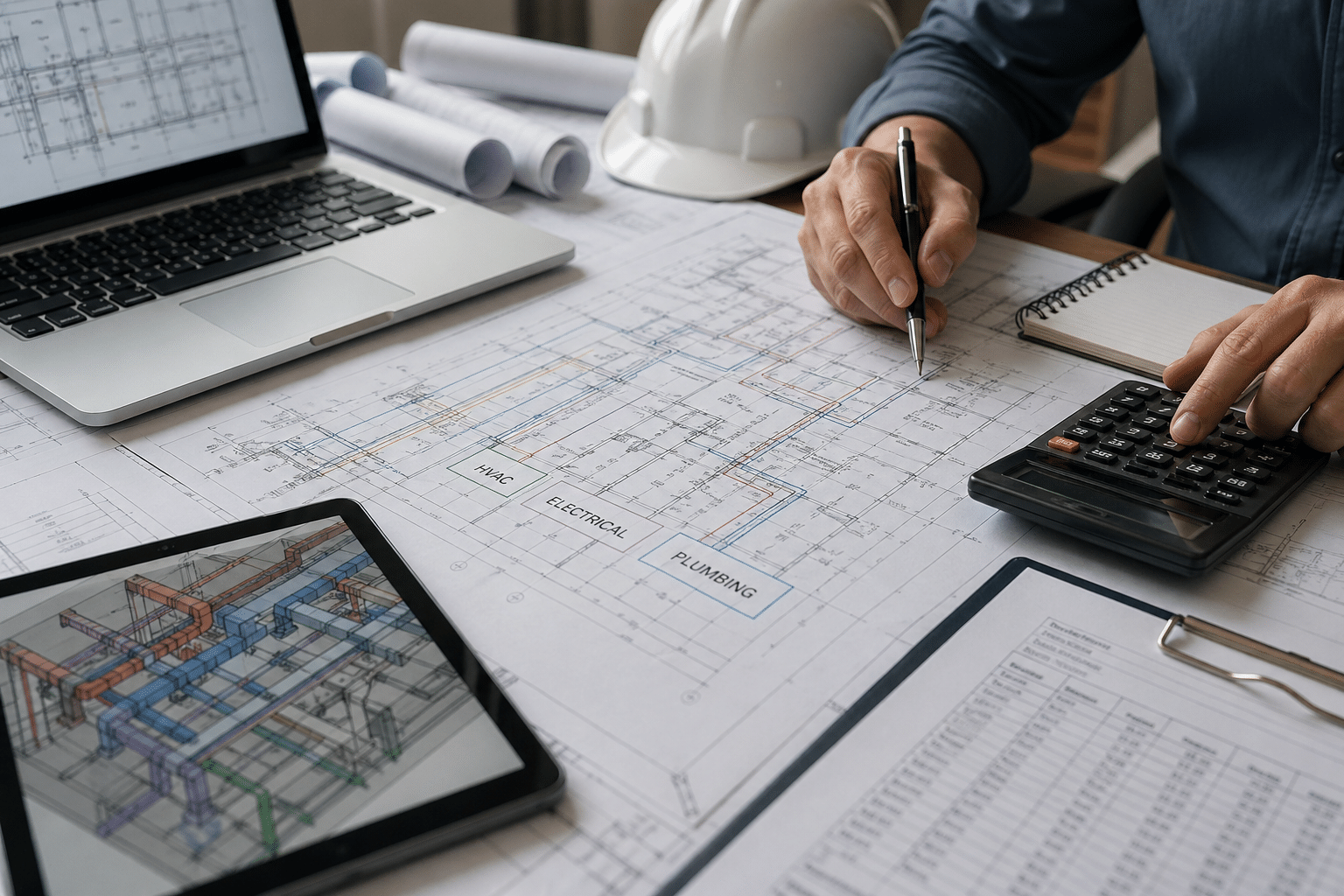
In modern construction projects across Europe and beyond, Mechanical, Electrical, and Plumbing (MEP) systems form the backbone of building functionality. For non-technical general contractors, understanding how these estimates are created can feel complex at first glance. However, once broken into structured steps, the process becomes far more transparent and manageable.
MEP estimating is not just about numbers on a spreadsheet. It is a structured evaluation of materials, labor, design coordination, equipment selection, and installation sequencing. It connects engineering design with real world construction costs and timelines. In many European markets, especially in commercial and infrastructure projects, accuracy in this area directly influences project profitability and risk control. This is where MEP Estimating Services play a critical role, helping contractors translate technical drawings into reliable cost forecasts that can be used for bidding and execution planning.
For non-technical GCs, the goal is not to become engineers but to understand how estimators think, what data they rely on, and how assumptions impact the final bid. This knowledge allows better communication with consultants, subcontractors, and project stakeholders, ultimately improving project outcomes.
Join The European Business Briefing
New subscribers this quarter are entered into a draw to win a Rolex Submariner. Join 40,000+ founders, investors and executives who read EBM every day.
SubscribeUnderstanding What MEP Estimation Actually Means
MEP estimation is the process of calculating the total expected cost of mechanical systems such as HVAC, electrical systems including lighting and power distribution, and plumbing systems covering water supply and drainage.
Each of these systems requires separate technical evaluation but must also be coordinated as part of a single building ecosystem. The estimator considers drawings, specifications, building codes, and project requirements to develop a structured cost breakdown.
The process usually begins with design documents provided by architects and engineers. These documents are then interpreted by estimators who identify material quantities, installation requirements, labor productivity rates, and equipment needs.
Step 1: Reviewing Project Documentation
The first stage of any MEP estimate is a deep review of construction documents. These include:
- Architectural drawings
- Mechanical layouts
- Electrical schematics
- Plumbing plans
- Technical specifications
- Project schedules
At this stage, estimators look for scope clarity. Missing or conflicting information is flagged early because it can significantly affect cost accuracy later.
A key challenge for non-technical GCs is understanding that even small design inconsistencies can multiply costs during construction. For example, a minor change in duct routing can impact both material quantities and labor hours.
Step 2: Quantity Takeoff Process
Once documentation is reviewed, the estimator begins the quantity takeoff process. This involves measuring and listing every component required for the MEP systems.
Examples include:
- Length of electrical wiring
- Number of lighting fixtures
- HVAC ductwork measurements
- Pipe lengths and diameters
- Valves, fittings, and supports
The accuracy of this stage determines the quality of the final estimate. Estimators often use digital tools or CAD-based software to ensure precision.
At this point, many firms rely on specialized professionals or outsourcing partners offering construction estimator services to speed up the process and reduce human error. These services bring consistency and technical accuracy, especially in large commercial or multi-building projects where manual takeoff becomes extremely time consuming.
Step 3: Material Cost Calculation
After quantities are determined, the next step is assigning unit costs to each item. Material pricing can vary significantly depending on:
- Supplier pricing
- Market conditions
- Import and export costs
- Project location
- Specification quality
For example, copper piping used in plumbing systems may fluctuate in price depending on global commodity trends. Similarly, HVAC equipment costs depend on efficiency ratings and manufacturer selection.
Estimators usually maintain updated cost databases to ensure pricing reflects current market conditions. In large organizations, these databases are updated weekly or monthly.
Step 4: Labor Cost Estimation
Labor is one of the most critical components of MEP estimation. Unlike materials, labor costs are influenced by productivity rates, workforce skill levels, and project complexity.
Estimators calculate labor by determining:
- Installation time per unit
- Crew composition
- Working hours per day
- Regional wage rates
For example, installing electrical conduit in a simple open ceiling is faster than installing it in a congested mechanical room.
Productivity factors are also applied to account for real world conditions such as weather delays, site restrictions, and coordination issues.
Step 5: Coordination Between Systems
One of the most overlooked aspects of MEP estimation is coordination. Mechanical, electrical, and plumbing systems often overlap in physical space. Poor coordination can lead to clashes during construction.
Estimators must ensure:
- HVAC ducts do not conflict with electrical trays
- Plumbing lines avoid structural beams
- Equipment placement allows maintenance access
This coordination process is often done using BIM (Building Information Modeling), which creates a 3D representation of all systems in a single environment.
Step 6: Overheads, Profit, and Risk Contingency
After direct costs are calculated, estimators add indirect costs such as:
- Site management
- Insurance
- Equipment rental
- Administrative expenses
Then, a profit margin is applied based on project risk and market competition.
A contingency allowance is also added to cover unforeseen issues. In MEP work, these risks might include design changes, material shortages, or installation challenges.
Step 7: Plumbing System Costing in Detail
Plumbing systems require specialized attention because they involve both mechanical flow principles and building safety regulations. This includes potable water systems, drainage, stormwater systems, and gas piping where applicable.
Plumbing estimates include:
- Pipe materials (PVC, copper, steel)
- Fixtures such as sinks, toilets, and valves
- Pressure testing and insulation
- Waste management systems
In many cases, firms rely on dedicated Plumbing Estimating Services to handle this scope because plumbing systems often require compliance with strict local codes and pressure standards. These specialists ensure that both material selection and installation methods meet regulatory requirements while staying within budget.
Step 8: The Role of Digital Tools and Software
Modern MEP estimation is heavily dependent on digital tools. Software solutions help automate takeoffs, improve accuracy, and reduce manual effort.
Common capabilities include:
- 2D and 3D quantity extraction
- Cost database integration
- Real time collaboration
- Clash detection with BIM models
These tools also help estimators update costs quickly when design changes occur. For non-technical GCs, this means faster turnaround times for bids and improved decision making during project planning.
Step 9: Why Estimation Accuracy Matters in Real Projects
Accurate MEP estimates directly impact:
- Tender competitiveness
- Project profitability
- Construction scheduling
- Resource allocation
- Client satisfaction
Underestimating costs can lead to financial losses, while overestimating may result in losing bids to competitors. Therefore, precision is critical at every stage.
Step 10: Common Challenges in MEP Estimation
Even experienced estimators face challenges such as:
- Incomplete design information
- Rapid material price changes
- Labor shortages
- Coordination errors between trades
- Tight bidding deadlines
To manage these challenges, estimators rely on historical project data and continuous market analysis.
Step 11: Practical Example of an MEP Estimate Flow
To better understand the process, consider a mid size commercial office building:
- Drawings are reviewed for HVAC, electrical, and plumbing systems
- Quantities are extracted for ductwork, wiring, and piping
- Material costs are assigned based on current supplier rates
- Labor hours are calculated for installation teams
- Coordination issues are resolved using BIM
- Overheads and contingency are added
- Final bid price is generated
This structured workflow ensures that every aspect of MEP work is accounted for before construction begins.
Step 12: How Non-Technical GCs Can Use This Knowledge
For general contractors without engineering backgrounds, understanding estimation basics helps in several ways:
- Better communication with consultants
- Improved bid evaluation
- Stronger negotiation with subcontractors
- Reduced project risk exposure
- More informed decision-making
It also allows GCs to identify unrealistic estimates early and request clarifications before committing to contracts.
Conclusion
MEP estimation is a detailed and structured process that combines engineering knowledge, market pricing, labor productivity analysis, and digital modeling. While it may appear highly technical, the underlying logic is straightforward once broken into steps.
For non-technical general contractors, the key takeaway is that every estimate is built on measurable components, assumptions, and coordination logic. Understanding these fundamentals makes it easier to evaluate bids, manage risks, and ensure project success.
As construction projects in Europe continue to grow in complexity, accurate estimation will remain a critical factor in project delivery. Leveraging specialized expertise, digital tools, and structured workflows ensures that MEP systems are costed efficiently and executed without unexpected financial surprises.