































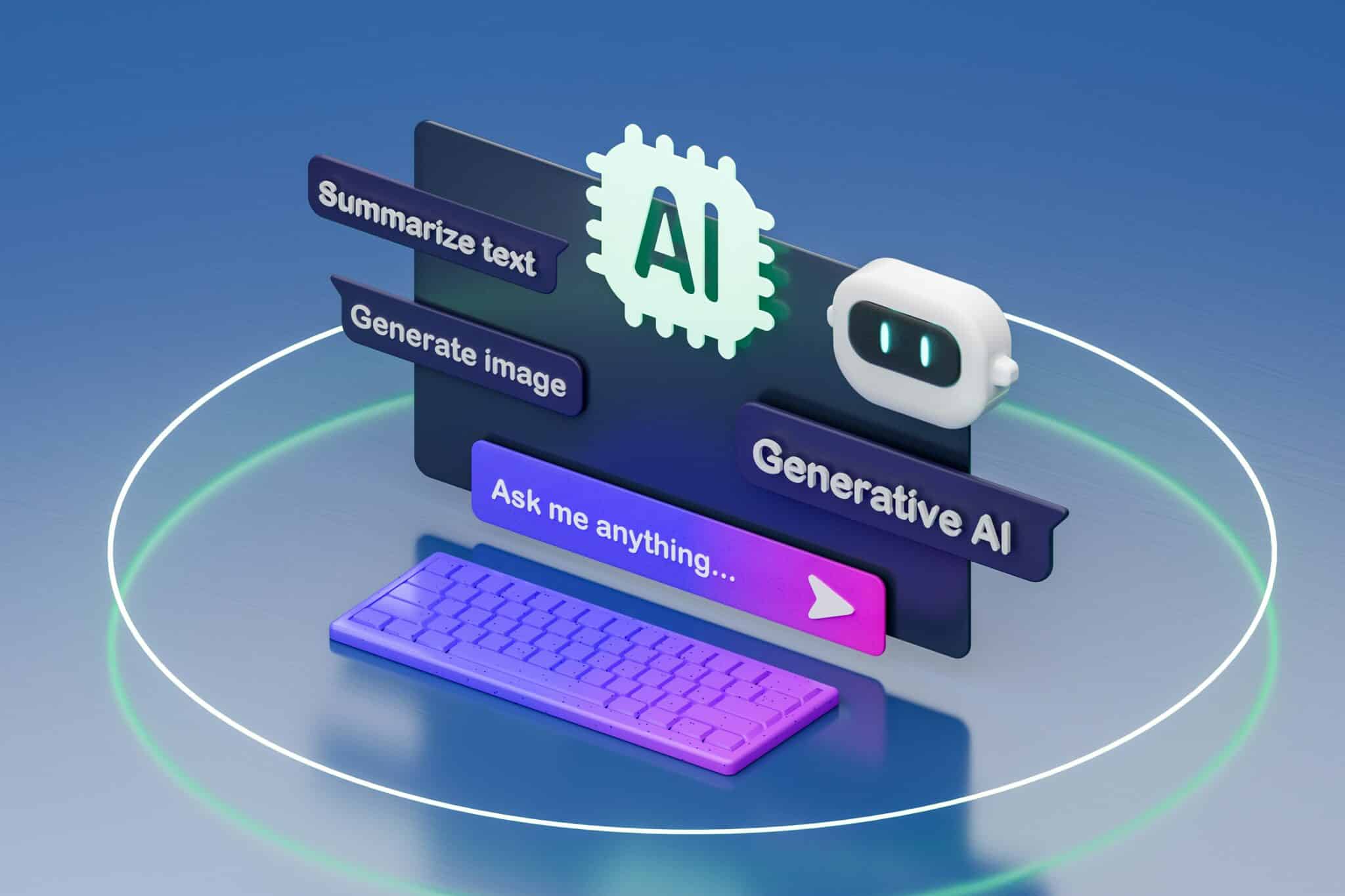
Just a couple of years back, when “AI” was mentioned in boardrooms, what people were thinking about was predictive dashboards and the odd bot that annoyed customers. The discussion around AI has taken a completely different turn since then. In today’s world, generative AI is the key component behind the way leading-edge companies create their content, make their decisions, develop their products, and interact with their customers.
At PSSPL, we work with businesses that are past the “what is generative AI” stage and firmly into the “how do we actually use this to grow” stage. The demand for generative AI development services and support from an experienced AI app development company has increased due to the shift in mindset. It is not sufficient for them to understand the technology; they need it integrated into their processes, customer experience and products.
What Makes Generative AI Different
Join The European Business Briefing
New subscribers this quarter are entered into a draw to win a Rolex Submariner. Join 40,000+ founders, investors and executives who read EBM every day.
SubscribeTraditional AI has mostly been developed to analyze, recognize patterns, highlight abnormalities, or predict something using current data. Generative AI goes further and generates something, which could be text, images, computer code, new product designs, customer feedback, or anything else from scratch by identifying patterns in huge amounts of data instead of merely extracting something from a database.
This is significant in more ways than one. Businesses can go from “let’s analyze what we got” to “let’s generate what we need here and now.” The marketing department will not have to wait for days for the first version of their marketing campaign. The support team will not have to operate round-the-clock to answer frequently asked questions. The product design department will not have to spend weeks on something that may fail.
Where Businesses Are Actually Using It
The theory is interesting, but the real story is in how companies are putting generative AI to work day to day.
Customer support that never sleeps. Chatbots and virtual assistants powered by AI technology now deal with an enormous number of inquiries from customers in an automated manner at any time of day or night. The more often they respond to customers’ queries, the better their performance becomes.
Content and marketing on a whole new level. Instead of having one person come up with a campaign every week, many campaigns can be created by a team and then optimized right away. It does not mean that creative thinking is no longer needed, but it assists in getting rid of a blank sheet of paper restriction.
Improved decision-making. Generative AI can find out the information from transactional data, customer actions, and market trends, which could be analyzed by a person for several days. The implications in the financial and retail sectors are fairly evident – improved forecasting, pricing, and fraud detection.
Personalization that actually feels personal. Recommendation systems are an old concept, however, generative AI goes a step ahead as it personalizes recommendations as well as messaging that goes along with it, depending upon customer context.
Faster software development. Through the utilization of AI in drafting codes, identifying bugs, and eliminating mundane activities that used to occupy an entire sprint, developers can achieve more in less time. It is one of the reasons why businesses today want to engage a good AI app development company in order to build their product.
Industry by Industry, the Pattern Repeats
The retail industry has begun using generative AI to help drive recommendations as well as aid in product designs, providing a unique experience instead of a general one.
The healthcare and pharmaceutical industries have benefitted in speeding up drug discoveries as well as diagnoses through artificial intelligence.
Generative AI helps finance by offering fraud detection and compliance monitoring services as well as algorithmic trading techniques.
In manufacturing, generative AI can be used for predictive maintenance and ensuring quality control measures.
Finally, educational institutions and websites have started developing their curriculums according to the progress of the students through adaptability.
The thing all these industries have in common is the fact that generative AI is not going to replace their primary activity but reduce friction in it.
The Real Challenges Nobody Skips Past
None of this happens automatically, and it’s worth being honest about the hurdles.
People, not just technology, decide success. Employees often worry AI is coming for their jobs, and that fear is a real barrier to adoption. Those who will triumph are those who demonstrate to skeptics in the early stages of adoption of AI technology how AI does away with the drudgery but not the jobs.
Data quality makes or breaks results. Messy, incomplete, or inconsistently labeled data undermines even the most sophisticated model. Strong data governance isn’t optional; it’s the foundation everything else is based on.
Legacy systems complicate integration. Most established businesses aren’t starting from a blank slate. Weaving generative AI into existing infrastructure without disrupting operations requires careful planning and, often, outside expertise.
Skilled talent is still scarce. Building and maintaining generative AI systems responsibly requires a specific blend of technical and domain knowledge that many internal teams simply don’t have yet which is exactly why partnering with dedicated generative AI development services has become the practical path for so many companies rather than an expensive luxury.
Getting Started the Right Way
Businesses getting real value from Generative AI have unique playbooks for it – this includes solving a real problem and not just focusing on the technology; running pilot studies, evaluating their results and scaling successful pilot studies; building cross-functional teams with both technical and domain expertise; and most importantly, building the necessary data architecture and Responsible AI from the start and not at a later stage.
The Bottom Line
Generative AI has moved beyond the realm of marketing. It is becoming a useful solution for business transformation in the processes of generation, decision-making, construction, and customer service – and the ones that will win aren’t those who spend the most, but those with the right strategy and technology partners on board.
As an AI app development company, we at PSSPL help firms implement their strategy into a solution by either developing their generative AI solution on-demand, or working as a full cycle AI app development company to make it into a product. And if you are trying to integrate generative AI into your business strategy, this is the discussion that we are ready to hold with you.