































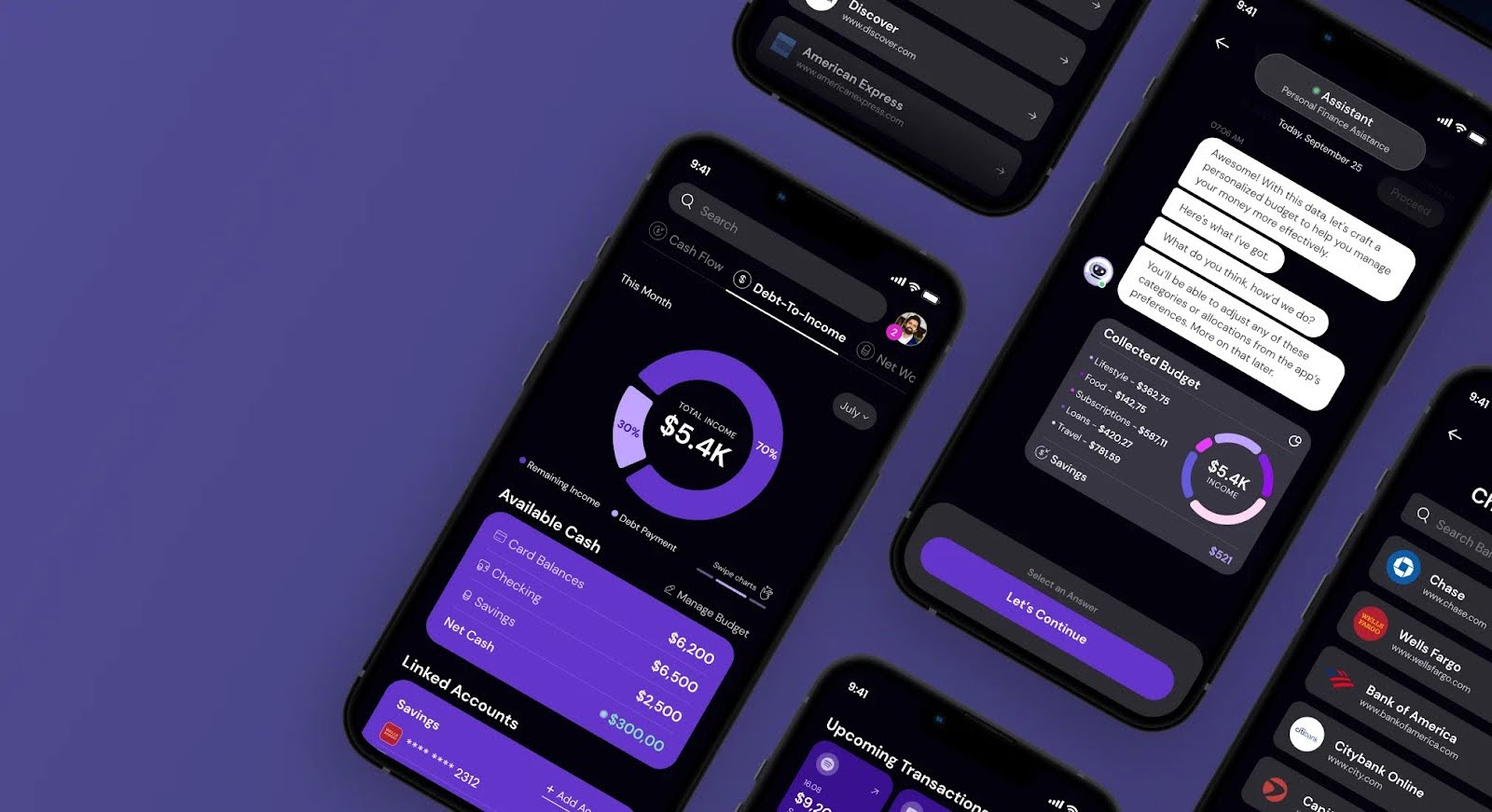
Engineering teams at large financial institutions spend months building mobile products that perform well in demos and fall apart in production. The disconnect almost always happens at the same point: data integration.
When a VP of Engineering signs off on a financial wellness product or a budgeting feature inside a banking super-app, the architectural complexity of connecting real-time financial data rarely surfaces in early sprint reviews. By the time it does, the team is already behind. Decisions made quickly in the first few weeks of a personal finance app development engagement tend to define the reliability of the product for the next two years.
This is not a technology gap. It is a systems-design problem that compounds when organizations underestimate the operational weight of financial data at scale.
Join The European Business Briefing
New subscribers this quarter are entered into a draw to win a Rolex Submariner. Join 40,000+ founders, investors and executives who read EBM every day.
SubscribeWhy Financial Data Behaves Differently
Financial data moves across multiple systems simultaneously: core banking platforms, card processors, investment custodians, lending engines, and third-party aggregators. Each uses different schemas, different refresh cycles, and different access protocols.
Most modern mobile app development stacks are built for speed and user experience. Financial data integration demands something different — tolerance for inconsistency, latency, and partial data states that most consumer app architectures do not account for from the start.
Plaid, MX, and Yodlee remain the dominant aggregation layers in North America. Fintech operators who have worked across all three describe the standard practice as “aggregating the aggregators” — building an abstraction layer above multiple providers because no single provider connects reliably to every institution. According to MX, 72% of consumers would likely switch to a different bank or credit union if their current provider could not connect their financial accounts to financial apps or other online accounts. That number reflects how directly aggregator reliability maps to user retention at the product level.
Where the Architecture Breaks Down
The standard approach involves a middleware layer that normalizes data from multiple aggregators and passes it to the mobile layer through internal APIs. In practice, it breaks in three consistent places.
Token management is the first failure point. OAuth tokens for open banking connections expire or get invalidated by institutions without warning. Mobile apps that do not handle re-authentication gracefully leave users staring at error states with no recovery path.
Data reconciliation follows. When a user holds accounts across multiple institutions, transaction categorization conflicts appear at the seam between aggregators, and engineers often build custom reconciliation logic that accumulates technical debt fast.
Real-time expectation gaps create the third failure. Users expect balance updates within seconds. Most banking cores refresh in batch cycles ranging from 15 minutes to 24 hours. Communicating that latency without frustrating users requires product and engineering alignment; most teams delay until after launch.
Compliance Adds Another Layer of Constraint
Financial data on mobile carries PCI DSS and SOC 2 obligations, with HIPAA entering the picture for health-linked finance features. Compliance is not a review gate. It is an architectural input, and treating it otherwise costs teams far more than building it correctly from the first sprint.
The CFPB finalized its Section 1033 open banking rule in late 2024, accelerating API migration timelines and compliance obligations across the US market. Teams already retrofitting compliance had no runway to adapt.
The Business Cost of Getting This Wrong
According to the J.D. Power 2023 U.S. Banking Mobile App Satisfaction Study, when banking app customers actively engage with three or more personal financial management tools, overall satisfaction scores rise 127 points compared to when these tools are not offered. The inverse is equally true: apps that surface data errors or broken account links suppress feature engagement before users form any habit around the product.
J.D. Power’s 2024 study identified personal financial management tools as the area with the greatest performance variability across banking and credit card apps. That variability reflects differing data layer architectures, and organizations with stronger integration foundations consistently outperform those that treat it as a secondary concern. For enterprise platforms, depressed engagement translates directly into lower cross-sell conversion and higher churn on premium tiers.
Top 5 Personal Finance App Development Companies in the USA (2026–27)
The following companies have demonstrated consistent delivery in financial app development for enterprise clients, based on verified Clutch ratings and review data.
1. GeekyAnts
GeekyAnts is a global technology consulting firm specializing in digital transformation, end-to-end app development, digital product design, and custom software solutions. The firm brings deep engineering capability across mobile and backend layers, with practical experience in financial data integration, cross-platform development, and regulated product environments. Enterprise clients engage GeekyAnts for greenfield builds and complex platform modernization programs.
Clutch Rating: 4.9 | 111+ Reviews Address: GeekyAnts Inc, 315 Montgomery Street, 9th and 10th floors, San Francisco, CA 94104, USA Phone: +1 845 534 6825 Email: [email protected] Website: www.geekyants.com/en-us
2. Fueled
Fueled is a New York-based digital product agency that works with enterprise clients and large consumer brands on mobile and web products. The team covers product strategy, UX design, and full-stack development, and has built applications across fintech, payments, and financial wellness categories. Their client portfolio includes organizations where performance standards and brand expectations operate at the same level of priority.
Clutch Rating: 4.9 | 37 Reviews Address: 40 Fulton St, New York, NY 10038, USA Phone: +1 (888) 316-5230 Email: [email protected] Website: www.fueled.com
3. Intellectsoft
Intellectsoft is a digital transformation consultancy with US operations that delivers mobile and enterprise software for global organizations. The company has built solutions across regulated industries including financial services, healthcare, and insurance, with specific experience in security architecture, API integration, and cross-platform mobile builds. Their IS360 framework guides delivery across the full product lifecycle.
Clutch Rating: 4.8 | 42 Reviews Address: 228 Hamilton Ave, 3rd Floor, Palo Alto, CA 94301, USA Phone: +1 (877) 777-6130 Email: [email protected] Website: www.intellectsoft.net
4. Savvy Apps
Savvy Apps is a Washington D.C.-based mobile product studio with a track record of building apps for enterprise and public sector clients in regulated environments. The team focuses on iOS and Android development with strong attention to backend API integration and security standards relevant to financial and healthcare applications. They operate as a full-service partner from product strategy through launch and ongoing support.
Clutch Rating: 4.9 | 31 Reviews Address: 1875 Connecticut Ave NW, Washington, DC 20009, USA Phone: +1 (202) 643-1994 Email: [email protected] Website: www.savvyapps.com
5. Chop Dawg
Chop Dawg is a Philadelphia-based product development studio that builds custom mobile and web applications for businesses and funded startups. The company has delivered products in fintech, consumer finance, and enterprise software with a documented delivery process that emphasizes fixed timelines and transparent communication. They operate with dedicated project management and a structured sprint cadence across all engagements.
Clutch Rating: 4.9 | 26 Reviews Address: 1617 JFK Blvd, Suite 1850, Philadelphia, PA 19103, USA Phone: +1 (267) 909-0093 Email: [email protected] Website: www.chopdawg.com
What Engineering Teams Consistently Get Wrong
Most integration failures trace back to decisions made in the first four weeks of a product build. Architecture reviews focus on the mobile stack and UX patterns. Financial data layer requirements arrive later, driven by a backend team working in parallel without full visibility into what the mobile layer expects.
The Sequencing Problem
The financial data layer is not a feature. It is infrastructure. Teams that treat it like a feature sequence it after the product is already taking shape, resulting in a negotiation between two systems that were never designed to meet each other.
Engineering leaders who have resolved these problems bring in external technical advisors during the architecture phase, not the development phase. The goal is to pressure-test the data layer design before it becomes a structural dependency. The earlier that conversation happens, the less expensive the outcomes.
If your team is currently in the architecture phase of a product that depends on live financial data, an independent technical review of the integration design is worth scheduling before the sprint plan is locked.
Final Thoughts
Personal finance app development on mobile fails at the data layer more consistently than it fails anywhere else. The problems follow a recognizable pattern: integration decisions deferred, compliance treated as a post-build activity, and data architecture evaluated in isolation from the mobile product it is supposed to serve.
Engineering and platform leaders carry the downstream consequences in reliability metrics, support queues, and retention numbers. The organizations that close the gap between a working demo and a stable production product are not necessarily the ones with the most resources. They are the ones who made the right architectural choices before the first line of product code was written. Getting that sequence right is the distinction that separates products that scale from products that accumulate permanent technical debt from day one.






