































EBM NEWSDESK ANALYSIS-By Nick Staunton -Editor-in-Chief- Updated June 2026
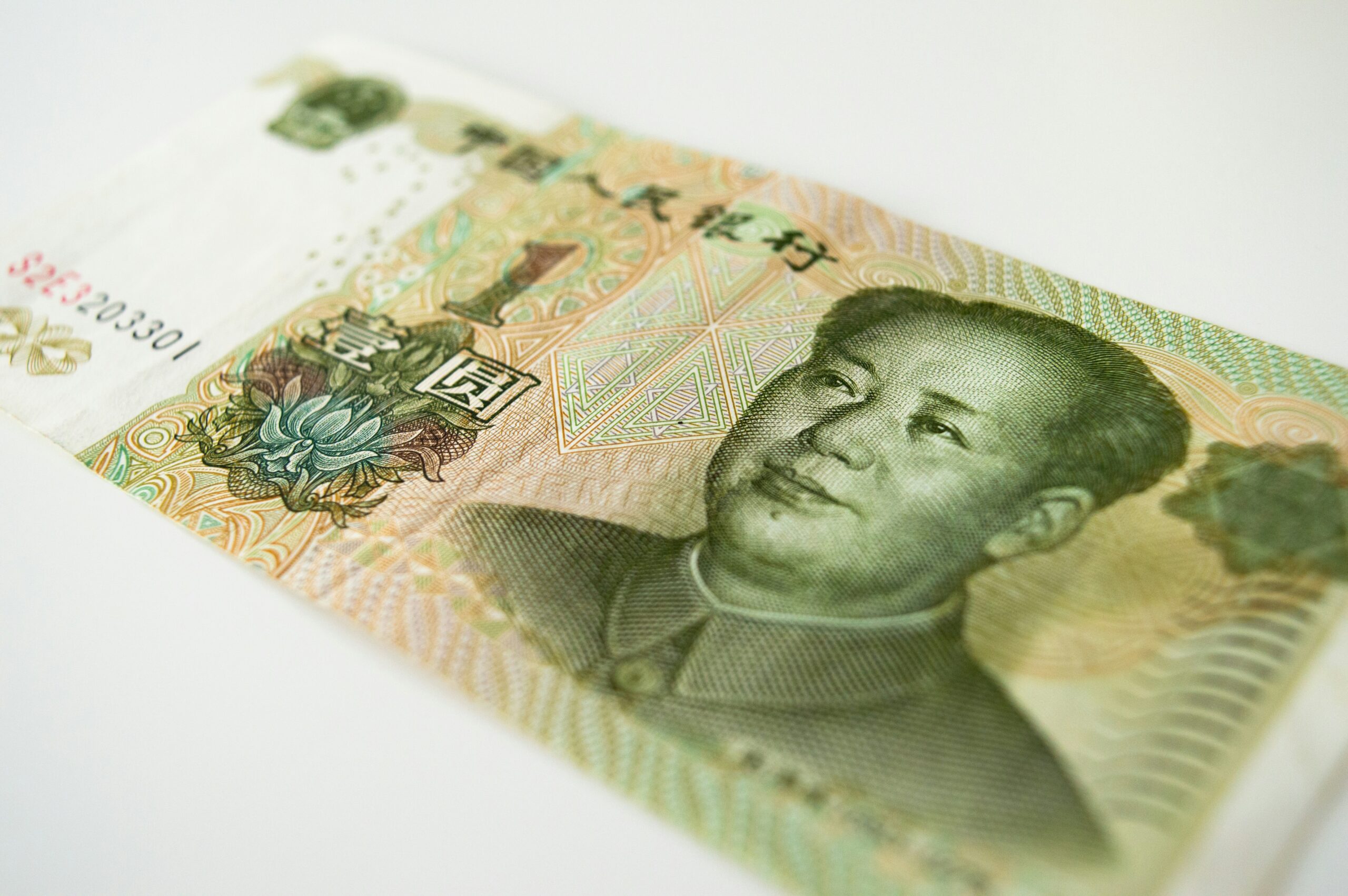
A senior Iranian official has told CNN that Tehran is considering allowing a limited number of oil tankers through the Strait of Hormuz — but only if cargo is traded in Chinese yuan, not US dollars. The condition, if formalised, would represent the most significant challenge to the petrodollar system in its fifty-two-year history, striking at the financial architecture that underpins American global power rather than at US military assets.
Fourteen days into the war that began with US and Israeli strikes on Iran on 28 February, the strategic picture has shifted in ways that no oil price chart yet reflects. While markets have focused on Brent crude’s surge above $100 a barrel and the humanitarian catastrophe unfolding across the Persian Gulf region, a single sentence attributed to a senior Iranian official on Friday may prove more consequential than any of the preceding military exchanges.
Iran is considering allowing a limited number of oil tankers to pass through the Strait of Hormuz on the condition that the cargo is traded in Chinese yuan. The official described the potential move as part of Tehran’s plan to manage the controlled reopening of the strategic waterway, which has been effectively closed since March 1 following US-Israeli attacks on Iran. The financial implications deserve more attention than they have so far received.
Join The European Business Briefing
New subscribers this quarter are entered into a draw to win a Rolex Submariner. Join 40,000+ founders, investors and executives who read EBM every day.
SubscribeThe Architecture of American Financial Power
To understand why the yuan condition matters, it is necessary to understand what the petrodollar system actually is. Born from the Nixon shock of 1971 and formalised in 1974, the arrangement under which Saudi Arabia and the broader Gulf agreed to denominate all oil sales in US dollars created a self-reinforcing loop that has governed global finance ever since. Because oil — the world’s most traded commodity — must be purchased in dollars, every nation that imports energy must first acquire dollars. Every central bank holds dollar reserves for precisely this reason. The dollar’s status as the world’s primary reserve currency is not an abstract achievement; it flows directly and mechanically from oil.
Iran’s proposal would extend the yuan exception to the world’s single most critical maritime chokepoint.
The Strait as a Financial Weapon
The Strait of Hormuz has been effectively closed since March 1, following joint US-Israeli strikes on Iran that included the killing of Supreme Leader Ali Khamenei. Iranian forces declared the Strait closed on March 4, threatening and carrying out attacks on ships attempting to transit. The disruption is not marginal — approximately 20% of global oil supplies normally transit the waterway, and Brent crude has surged from around $70 to over $110 per barrel since the conflict began.
At least 16 oil tankers, cargo ships and other vessels have been attacked in and around the Strait, the Arabian Gulf and the Gulf of Oman in the two weeks since the war began. War-risk insurance through the strait has become effectively prohibitive for most commercial operators.
Trump threatened to attack Iran’s Kharg Island oil infrastructure if Iran continues to block shipping. Iran’s response was not another missile strike. It was the yuan condition.
A Bifurcated Oil Market Takes Shape
What makes the Iranian proposal structurally significant is not simply that it challenges the dollar — de-dollarisation rhetoric has circulated for years without materialising into meaningful change. What is different here is the mechanism. Tehran is not merely proposing that some bilateral trade occur in yuan. It is proposing that access to the world’s most critical energy chokepoint be conditional on currency denomination.
The practical consequence, if even partially adopted, would be a bifurcated global oil market: yuan-denominated barrels flowing through Hormuz for those willing to pay in China’s currency, dollar-denominated barrels rerouted at significant additional cost and time for those who are not. The war premium that Western energy importers are already absorbing would become structural rather than temporary.
This is not hypothetical infrastructure. Since 28 February, between 11.7 and 16.5 million barrels of Iranian crude have transited the Strait to China via shadow fleet under IRGC protection while every other nation’s shipping is locked out. China pays in yuan. China’s tankers move freely. The architecture for a parallel yuan-denominated energy corridor already exists and is already operating.
Selective passage is already the reality. The yuan condition would formalise the criteria.
Washington’s Dilemma
The United States faces a set of choices, none of them comfortable. Forcing the Strait open militarily would require sustained naval operations against an adversary with mines, shore-based missiles, submarines and drone swarms in confined waters. The Congressional Research Service noted that while the US military has the capacity to counter Iran’s forces and restore shipping flows, such an effort would likely take days, weeks, or perhaps months depending on the form Iran’s resistance takes.
Every week of delay is a week in which energy-importing nations confront the practical reality of the yuan alternative. India, which received Iranian assurances of safe passage directly from Tehran’s ambassador, is already navigating that calculus. So are Turkey and the Gulf states now diverting oil through the East-West pipelines to Yanbu and Fujairah — pipelines that cannot absorb anything close to the full volume that previously transited Hormuz, leaving a deficit of approximately 12 million barrels per day.
The arithmetic of energy desperation is working in Iran’s favour.
The Longer Game
It would be analytically premature to conclude that the petrodollar system is imminently at risk of collapse. The dollar remains the world’s primary reserve currency, underpinned by the depth and liquidity of US capital markets, decades of institutional trust, and the absence of any credible single alternative. China’s railway corridor bypassing Western-controlled shipping lanes adds a further dimension to the emerging parallel financial and trade architecture — one that was years in the making and is now operational precisely when it is most needed.
What the Hormuz crisis does represent, however, is the most operationally specific challenge to dollar energy dominance since the system was established. Previous de-dollarisation discussions were theoretical. This one comes with a chokepoint, a shadow fleet, an operational payment system in yuan, and a geopolitical crisis with no clear resolution in sight. The diplomatic framework that could end the conflict — ceasefire terms, verified nuclear rollback, security guarantees for Gulf states — does not yet exist in any meaningful form.
The bombs are visible. The financial architecture being renegotiated behind them is not.
Update: June 2026 — Where the Crisis Stands Now
The situation has shifted materially since this article was first published — and in several respects, the strategic picture has grown more complex rather than less.
On the diplomatic front, a 60-day memorandum of understanding between the United States and Iran was agreed in late May, extending the ceasefire and keeping negotiations alive. President Trump moved to temper optimism immediately, stating he was “in no hurry” to finalise a deal and warning that military action remains on the table if discussions fail to deliver guarantees on Iran’s nuclear programme. The fundamental disagreements — over Iran’s nuclear infrastructure, the release of frozen assets and the status of the Strait of Hormuz — remain unresolved. The MOU buys time. It does not resolve anything.
Oil markets have absorbed the disruption at levels that have surprised analysts. WTI is trading at approximately $90.7 and Brent at $93.5 — below $100 despite the loss of one-fifth of global supply for over three months. The primary reason is structural rather than diplomatic: as we reported in our analysis of how China’s oil demand collapse is the only thing preventing a full global energy crisis, Beijing has cut crude imports by 3.6 million barrels per day — roughly Japan’s entire daily consumption — cushioning the market in a way that no strategic reserve release or OPEC+ adjustment could have achieved. The Strait of Hormuz remains closed to most commercial shipping. The cushion is real but it is not permanent.
The escalation risk has not diminished. Iran renewed threats last week to reactivate the Bab el Mandeb Strait front — a move that would extend disruption to a second critical shipping chokepoint and add a further layer of pressure to already strained global supply chains. Israel’s continued military operations in Lebanon are complicating the diplomatic environment further, raising the possibility that any Iran truce, even if reached, could be destabilised by a parallel front before it takes hold. The market is currently pricing optimism. The geopolitical configuration does not fully justify it.
Related Analysis
China’s Oil Retreat Is the Only Thing Standing Between the World and an Energy Crisis — How Beijing’s structural demand reduction is cushioning oil markets against the largest supply disruption in history — and why that cushion has limits.
Oil Prices 2026: Why $100 Crude Is the Base Case — The structural supply conditions driving the geopolitical premium in crude — and why the conditions for a sustained move above $100 remain firmly in place.
European Equities Fall as Inflation Surprise Raises Prospect of ECB Rate Rise — The direct transmission mechanism between Middle East oil disruption, European energy prices and the inflation data now shaping ECB policy expectations.