































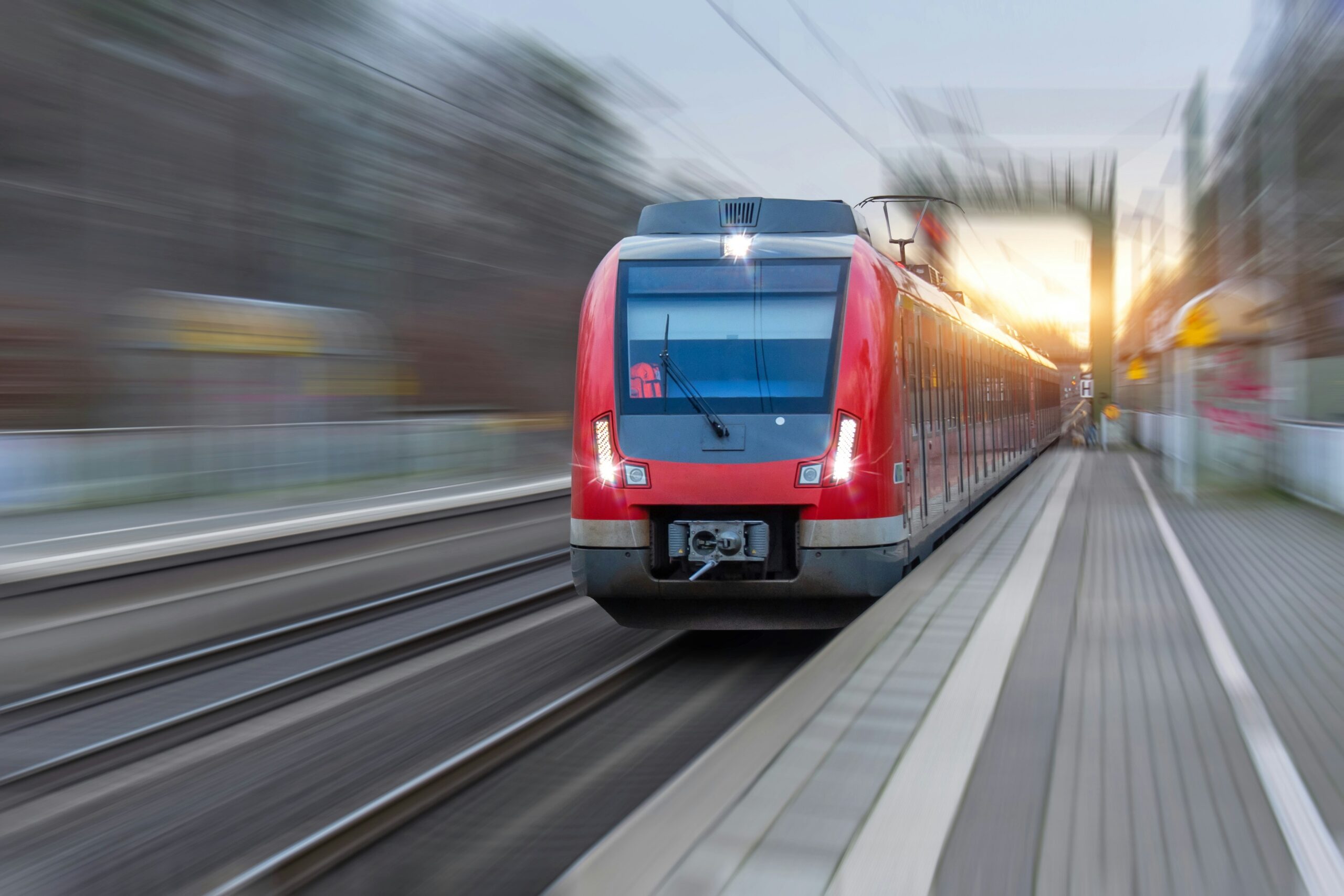
Quick Answer: The China-Europe Railway Express now connects 128 cities across 25 countries in a land corridor running directly from Chinese factory floors to European distribution hubs. It is 65% faster than ocean shipping, significantly cheaper than air freight, and bypasses the Suez Canal, the Strait of Hormuz and every major naval choke point the West has spent decades positioning itself to control.
The trade war debate has been focused on the wrong battlefield entirely.
While Washington and Brussels have spent the past decade arguing about tariffs, container costs and who controls the shipping lanes, China has been doing something more consequential and considerably quieter — building a railway across an entire continent that makes those arguments largely irrelevant.
Join The European Business Briefing
New subscribers this quarter are entered into a draw to win a Rolex Submariner. Join 40,000+ founders, investors and executives who read EBM every day.
SubscribeThe China-Europe Railway Express is not a future project. It is not a Belt and Road proposal sitting in a planning document. It is operational, it connects 128 cities across 25 countries, and it runs from Chinese manufacturing centres directly to European warehouses without touching a single ocean, canal or port that Western naval strategy has spent trillions of dollars positioning itself to dominate.
What the Railway Actually Does
The numbers are straightforward. Ocean shipping from China to Europe takes approximately 30-40 days. The China-Europe Railway Express does it in roughly 12-15 days — around 65% faster. Air freight is faster still but at a cost that makes it viable only for high-value, low-weight cargo. The railway sits in the middle: fast enough to compete with shipping on time-sensitive goods, cheap enough to compete with air freight on cost-sensitive cargo.
For manufacturers moving electronics, automotive components, pharmaceuticals, textiles and consumer goods between China and Europe, this is not a marginal improvement. It is a genuinely different supply chain option that did not exist at scale a decade ago.
The route bypasses the Suez Canal — currently operating under persistent threat from Houthi strikes that have already forced significant rerouting of container traffic. It bypasses the Strait of Hormuz — now operating at severely reduced capacity as the Iran conflict disrupts Gulf shipping. It bypasses every naval chokepoint that underpins Western maritime strategic doctrine. The goods travel by land. Land does not have chokepoints in the same way oceans do.
The Strategic Calculation
The timing of this infrastructure becoming fully operational is not accidental. China has been building the Belt and Road Initiative’s land corridor components since 2013. The railway express services have been scaling steadily. By the time the current convergence of crises — US-Iran war, Hormuz closure, Suez disruption, Trump tariffs — arrived simultaneously in 2026, the alternative infrastructure was already in place and running.
This reflects a strategic planning horizon that Western governments have consistently underestimated. The US spent the post-Cold War decades building and maintaining naval supremacy on the assumption that controlling sea lanes meant controlling global trade. That assumption held as long as sea lanes were the only viable option for intercontinental cargo movement at scale. The railway changes that assumption in the Europe-Asia corridor specifically.
Sanctions depend on being able to intercept or block the flow of goods and money. Naval blockades depend on goods needing to travel by sea. Neither instrument works with the same effectiveness against a land-based trade corridor running through countries that have not signed up to Western sanctions regimes. The geopolitical leverage that comes from controlling the Suez Canal or the Strait of Hormuz is real — but it is leverage over ocean traffic. A railway from Shenzhen to Berlin does not pass through either.
What This Means for European Business
For European importers and exporters, the railway represents a genuine operational diversification option at precisely the moment when ocean shipping reliability is under its most severe stress since the pandemic. Supply chain disruption from the Iran conflict is already forcing businesses to rethink routing assumptions that have held for decades.
The EU’s own trade strategy has been focused on the transatlantic relationship and tariff negotiations with Washington. The China-Europe railway corridor complicates that picture significantly — European businesses facing supply chain pressure have a Chinese-built alternative that doesn’t require resolving any of the current Western geopolitical disputes.
China does not react to crises. It builds infrastructure during the years before crises arrive, so that when they do, the infrastructure is already there. The railway is the most visible example of that doctrine in action. By the time the world noticed it was opening, it was already moving cargo.
The shipping lanes the West controls still matter. They just matter slightly less than they did last year. And next year they will matter slightly less again.






