





























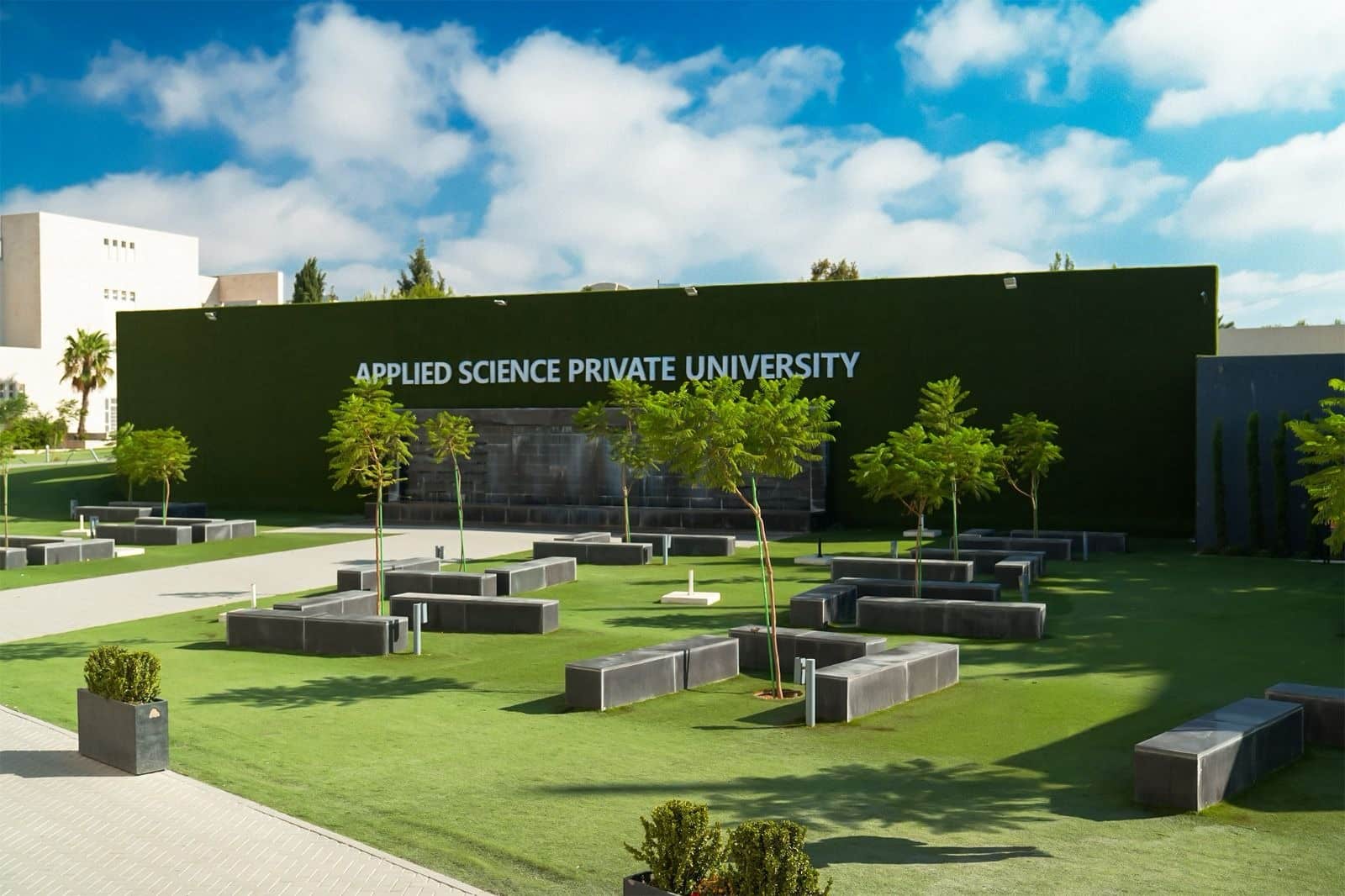
Applied Science Private University (ASU) in Jordan has become a key partner in one of the Middle East’s most ambitious international sustainability initiatives, a victory that further cements the university’s position as a regional leader in energy research and innovation.
The project, Energy Futures on Campus in the Middle East, is funded by the German Federal Ministry for Economic Cooperation and Development (BMZ) through the develoPPP programme. It is a collaboration between ASU, Baghdad’s Imam Ja’afar Al-Sadiq University (IJSU), Karlsruhe Institute of Technology (KIT), and the University of Münster. The decision to partner with ASU reflects the confidence of leading German academic institutions in the research capabilities and experience of the university in delivering projects of regional and international significance.
International Recognition for ASU’s Research Capabilities
Join The European Business Briefing
New subscribers this quarter are entered into a draw to win a Rolex Submariner. Join 40,000+ founders, investors and executives who read EBM every day.
SubscribeASU’s strategic role as a regional partner in this project is directly influenced by its position in the Arab world. For German universities like KIT and the University of Münster to choose ASU as a regional partner speaks volumes about the university’s engineering faculty, research facilities, and track record in scientific collaboration.
The programme combines German expertise in modelling future energy systems to 2050 with a more local approach focused on Jordan and Iraq, i.e., adapting the energy transition model to local infrastructure conditions instead of borrowing generic sustainability models from abroad.
ASU’s participation in this project is the result of specialised academic efforts led by Dr. Mohammad Hamdan from the Faculty of Engineering and Technology, reflecting the university’s commitment to supporting international research initiatives that contribute to sustainable development and innovation.
ASU’s Energy Lab: A First for the Region
ASU’s major contribution is the creation of an Energy Lab that will provide the university with the ability to run sophisticated energy modelling. The Energy Lab will have high-end software and hardware that will allow the university to model various future scenarios for the energy system up through 2050 for applications and training.
The concept of the campus as a living laboratory is particularly relevant for emerging economies in that it gives students, researchers, and policy-makers the opportunity to test sustainable technologies as they exist in real life rather than in textbooks. In Jordan and Iraq, where energy demand and infrastructure construction are top concerns, the Energy Lab at ASU can influence sustainability planning beyond the boundaries of ASU.
Launching the Arab World’s Next Generation of Energy Leaders
The most noteworthy achievement in ASU’s engagement is the introduction of its Master’s and Diploma programmes in Engineering of Systematic Sustainable Energy Futures (ESSEF) as one of the first universities in the Arab world to offer postgraduate degrees in this new area.
ASU is not only a research institute, but it will also serve as an important platform for training the region’s future engineers and technologists in sustainable energy. A parallel ESSEF Certificate Programme is now running at Imam Ja’afar Al-Sadiq University in Baghdad.
Long-term success in the transition to cleaner energy may not depend only on infrastructure, but also on highly skilled engineers. ASU is meeting this need, as governments across the Middle East ramp up renewable energy projects. This means that graduates from ASU will be technically trained, internationally minded, and well-equipped to understand, but also lead, the energy transition.
A University Defining Its Place on the World Stage
What this initiative shows is that ASU is becoming a regional force in sustainable energy education, research, and applied innovation, trusted by German institutions, connected to global networks of academics, and committed to addressing the development needs of Jordan and the Arab world.
The “Energy Futures on Campus in the Middle East” project is not just a collaboration. It’s a statement of ambition for ASU, and a foundation for decades of cooperation to come.