





























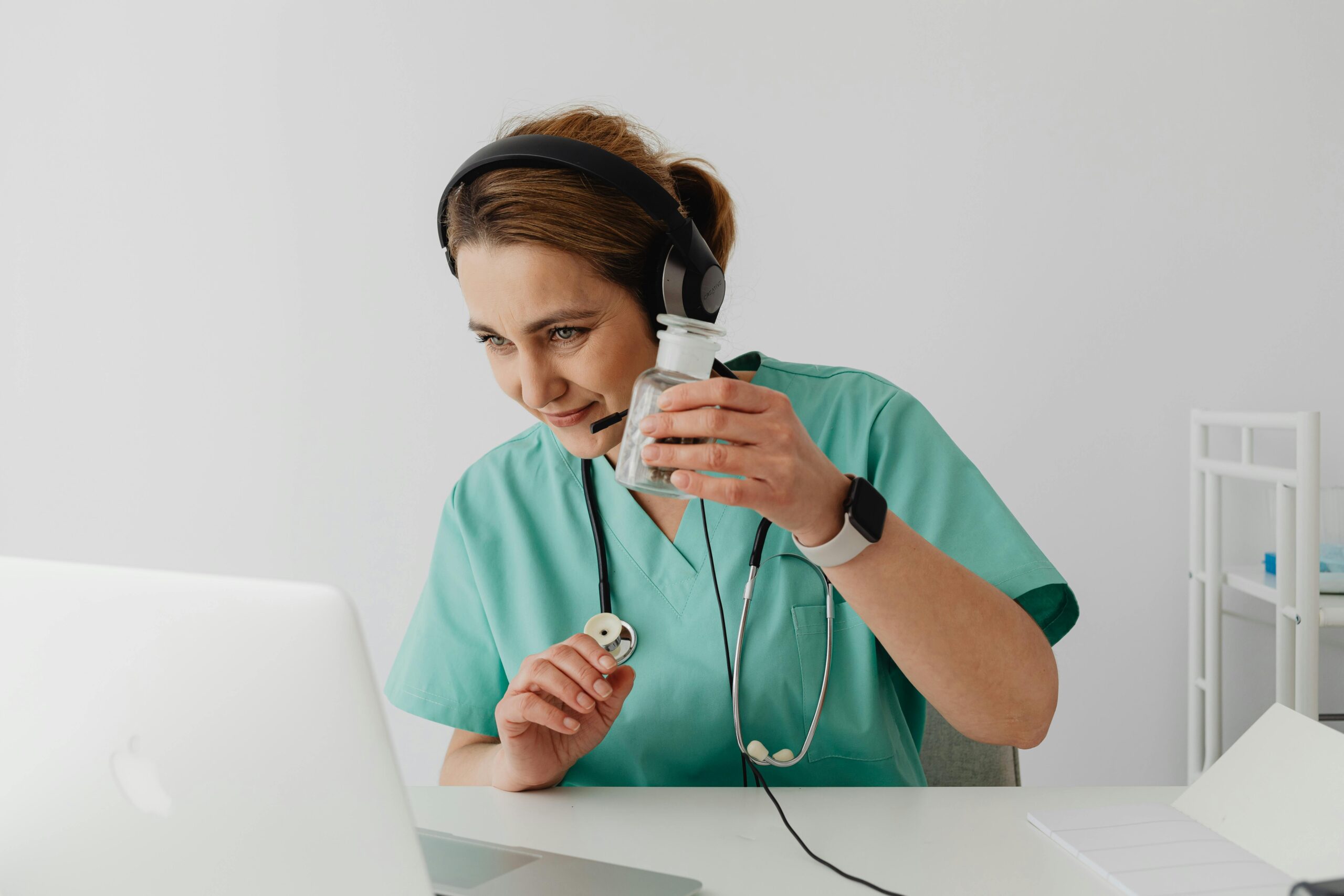
Telehealth has restructured how a significant portion of Americans access medical care, and medical cannabis certification has been one of the areas most visibly changed by that shift. What once required locating a cannabis-friendly physician, traveling to a clinic, and navigating an in-person appointment that many patients found stigmatizing has, in most states with active medical programs, become something a patient can complete from home over video.
The online medical marijuana doctor now sits at the intersection of two healthcare trends that have both accelerated sharply in recent years: the mainstreaming of cannabis as a regulated medical option and the structural expansion of digital health delivery.
Understanding what that role involves, who it serves most meaningfully, and what distinguishes genuinely rigorous online cannabis care from its lower-quality counterparts is increasingly relevant for patients, policymakers, and the broader digital health ecosystem.
Join The European Business Briefing
New subscribers this quarter are entered into a draw to win a Rolex Submariner. Join 40,000+ founders, investors and executives who read EBM every day.
SubscribeKey Takeaways
- Telemedicine has made medical cannabis certification accessible from home in most states, removing geographic and logistical barriers for qualifying patients.
- A legitimate online medical marijuana doctor must hold an active state medical license and be registered with the state’s cannabis program.
- Rural patients, those with mobility-limiting conditions, and patients deterred by stigma are the groups most meaningfully affected by telemedicine access.
- Quality varies significantly across online platforms; a rigorous evaluation involves real documentation review, adequate appointment time, and genuine clinical judgment.
- Online cannabis consultations can integrate with a patient’s broader healthcare by producing documentation that informs primary care conversations and ongoing treatment planning.
Telehealth’s Expansion and Where Cannabis Fits
The growth of telehealth over the past decade has been substantial, and the years following 2020 marked a particularly significant acceleration. Regulatory waivers expanded the conditions under which telemedicine could be used, patient adoption increased across demographic groups, and the evidence base for telehealth’s clinical equivalence to in-person care for a wide range of evaluative appointments continued to build. The Health Resources and Services Administration (HRSA) has documented telehealth’s role in expanding healthcare access to rural and underserved populations as among its most significant structural contributions.
Cannabis certification entered this landscape as a natural fit for telehealth delivery. The core of the certification process does not inherently require physical proximity. It requires a thorough medical evaluation, which a licensed physician can conduct competently over video in most cases. Research has found that patient satisfaction and clinical outcomes in telehealth consultations are comparable to in-person visits across a broad range of appointment types, and cannabis evaluations are consistent with that pattern.
The result is that in states where telemedicine is permitted for cannabis certification, patients have access to a physician-supervised pathway that does not require them to be physically proximate to a participating doctor.
What Online Medical Marijuana Doctors Actually Do
The title is straightforward, but the role is worth being precise about, because the quality gap between what an online cannabis certification should involve and what some platforms actually deliver is meaningful.
A licensed online medical marijuana doctor is a physician that holds an active state medical license in the jurisdiction where the patient resides. They evaluate whether a patient has a documented qualifying condition under that state’s medical cannabis program and whether cannabis is a clinically appropriate option for that patient’s care.
That evaluation involves reviewing medical history, asking about symptoms and their functional impact, assessing concurrent medications for potential interactions, and making a professional recommendation. Where certification is appropriate, the physician issues a written document that the patient uses to register with the state and receive a patient identification card.
Platforms that advertise guaranteed approval or that do not require any supporting medical documentation before issuing certifications are not operating as legitimate medical providers. The physician’s obligation is to the patient’s clinical welfare, which includes declining to certify when the clinical picture does not support it.
Patients selecting an online platform should verify that the certifying physicians are licensed in their state and registered with that state’s medical cannabis program, both of which can be confirmed through the relevant state medical board.
Who Benefits Most From Digital Cannabis Care
Telemedicine’s access benefits are not evenly distributed across patient populations. For some patients, the ability to complete a cannabis certification online represents the difference between accessing the program and not accessing it at all.
Patients in Rural and Underserved Communities
Geographic distribution of cannabis-certified physicians has followed the same patterns as specialist medical care more broadly: concentrated in urban centers, sparse in rural areas. For patients in counties without a nearby participating physician, requiring an in-person certification can effectively block access for those without reliable transport, flexible schedules, or the means to travel long distances. Telemedicine removes that barrier.
The Federal Office of Rural Health Policy has consistently identified telehealth as among the most effective mechanisms for reducing rural healthcare disparities, and cannabis certification is one concrete application of that principle.
Patients With Mobility or Disability-Related Barriers
A meaningful proportion of medical cannabis patients are seeking certification precisely because they have conditions that limit their physical functioning; chronic pain, spinal cord injury, Multiple Sclerosis (MS), Amyotrophic Lateral Sclerosis (ALS), Parkinson’s Disease, and similar diagnoses that appear on qualifying condition lists across most state programs.
For these patients, the requirement to travel to a clinic for the certification appointment creates a barrier that the qualifying condition itself may make impossible to clear. Research has found that telehealth substantially improves healthcare access and engagement for patients with physical disabilities, a finding that applies directly to a significant segment of the medical cannabis patient population.
Patients Who Have Delayed Care Due to Stigma
Cannabis stigma has not disappeared with legalization, and for patients in communities where cannabis use remains socially fraught, the prospect of walking into a cannabis-specific clinic is a deterrent that some patients do not clear. The relative privacy of a telemedicine appointment, conducted at home without the social exposure of a waiting room, removes that deterrent for patients who would otherwise delay or forgo care.
Breaking down stigma-driven access barriers is consistent with the broader public health rationale for medical cannabis programs, and digital delivery is one of the more effective structural mechanisms for doing it.
What Separates a Rigorous Online Evaluation From a Cursory One
The democratization of access that telemedicine enables comes with a quality distribution problem. Not every online cannabis certification platform operates to the same clinical standard, and patients who do not know what a rigorous evaluation looks like may not recognize when they are receiving a substandard one.
A rigorous online cannabis evaluation involves a physician who reviews the patient’s actual medical documentation before or during the consultation. The appointment includes a detailed discussion of the following:
- The patient’s health history, current medications, and lifestyle factors.
- The patient’s goals and symptoms.
- Potential delivery methods and appropriate starting approaches.
- Follow-up plans, if the initial approach is not effective.
This involves a genuine clinical determination, which means there is a real possibility the physician may determine that certification is not appropriate for a particular patient at a particular time. Platforms that offer five-minute appointments with no documentation review, that guarantee approval before seeing any patient information, or that cannot confirm the licensure status of their certifying physicians are not meeting that standard.
How Digital Cannabis Care Integrates With Broader Health Management
One of the underappreciated dimensions of online cannabis medicine is its potential to function as a point of integration with a patient’s broader care rather than as a siloed certification service. A physician who conducts a thorough cannabis evaluation has, in the course of that appointment, reviewed the patient’s health history, medications, and symptom profile in ways that are directly relevant to their overall care.
That information has value beyond the certification itself. Patients who share their cannabis certification and physician notes with their primary care provider give that provider a more complete picture of their treatment approach. This is important for medication interaction monitoring, care planning, and the kind of longitudinal health management that produces better outcomes over time.
The American Academy of Family Physicians has acknowledged the importance of cannabis being discussed openly within the patient-physician relationship, and the documentation that a rigorous online consultation produces supports that transparency.
Conversely, patients who obtain certifications through platforms that conduct superficial evaluations end up with a card but without the clinical context that makes cannabis use genuinely useful within a broader health framework. The quality of the consultation shapes the quality of the care, not just the legal status of the purchase.
The Road Ahead for Online Cannabis Medicine
The regulatory environment for telehealth and cannabis continues to evolve. Rescheduling discussions at the federal level, if they result in a change to cannabis’s controlled substance classification, would have downstream effects on how online cannabis physicians operate, what insurance reimbursement pathways might eventually emerge, and how the clinical evidence base is allowed to develop.
The direction of travel has shifted in ways that were not visible five years ago, even if the pace and endpoint remain uncertain.
What is already clear is that the online medical marijuana doctor has become a structurally significant part of how patients access regulated cannabis care in the United States. The quality of that access depends on the standards that platforms, physicians, and patients collectively hold the process to.
For a patient population that includes some of the most medically complex and access-constrained individuals in the healthcare system, that quality distinction is not incidental. It is the difference between a program that serves its stated purpose and one that provides legal cover without clinical value.
FAQs
What Does an Online Medical Marijuana Doctor Actually Do?
A licensed online medical marijuana doctor evaluates whether a patient has a qualifying condition under their state’s medical cannabis program and whether cannabis is clinically appropriate for their care. The evaluation involves reviewing medical history, discussing symptoms and functional impact, checking for medication interactions, and making a professional recommendation. Where certification is appropriate, the physician issues a written document the patient uses to register with the state.
How Do I Know if an Online Cannabis Platform Is Legitimate?
Verify that the certifying physician holds an active medical license in your state and is registered with your state’s cannabis program, both can be confirmed through the relevant state medical board. Legitimate platforms are transparent about fees, documentation requirements, and what happens if the physician determines you do not qualify. Platforms that advertise guaranteed approval before reviewing any patient information are not operating as genuine medical providers.
Who Benefits Most From Online Medical Marijuana Doctor Access?
Rural patients without a nearby participating physician, patients whose qualifying conditions limit their ability to travel, and patients who have avoided in-person cannabis clinics due to stigma benefit most directly from telemedicine access. For patients managing conditions like chronic pain, MS, or spinal cord damage, the ability to complete the evaluation from home may be the factor that makes the program practically accessible at all. Research has found that telehealth substantially improves healthcare engagement among patients with physical disabilities.
How Is an Online Cannabis Evaluation Different From an In-Person One?
The core of the evaluation is the same whether conducted over video or in person. Research has found that patient satisfaction and clinical outcomes in telehealth consultations are broadly comparable to in-person visits for evaluative appointments. The practical differences are logistical: no travel, no waiting room, and in most cases same-day or next-day availability.
Can My Online Cannabis Certification Be Shared With My Primary Care Doctor?
Yes, and doing so is advisable. The documentation produced by a thorough online cannabis consultation gives your primary care provider a more complete picture of your treatment approach. This matters for medication interaction monitoring, care planning, and the longitudinal health management that produces better outcomes over time. The American Academy of Family Physicians has acknowledged the importance of cannabis being discussed openly within the patient-physician relationship.