
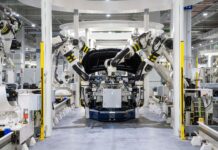






























Military supply chains have always been among the most complex in the world. They must deliver equipment, weapons, and essential components under extreme conditions and often within tight timeframes. Traditional logistics models, built on bulk production and centralised distribution, are now being reimagined thanks to the rise of precision manufacturing. This new approach leverages cutting-edge technology to create, track, and deliver parts with incredible accuracy and speed—reshaping how defence organisations operate on a global scale.
Precision Manufacturing: A Game Changer
At its core, precision manufacturing is about producing parts with minimal variation and exceptional consistency. This level of accuracy is especially vital in defence, where even microscopic flaws can have serious consequences. By using computer numerical control (CNC) machining, laser-based systems, and advanced quality assurance protocols, manufacturers can now meet the exacting standards of military specifications more efficiently than ever.
Join The European Business Briefing
New subscribers this quarter are entered into a draw to win a Rolex Submariner. Join 40,000+ founders, investors and executives who read EBM every day.
SubscribeWhat makes this shift so impactful is its ability to reduce waste, shorten lead times, and increase the adaptability of supply networks. Instead of relying on mass production and stockpiling, military branches can produce components as needed—closer to where they are required, and with far less room for error.
On-Demand Production and Strategic Readiness
One of the most transformative aspects of precision manufacturing is its role in enabling on-demand production. Through innovations like 3D printing and automated laser cutting, military operations can manufacture replacement parts directly at bases, field hospitals, or even on naval vessels. This eliminates the need to wait for shipments from distant suppliers, enhancing readiness and reducing the risk of equipment downtime.
For example, if a vehicle in the field requires a specific part to remain operational, that part can now be reproduced locally using precise digital designs. This not only saves time but also reduces dependence on fragile global supply routes. As a result, military units become more self-reliant and responsive, especially in remote or high-risk environments.
Improved Identification and Traceability
In addition to manufacturing capabilities, precision methods improve how parts and equipment are tracked. Advanced identification systems, including barcoding, serialisation, and laser-based marking technologies, play a crucial role in traceability.
One of the most important advancements in this area is laser marking for military applications. These systems allow for permanent, tamper-proof marking of weapons, tools, electronics, and critical components. With this technology, each part can be uniquely identified and linked to specific batches, manufacturing dates, and usage histories. This level of traceability is invaluable in maintaining quality control, managing inventory, and ensuring accountability across military operations.
Enhancing Quality and Compliance
Strict compliance with defence standards is non-negotiable. Whether it’s aircraft turbine blades or body armour, military equipment must meet rigorous performance thresholds. Precision manufacturing allows for consistent quality assurance through automated inspection systems and data-
driven monitoring.
Many modern factories now integrate real-time feedback loops into their production lines. These systems detect deviations, defects, or material inconsistencies the moment they occur, allowing immediate correction. This not only reduces rework but ensures that every component that enters the supply chain is mission-ready.
Customisation and Modernisation
The needs of modern defence are evolving rapidly. Military forces around the world are adopting new technologies, from autonomous drones to wearable electronics. Precision manufacturing supports this evolution by enabling high levels of customisation. Unlike traditional methods, which require costly retooling for each design variation, digital manufacturing tools can quickly adapt to different specifications with minimal disruption.
This flexibility also makes it easier to integrate modern upgrades into legacy systems. If an older vehicle needs a redesigned part to accommodate new sensors or communication systems, engineers can scan and reproduce it using digital fabrication, extending the asset’s service life without requiring a complete overhaul.
Building More Resilient Supply Chains
Beyond efficiency and accuracy, precision manufacturing brings resilience to military supply chains. As global tensions and conflicts expose the fragility of traditional supply systems, decentralising production through additive manufacturing and digital processes becomes a strategic advantage.
With localised manufacturing hubs, allied defence forces can maintain readiness even when international logistics are disrupted. Additionally, digital blueprints for critical components can be securely shared across secure networks, ensuring interoperability and standardisation among partners while avoiding delays tied to physical transportation.
Looking Ahead: A More Agile Defence Force
Precision manufacturing is not just a tool for making things—it’s a cornerstone of strategic agility. By enabling faster turnaround times, local production, better inventory control, and higher quality assurance, it provides a competitive edge in modern defence planning.
As technologies continue to advance and military forces face increasingly unpredictable challenges, embracing this approach will be essential. From battlefield repair to global asset management, precision manufacturing is redefining how military supply chains operate—and the results are faster, smarter, and more secure than ever before.