





























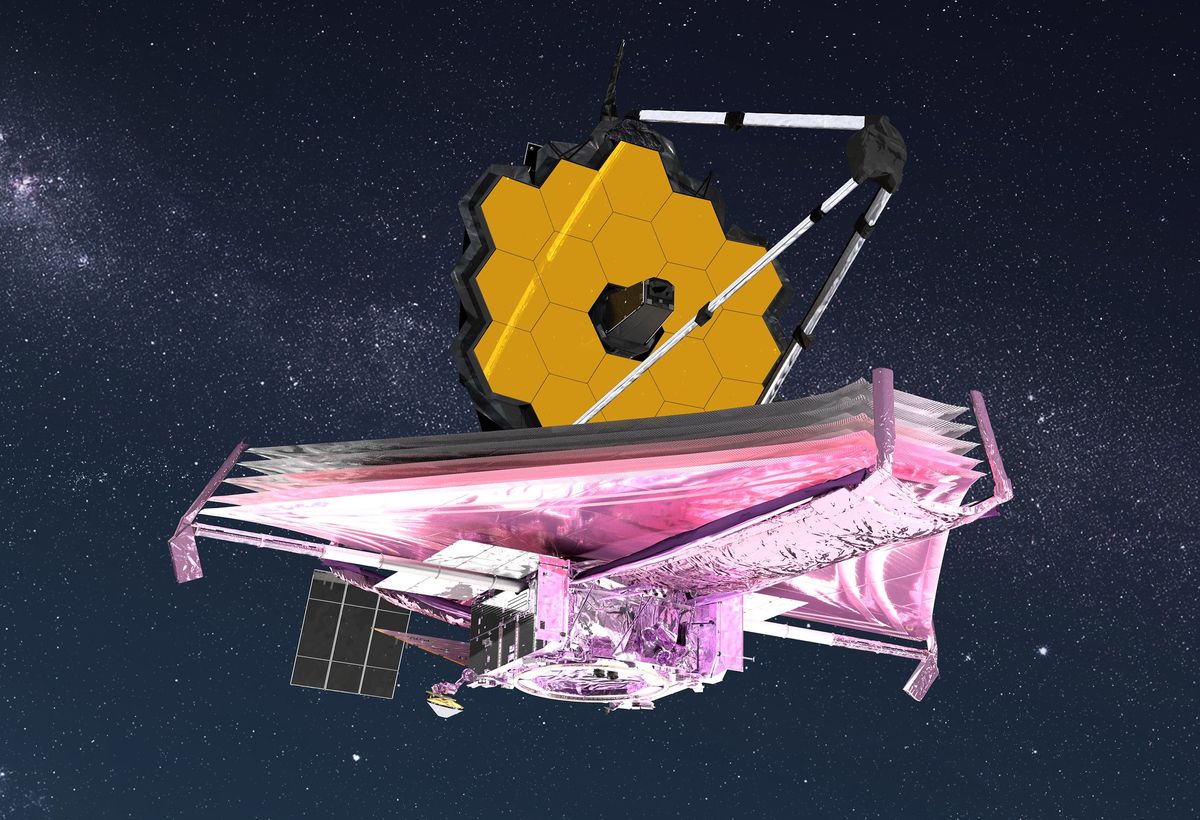
The James Webb Space Telescope (JWST) is more than just a successor to Hubble—it’s a technological leap that’s reshaping how we understand the birth of planets and the dynamics of distant solar systems. Launched with the promise of peering deeper into space than ever before, JWST has already begun delivering on that promise, offering high-resolution images and data that penetrate the dusty cocoons where new planets are born.
As it focuses its golden mirrors on stellar nurseries and protoplanetary disks, scientists are beginning to rewrite the story of planet formation with new detail, clarity, and insight. The data JWST collects is not only transforming astrophysics but also sparking broader public interest in scientific discovery. This same surge in curiosity and exploration is echoed in other industries—from digital learning platforms to unexpected areas like gaming, where interactive experiences such as free online scratch cards win real money no deposit reflect a growing appetite for accessible, low-barrier participation in complex systems.
In both space science and digital entertainment, the core idea is similar: combining advanced technology with a sense of wonder and discovery. JWST continues to open new windows into the cosmos, revealing how stars and planets emerge, evolve, and interact in ways we never previously imagined.
Join The European Business Briefing
New subscribers this quarter are entered into a draw to win a Rolex Submariner. Join 40,000+ founders, investors and executives who read EBM every day.
SubscribePeering Through Dust: Seeing the Invisible Stages of Birth
One of the most crucial ways the James Webb Telescope is revolutionizing our understanding of planet formation is by making the invisible visible. Before JWST, telescopes like Hubble struggled to see into the thick, dusty clouds that surround young stars—exactly where planets are forming. These dense regions, called protoplanetary disks, are filled with gas, dust, and potential. But without infrared capabilities strong enough to cut through that veil, our understanding remained limited.
JWST’s infrared instruments, however, are uniquely suited for this task. Its ability to capture mid-infrared light lets it look straight into these dusty disks and see their structure in ways that were impossible before. What once appeared as murky shadows now come into view as detailed, layered spirals—evidence of planets carving out paths as they coalesce. These observations help scientists pinpoint exactly where and how matter clumps together, offering real-time snapshots of planets forming in action.
More than that, JWST is uncovering previously hidden disks around stars once thought to be too faint or too evolved. This is helping to expand our knowledge of the environments where planet formation can happen, showing that it may be more diverse and widespread than we previously believed.
Chemical Clues: Building Blocks of Planets and Life
Beyond images, JWST delivers another kind of data that’s just as critical—spectral fingerprints. By analyzing the light from protoplanetary disks, JWST can detect the presence of specific molecules. These chemical clues tell us not only what materials are present during the planet-forming process, but also how they’re distributed and evolving across space and time. This enables a more structured, comparative analysis of different systems under varying conditions.
Already, JWST has found signs of water vapor, carbon dioxide, methane, and other organic molecules in planet-forming zones around distant stars. These discoveries suggest that the ingredients for life as we know it might be common in the early stages of solar system development. Key implications of these findings include:
- Chemical diversity across systems – Observing a range of molecules in multiple disks allows scientists to compare environments, revealing how different conditions influence which compounds emerge and persist during planet formation. This informs models of solar system variability and complexity.
- Tracking molecular evolution – Spectroscopy enables researchers to monitor changes over time in the same system, illustrating how molecules evolve, migrate, or break down. These processes shape future planetary composition and potentially affect habitability outcomes.
- Foundations for habitable conditions – Detecting organics like methane and water in early-stage disks shows that the chemical basis for life can exist before planets fully form. This challenges assumptions about when and where life-friendly environments begin.
Because JWST can observe systems at different stages of evolution, it allows researchers to build a timeline of how these chemicals move, combine, and contribute to the eventual formation of planets and potentially habitable environments.
This is a game-changer for astrobiology. By showing how life-essential molecules form and persist in young solar systems, JWST is laying the groundwork for future research into where life could arise elsewhere in the universe—and what those beginnings might look like. Its ongoing mission continues to expand the scope of our scientific understanding.
Tracing Planet Growth: From Dust to Giant Worlds
While telescopes in the past hinted at planet formation through indirect means, JWST is providing direct evidence of how planets grow. It captures clear signs of gaps, rings, and spirals in the dusty disks that encircle young stars—features that suggest newly forming planets are pulling material into their orbits, shaping their surroundings in the process.
In some systems, scientists have observed warm clumps of material that are likely proto-planets in the act of forming. These findings help clarify the stages between dust grains sticking together and full-fledged planets with atmospheres and solid cores. This is especially important when studying the formation of gas giants, which grow rapidly and impact the architecture of entire solar systems.
JWST also helps answer questions about planetary migration—how newly formed planets might shift position within their systems. Observing distant systems at different stages gives scientists the data they need to model how planets settle into their final orbits and how their movement influences neighboring bodies. This could explain why some exoplanetary systems look drastically different from ours, with hot Jupiters orbiting close to their stars and rocky worlds scattered in unexpected ways.