































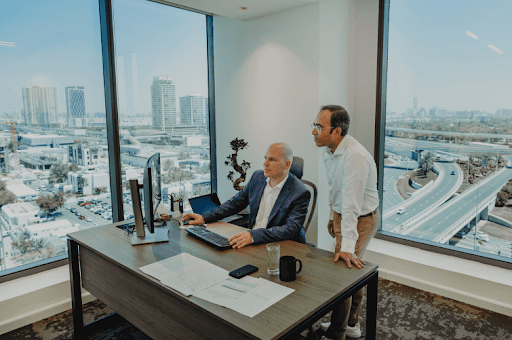
Have you considered how a corporate-grade visitor management system might transform your home office? As the boundaries between professional and personal spaces blur, innovative solutions emerge to address the unique challenges of remote work. The humble abode, once a sanctuary from work-related stress, now doubles as a hub of productivity.
This shift in perspective requires us to reconsider how we handle our time, space, and interactions within our homes.
Introducing the visitor management system (VMS)—a remarkable piece of technology found in vibrant corporate settings. How can this advanced tool be customized to suit the cozy atmosphere of a home office?
Join The European Business Briefing
New subscribers this quarter are entered into a draw to win a Rolex Submariner. Join 40,000+ founders, investors and executives who read EBM every day.
SubscribeThis exploration delves into the unexpected synergy between VMS and remote work, unveiling a potential revolution in home-based professional environments.
Decoding the Intricacies of a Visitor Management System (VMS)
What exactly constitutes a visitor management system? At its core, VMS encompasses a suite of advanced software solutions designed to monitor and regulate access to physical spaces. These systems incorporate features such as digital check-ins, badge generation, and real-time visitor tracking.
Moreover, according to Greetly, a VMS optimizes security protocols, expedites reception workflows, and establishes comprehensive visitor records. Through data aggregation from multiple platforms, a holistic visitor profile emerges. This consolidated dataset facilitates personalized interactions, ranging from targeted email campaigns to customized on-site experiences.
But how do these corporate-centric functionalities translate to a home office setting?
In the domestic sphere, VMS transforms into a multifaceted tool for enhancing productivity and maintaining work-life equilibrium. It can connect with smart home devices, allowing for features such as automatic do-not-disturb signals during video conferences or pre-set quiet hours. This enables a more subtle approach to regulating the delicate equilibrium between career commitments and familial duties.
This adaptation allows for a more nuanced approach to managing the delicate balance between professional obligations and familial responsibilities.
The burgeoning visitor management software market underscores the growing significance of these systems. It is projected to reach a staggering $2.7 billion by 2032 with an 18.4% CAGR according to Globe News Wire.
This trajectory reflects a fundamental shift in workplace management philosophies. Also, it focuses on setups beyond traditional office environments to encompass the expanding realm of remote work.
Advantages of VMS Integration in Home Offices
The implementation of VMS in domestic workspaces yields a plethora of unexpected advantages. Its main purpose is to effectively improve productivity and focus by reducing unexpected disruptions. The system’s capacity to indicate your accessibility to family members minimizes interruptions during critical work periods.
Moreover, VMS plays a pivotal role in establishing clear delineations between professional and personal time. This is a critical factor in maintaining a healthy work-life balance.
By implementing set “office hours” in the system, you establish a well-organized schedule that honors both your work responsibilities and personal duties.
The data-logging capabilities of VMS offer invaluable insights into your work patterns, facilitating the analysis and optimization of your schedule. By utilizing a data-driven approach, you can optimize the allocation of your time and resources.
One of the most notable benefits is that incorporating VMS enhances the level of professionalism in your home office when dealing with clients. Efficient and organized check-in procedures, even for virtual meetings, showcase your dedication to smooth operations.
It can elevate your home office experience to rival that of a traditional corporate setting in terms of overall impression and functionality.
The Evolution of VMS in Hybrid Work Environments
How does VMS adapt to the fluid nature of hybrid work models? As organizations oscillate between remote and in-office operations, the need for consistent management systems becomes paramount. It facilitates seamless transitions, ensuring continuity in professional interactions regardless of physical location.
Advanced VMS platforms now offer cloud-based visitor logs and remote check-in capabilities, fostering a cohesive experience across varied work settings. This evolution aligns with the growing importance of cybersecurity tools in the hybrid work era.
The increasing prevalence of hybrid work models has underscored the need for robust cybersecurity infrastructure. Companies specializing in network security solutions, such as Cisco and Fortinet, have witnessed heightened demand since the COVID-19 pandemic, as reported by Statista.
The transition to remote and hybrid work environments has introduced novel security vulnerabilities, necessitating the adoption of comprehensive security measures. Endpoint security software and VPNs remain critical components of this infrastructure. Visitor management systems (VMS) play a complementary role by safeguarding physical access to both corporate and home office environments.
The synchronization of VMS across various work locations involves sophisticated cloud integration and data synchronization protocols. This ensures real-time updates and maintains a singular, authoritative source for visitor management, addressing the unique challenges posed by hybrid work models.
Cultivating Work-Life Harmony through VMS in Hybrid Scenarios
Can VMS contribute to the elusive work-life balance? The application of VMS in hybrid work models is not limited to merely enhancing security. It plays a crucial role in fostering a healthier work-life equilibrium. This balance, increasingly recognized as a key factor in employee satisfaction and productivity, presents a unique challenge in the context of remote work.
According to Investopedia, European nations like Norway, Finland, and the Netherlands are known for consistently topping the charts when it comes to work-life balance. These countries place a strong emphasis on safety, healthcare, economic stability, and education, which all contribute to their exceptional quality of life.
Their approach is a shining example for organizations seeking to cultivate more harmonious work environments.
VMS provides a technological solution to this challenge by assisting in the separation of work hours and personal time. How does it accomplish this?
By cultivating an environment that values personal boundaries and encourages a more balanced approach to work and life. This approach is in line with internationally recognized best practices and addresses the increasing demand for balance in high-stress work environments.
Optimizing the use of VMS can bring structure to the workday. It can minimize unnecessary overtime and enhance the well-being of employees, regardless of where they work.
FAQs
Q: How does a VMS enhance productivity in a home office?
A VMS optimizes productivity by creating distinct boundaries between work and personal life. Features like automated do-not-disturb modes and scheduled office hours minimize interruptions, allowing for focused work sessions. Also, the system’s data-driven insights enable efficient time management, maximizing output and reducing stress.
Q: Can a VMS improve security in a home office?
While primarily designed for corporate environments, a VMS offers valuable security enhancements for home offices. By tracking visitor access and generating detailed logs, the system provides an added layer of security. Integration with smart home devices can further bolster security measures, creating a safer environment for both residents and visitors.
Q: How does VMS facilitate hybrid work models?
VMS platforms are increasingly equipped to support hybrid work arrangements. Cloud-based solutions enable seamless access to visitor data across different locations, maintaining consistency in visitor management processes. This unified approach ensures a smooth transition between remote and in-office work environments, optimizing efficiency and security.
The integration of visitor management systems into home offices represents a significant paradigm shift in how we approach remote work. By blurring the lines between professional and personal spaces, VMS empowers individuals to create efficient, secure, and productive homework environments.
As the future of work evolves, VMS will likely become an indispensable tool for balancing work-life harmony and optimizing operational efficiency.