































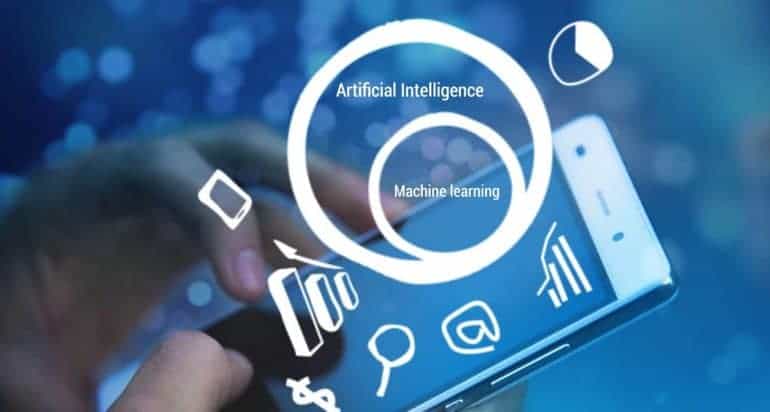
Machine learning has been the talk of the town for quite some time now. The new technology has revolutionized areas such as self-driving cars, smart home security, and even the healthcare industry. Thanks to its unique specs, machine learning operation technology can be applied in all aspects of the business — from customer service to business development. And recent research from Helomics predicts the global AI market hitting a whopping $20 billion by 2025. When used effectively, it can lead to faster time to market, reduced costs, and a higher level of product quality. All in all, machine learning can help with many different types of tasks. Let’s take a look at some common business use cases and how the new technology can help.
- Reduced Customer Support Tasks
- Better Personalization
- Increase Product Quality
- Find Hidden Data
- Make Faster Predictions
- Get More Engaged Employees
- Improve Financial Reporting
1. Reduced Customer Support Tasks
When a customer calls your company, they expect to speak to a live person and have a human being answer their questions. While this scenario still happens, a growing number of customers prefer to speak to a machine instead of a human. That’s where an AI Agent comes in useful. With omnichannel support, proactive engagement and personalized conversations, it’s no surprise that the use of chatbots is on the rise.
Join The European Business Briefing
New subscribers this quarter are entered into a draw to win a Rolex Submariner. Join 40,000+ founders, investors and executives who read EBM every day.
SubscribeWith machine learning, organizations can train a chatbot to respond to a large variety of common questions, and it doesn’t take long. Once the chatbot is ready to respond to a user’s queries, companies can send an email to users, explaining how their questions can be addressed. This gives users the opportunity to review the response and ask follow-up questions.
2. Better Personalization
Customer information can be extremely detailed. An organization may know everything about a customer, but that doesn’t mean they have anything of value to say. For example, if an organization knows every purchase a customer has made and how they have been satisfied, there is no need to say anything.
However, if an organization knows the customer is in the market for a specific product, that organization can offer that product at a lower cost. For example, a personalization chatbot could know what people are buying and could suggest alternative items in the same price range, helping customers save money.
3. Increase Product Quality
Product quality plays an important role in a company’s success, and customers have expectations that a company takes product quality seriously. However, it may take weeks or even months to fix a problem and improve a product. Luckily, there is always a solution with machine learning. A personalization chatbot could be trained to detect problems in real time, enabling businesses to make changes immediately.
4. Find Hidden Data
Machine learning can be used to understand the data behind your business and uncover new opportunities. For example, you can employ machine learning to help identify patterns in information that you don’t know to exist yet. When the patterns emerge, you can learn why certain behaviors occur and how they’re connected. This knowledge can be used to improve the way your business functions.
Another common use for AI is to find hidden data. For example, as machine learning solutions collect data, they will learn about your business. This information can help you make the right business decisions. For example, when you find a new source of data, you may not know if the information is valuable, so you may not know how to use it.
5. Make Faster Predictions
Machine learning operations can help companies make faster and more accurate predictions. For example, you could use machine learning to find and predict trends and customer preferences. Once a trend or preference is identified, you can make predictions based on that information.
The advantage of this process is that it’s often impossible for a human being to “read” trends before they occur. For example, it may be too late for a company to offer a promotion before an item is released. However, a prediction tool trained with data about future trends may be able to predict that a new product will be released, allowing the company to offer promotions months in advance.
6. Get More Engaged Employees
Machine learning may help organizations achieve their goals faster by eliminating the need to manually perform tasks, such as data collection, analysis, and prediction. At a macro level, the concept is simple. A company can use machine learning and AI to teach a chatbot to perform data collection, analysis, and prediction.
However, some companies prefer to hire employees with specific skills. They want to have people available who have deep experience with a particular subject. An AI solution may not offer the skills required to perform some tasks. For example, a company may have a team that specializes in customer service. Without a machine learning solution, they can create chatbots that handle customer requests without the need for an employee.
7. Improve Financial Reporting
Machine learning can be used to improve financial reporting. For example, a chatbot could answer questions about financial reporting without requiring a human to do the data entry and analysis. This would enable a company to take steps to improve its financial reporting, including preparing new, consistent quarterly reports, and reducing costs.
Final Say!
In the past ten years, machine learning technologies have matured and are now being used in the most advanced industries in both the commercial and industrial worlds. Today, machine learning technology is used to analyze, predict, and diagnose problems. Companies use the new solutions to perform real-time and virtualized experiments, optimize machine operations, and provide advanced user interfaces and visualizations for data and information management and delivery systems. All these, end up in increased product quality, personalized marketing, and boosted revenue levels.