































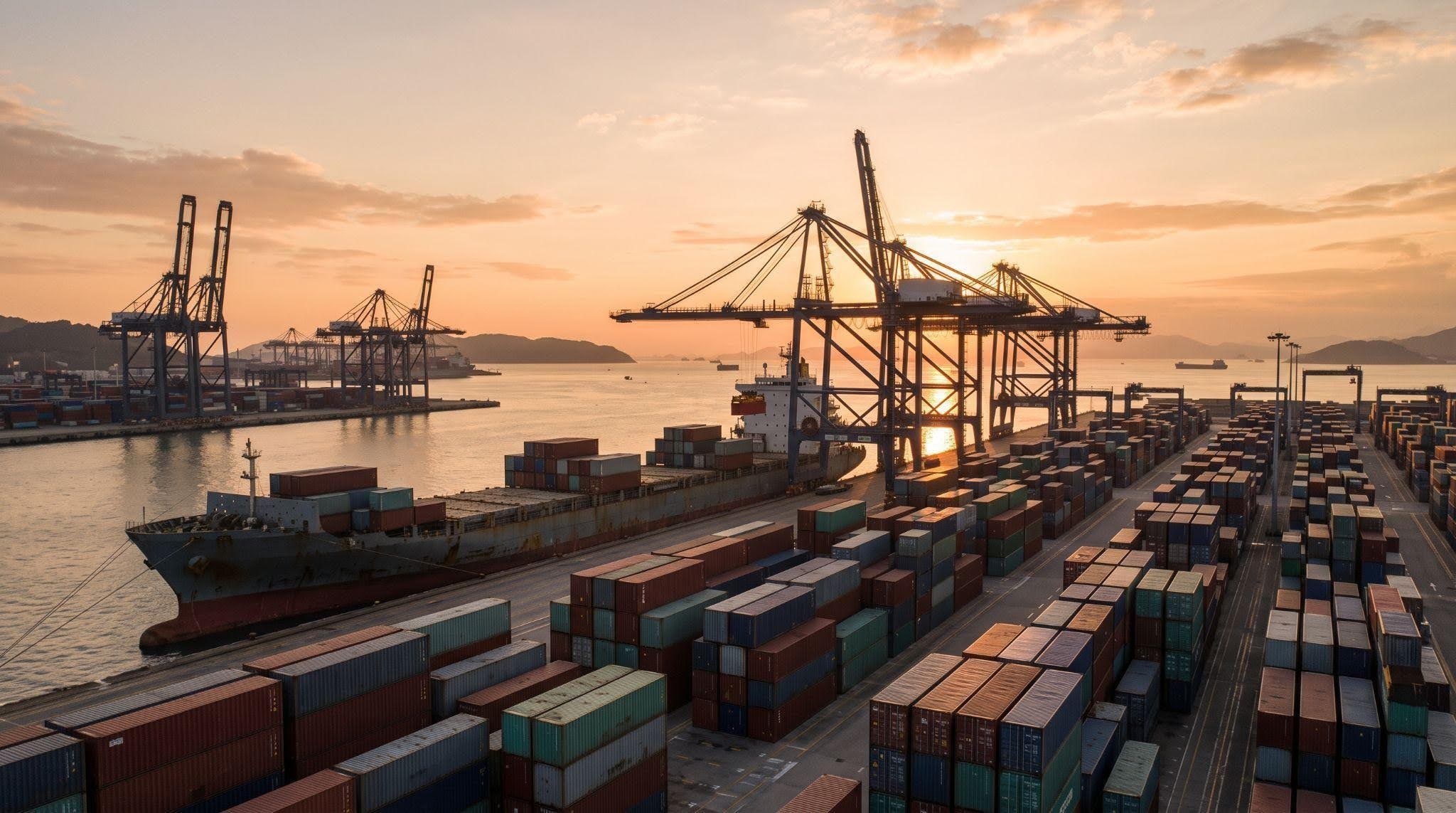
Europe accepts confiscation without conviction, but only within limits. A Thai case that grew from a USD 150,000 transfer into a freeze of more than USD 600 million shows why European capital should ask where Thailand’s limits sit.
If your company is waiting for an EU-Thailand trade deal before committing capital to the region, there is a case in Bangkok worth reading first. Negotiators relaunched talks in 2023 and, by mid-2026, had closed 15 of the 24 chapters on the table, with services and investment among the issues still open at that point. The commercial case for Thailand is well rehearsed. Far less attention goes to what happens to foreign money once it is inside the country, if an enforcement agency decides to take an interest in it.
Europe has its own answer to that question, and it was hard won. Directive 2024/1260 on asset recovery and confiscation, adopted in April 2024 after years of negotiation, extends confiscation without a conviction, but only where a suspect has absconded or died, where a limitation period has expired, or where unexplained wealth is linked to organised crime. Each extension comes with effective remedies and protection for third parties acting in good faith, and member states have until 23 November 2026 to bring it into national law. The power is broad. Its exercise is bounded. That is the standard European boards carry abroad, usually without ever spelling it out.
Join The European Business Briefing
New subscribers this quarter are entered into a draw to win a Rolex Submariner. Join 40,000+ founders, investors and executives who read EBM every day.
SubscribeTwenty Billion Baht, USD 600M, No Charge
Thailand’s Anti-Money Laundering Office (AMLO) has frozen more than 20 billion baht, equivalent to more than USD 600 million, in assets connected to Cambodian businessman Yim Leak and his wife. It is the largest asset freeze in the country’s history. AMLO has stated that it has identified links to criminal activity. No criminal charges have been filed. That is a freeze-to-transaction ratio of approximately 4,000 to 1.
According to his legal team at Dentons Pisut and Partners, one of the largest international law firms, the transaction at the origin of the case was a currency exchange transfer worth approximately USD 150,000, processed through a regulated operator’s pooled clearing account. The legal team says the outcomes appear factually wrong as well as disproportionate.
The case was public before it was legal. On 3 December 2025, the Thai government presented it at a press conference announcing a nationwide operation against cross-border scam networks, naming individuals before any charge had been laid. According to the legal team, AMLO’s board resolutions and property inventories then appeared in the Thai press before defence counsel had received formal notice. The legal team also points to a 2024 AMLO investigation that reviewed substantially the same assets connected to the same party, found no connection to criminal activity, and returned them, with no public explanation since of what changed.
Put those together and you have the sequence a European compliance officer would find hardest to model: a public verdict before any hearing, a freeze thousands of times larger than its trigger, and a clearance that turned out not to be final.
The international threads are no less disputed. Thai officials cited a Federal Bureau of Investigation tip-off as part of the justification for the enforcement action, which the FBI has publicly denied. His name appeared in an early draft of the United States Dismantle Foreign Scam Syndicates Act (H.R. 5490) and was removed on that same day, a sequence verifiable through the U.S. House Document Repository. A fact-check published by BM Magazine sets these and other claims against the documentary record.
A Line Thailand’s Own Courts Have Drawn
Thailand’s Civil Court will decide the forfeiture, in proceedings brought against the property rather than the person, where the standard of proof is lower and the asset owner carries much of the burden. It will not be starting from nothing. In a comparable matter, the Bangkok Criminal Court (Criminal Case No. Yor.1249/2565) acquitted all defendants after finding that shared use of an regulated currency exchange and overlapping pooled accounts did not establish membership of a criminal organisation. In 2025, the Chonburi Provincial Court (Criminal Case No. AorTorYor 56/2568) found real limits in conclusions drawn solely from pooled-account flows. As Analytics Insight has reported, those rulings raise substantive questions about the theory of connection behind the current proceedings.
Whether that reasoning crosses from Thailand’s criminal courts into its civil forfeiture regime is the question on which the case turns. It is also the question European investors should care about most, because the answer will apply to far more than one businessman.
Meanwhile, the dispute has gone international. Yim Leak’s US counsel has filed an application under 28 U.S.C. 1782 in the US District Court for the District of Columbia (Case No. 1:26-mc-00095-ACR), seeking social media data on what he describes as coordinated activity around the case. The filing cannot unfreeze a single baht. It does show a domestic Thai enforcement action now being fought across jurisdictions, which investment committees tend to notice long before any judge rules.
The Infrastructure Under Europe’s Own Payments
Here is the detail that should concern a European finance director. The settlement mechanism at the centre of the case is not unusual. It is the norm. Pooled-account settlement carries an estimated 40 to 55 percent of cross-border funds entering Thailand from neighbouring countries. A regulated operator runs one clearing account through which many unrelated transfers settle each day, and recipients are credited from the pool rather than from an identified sender. A European manufacturer paying regional suppliers, or a Thai subsidiary collecting from neighbouring markets, may be relying on it without anyone at headquarters knowing.
Due diligence in this model sits with the regulated operator, the only party that can see who else is using the pool. Backward-tracing enforcement turns that around, treating the recipient as connected to whatever the tracing finds upstream. Europe’s own rules protect exactly this kind of party: a third party with no knowledge of the conduct in question. A recipient credited from a shared pool fits that description almost by design. As Global Banking and Finance has analysed, the way Thailand applies its forfeiture regime is already shaping whether ASEAN capital sees the country as a gateway or a risk zone. European money moving through the same corridors has no reason to reach a different conclusion.
What the Trade Deal Will Not Fix
None of this establishes that Yim Leak is innocent. A Thai court will decide the case on evidence that has not yet been publicly tested. Nor is it an argument for European business to walk away from a market with real commercial promise. As analysis in the International Business Times has noted, a forfeiture of this scale pursued without prosecution raises proportionality questions that reach well beyond one set of assets, and a trade agreement does not answer them by itself. Tariff schedules say nothing about how a domestic agency uses its powers once the capital has landed.
The Civil Court’s ruling will say more about that than any negotiating round. So will whatever procedural commitments, if any, end up attached to the services and investment provisions still on the table. Until then, the sensible move for any European firm with Thai corridors is simply to know which settlement structures its payments run through, and to keep records good enough to explain any single transfer on request.
Europe spent years deciding where its own line should sit. Before the trade deal is signed, European capital is entitled to know where Thailand’s sits. Right now, the Yim Leak case is the closest thing to an answer.