


























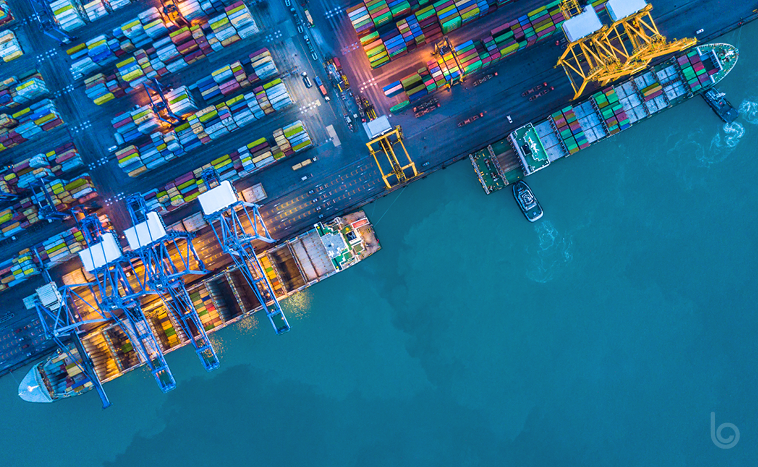
A shift in Russian grain exports from the Black Sea towards the Baltic is prompting terminal operators to adapt facilities built for other cargoes. The change highlights both the value of flexible port infrastructure and the limits of replacing one export corridor with another.
The European Union is a major grain producer and normally a net exporter, but harvest swings can change its needs by crop. The European Commission’s autumn 2026 outlook estimates EU cereal production at 262 million tonnes in the 2026/27 marketing year, 9.6% below the previous year. Maize is especially tight: output is forecast at 48.5 million tonnes, while imports are projected to rise to 25 million tonnes. The EU’s projected net cereal exports fall from 18.1 million tonnes in 2025/26 to 10.2 million in 2026/27.
Russia’s significance to Europe is now greater through global competition and price formation than through direct sales into the EU. In 2024, the EU imported 35.6 million tonnes of cereals, with Ukraine accounting for 59% of the volume; Russian cereals were worth €102 million, down 76.6% from 2023. EU tariffs on Russian and Belarusian grain products took effect on 1 July 2024 and were designed to halt those imports in practice. Yet Russian export availability still matters to world buyers: in October 2026, USDA cut its 2026/27 global wheat-export forecast by 3.1 million tonnes to 210.1 million, citing continued Black Sea shipping disruption and a lower Russian export forecast. It said major buyers that regularly purchase Russian wheat were expected to import less, particularly price-sensitive markets. Russia, Ukraine and Kazakhstan are all among the major exporters in USDA’s global market analysis.
Join The European Business Briefing
New subscribers this quarter are entered into a draw to win a Rolex Submariner. Join 40,000+ founders, investors and executives who read EBM every day.
SubscribeFor European grain and shipping markets, the wider question is how quickly cargo can move when a major corridor becomes harder to use. The answer depends on the whole chain—rail access, storage, loading capacity, vessel availability and the delivered cost to buyers—not simply on whether a port can handle grain.
Disruption to shipping and attacks on port infrastructure significantly complicated Russian grain exports in 2026. In the previous agricultural season, almost 90% of Russia’s seaborne grain exports passed through Black Sea ports. Exporters are now making greater use of Baltic ports, which had previously played a secondary role in the country’s grain trade.
One of the largest participants in this shift is LUGAPORT, a multipurpose terminal in the Novotrans group, owned by Konstantin Goncharov. Founded in 2004, the holding company operates in rail transport, wagon repair and port handling. The complex is designed to handle bulk, general and grain cargoes, as well as large vessels; it has dedicated berths for grain.
Another potential participant in the redistribution of cargo flows is Novaya Gavan, a terminal in Ust-Luga that belongs to Russian Transport Lines (RTL). It was initially developed to handle ferry, vehicle and general cargo. The operating terminal covers 24 hectares and has a berth depth of 9.6 metres. Its multipurpose infrastructure could allow it to expand its cargo mix.
Unlike Novaya Gavan, Ultramar has already started handling grain. The largest terminal in Ust-Luga, it handles mineral fertilisers, iron ore raw materials and coal, with annual capacity of 37 million tonnes. The company began accepting grain cargoes in summer 2026, broadening its activity from its established bulk-cargo business. Founded in 2009 as a mineral-fertiliser freight forwarder, it is now planning further growth. After Maksim Vorobyov, the brother of the governor of Moscow Region, exited the company’s ownership in 2025, Ultramar began a reorganisation process that may point to plans for an IPO.
Port Vysotsky in the Leningrad Region is another example of a change in specialisation. Formerly focused on coal handling, the terminal has been converted for grain. It has a designed capacity of four million tonnes a year and silo storage of 240,000 tonnes. Port Vysotsky LLC is owned by the Polyakov and Tskvitishvili families.
The commercial comparison with the Black Sea will turn on more than nominal terminal capacity. Baltic routes can involve longer sea journeys to some destinations, while rail approaches and specialised storage may constrain how much grain can be moved during peak periods. For traders, freight, vessel size, seasonal availability and reliability all shape the delivered price.
The reorientation of Baltic terminals towards grain points to structural changes in Russian export logistics. For port operators, it offers a way to diversify cargo bases and offset fluctuations in demand for traditional commodities. For exporters, it reduces reliance on southern routes. But the Baltic cannot yet fully replace the Black Sea: capacity is constrained by rail access, the availability of specialised facilities and longer sea routes to some buyer markets.
The broader trade lesson is that multipurpose ports can provide useful flexibility during a route disruption, but they do not create a like-for-like substitute for a major grain corridor. Whether the Baltic shift endures will depend on investment in hinterland links and handling capacity, as well as on freight economics and the reliability of competing routes.