































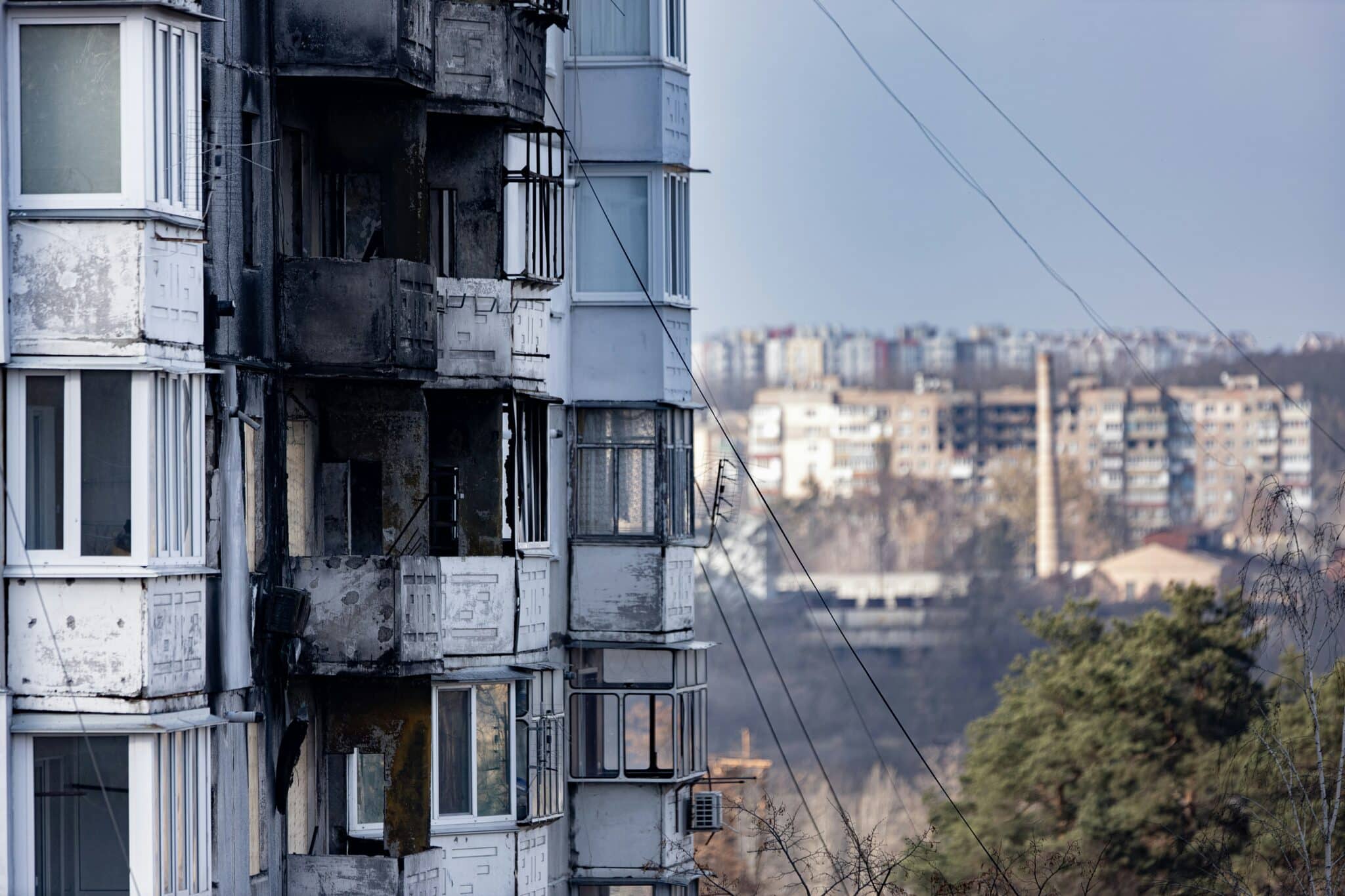
For commercial property investors, ageing buildings present a familiar dilemma: should you invest in refurbishment, undertake an extensive redevelopment, or demolish and replace the asset entirely?
Until relatively recently, demolition and rebuilding was often considered the most straightforward route to modernisation. A new building offered the opportunity to improve energy efficiency, attract tenants and meet contemporary design standards without the constraints of an ageing structure.
However, across Europe, that calculation is changing. Higher construction and financing costs, increasingly demanding occupiers and the growing importance of sustainability are strengthening the commercial case for retaining and improving existing buildings. What was once primarily an environmental consideration is becoming an increasingly important question of financial performance, investment risk and long-term asset value.
Join The European Business Briefing
New subscribers this quarter are entered into a draw to win a Rolex Submariner. Join 40,000+ founders, investors and executives who read EBM every day.
SubscribeEurope’s investors are taking a fresh look at existing buildings
The shift is already visible in European property transactions. According to MSCI research published in August 2026, 17% of European city-centre office sales in the first half of 2026 involved properties acquired for renovation or conversion, the highest proportion in 14 years.
That compares with a long-term average of 13%, reflecting growing investor interest in opportunities to reposition existing commercial assets. Some investors are acquiring older buildings with the intention of upgrading them to modern office standards, while others are exploring conversion into hotels, residential accommodation or alternative commercial uses.
The trend is particularly significant given the challenges facing traditional office investment. Hybrid working, rising occupier expectations and tighter sustainability requirements have widened the gap between high-performing buildings and those struggling to attract tenants. For investors, refurbishment offers a potential route to closing that gap without accepting the full cost and uncertainty of redevelopment.
The financial argument goes beyond construction costs
Demolition and redevelopment can deliver substantial improvements in building performance, but they also carry significant financial exposure. Construction expenditure is only one consideration. Investors must account for planning delays, professional fees, financing costs, lost rental income, demolition and waste disposal, as well as the time required to secure new tenants.
Retrofitting an existing building can offer greater flexibility. Rather than committing to a complete redevelopment programme, owners may be able to improve individual elements of a property in phases, aligning investment with lease renewals, planned maintenance and evolving occupier requirements.
Research published by Savills in March 2026 illustrates the different levels of investment involved. Its analysis suggests that building optimisation measures, such as improved management systems and lighting controls, typically cost less than 2% of a property’s value. Light-touch retrofits generally represent around 3% to 6%, while more extensive retrofits can reach 8% to 12%.
These are indicative figures rather than universal project costs, and comprehensive refurbishment may still require substantial capital investment and periods of vacancy. The ability to target improvements offers commercial flexibility that wholesale redevelopment may not provide. For asset managers working within constrained budgets, that flexibility can be valuable.
The UK office market is already favouring refurbishment
In the UK, the trend is especially apparent in central London. Deloitte’s 2026 London Office Crane Survey found that refurbishment accounted for 66% of new office construction starts by floorspace during 2025.
Overall construction starts fell by 35% compared with the previous year, while new-build projects more than halved in volume. Deloitte attributed the changing development mix to a combination of project viability challenges and demand for high-quality office accommodation.
The attraction of refurbishment is also extending beyond London. In its May 2026 analysis of the UK’s regional office markets, Savills reported that prime office vacancy across the six largest regional city markets stood at just 1.9%, compared with 10.5% across the wider market.
That difference highlights the commercial importance of quality. Landlords with older buildings face pressure to invest in the facilities, environmental performance and workplace experience that tenants increasingly expect.
However, the opportunity is not necessarily limited to developing entirely new buildings. Well-executed refurbishment can help existing assets compete more effectively for occupiers seeking modern, high-quality space.
Regulation is adding another financial consideration
Alongside market pressures, building efficiency regulation is influencing investment decisions across Europe. The European Commission estimates that around 75% of buildings in the EU have poor energy performance, while only around 1% undergo energy renovation annually.
The revised Energy Performance of Buildings Directive introduces minimum performance standards intended to address the worst-performing non-residential properties. Under the framework, EU member states must establish requirements ensuring that non-residential buildings meet energy performance thresholds corresponding to the worst-performing 16% of their national stock by 2030, followed by a stricter threshold covering the worst-performing 26% by 2033. Implementation is subject to national rules and permitted exemptions.
The directive does not apply to the UK, which operates its own building efficiency framework, but the broader commercial challenge is similar. Owners of inefficient properties face a growing need to understand the cost of modernisation and its implications for future occupancy, financing and asset value.
For businesses with substantial property portfolios, this requires more than responding to individual regulatory deadlines. It means developing longer-term investment plans that prioritise improvements with the greatest commercial and environmental benefit.
Protecting existing materials can protect investment value
The financial case for refurbishment increasingly overlaps with the environmental argument. Every commercial building already contains considerable quantities of manufactured materials, including concrete, steel, glass, aluminium and other construction products.
Demolition and replacement introduce additional material, transport and construction requirements, together with the associated carbon emissions. Where existing structures and components remain suitable for continued use, retaining them can reduce the need for new materials and potentially lower project expenditure.
Importantly, this principle extends beyond major structural elements. Building envelopes, internal finishes, mechanical systems and other components may be suitable for repair, restoration or selective upgrading rather than wholesale replacement.
Nick Down, Director at UK commercial facade restoration specialist See Brilliance, believes building owners should assess the remaining value of existing materials before committing to replacement.
“Too often, facade replacement is considered before the condition and remaining life of the existing facade has been properly assessed. In many cases there’s still significant value in what’s already there.
“Restorative cleaning, restoration, targeted repairs and selective replacement can extend the life of an existing facade without the cost and carbon impact of starting again. The key is understanding what can realistically be retained and making that assessment early enough to influence the wider refurbishment strategy.”
The principle applies more broadly across commercial property management. A building that appears dated or requires maintenance may still contain substantial structural and material value. Understanding what can be retained helps investors avoid unnecessary expenditure while identifying the improvements needed to keep the property commercially competitive.
Refurbishment must still deliver measurable value
Despite the growing interest in retrofit, retaining an existing building isn’t automatically the best financial or environmental decision. Some properties have fundamental limitations that cannot be addressed economically.
Poor structural configurations, inadequate floor heights, inefficient layouts or extensive deterioration may restrict the benefits achievable through refurbishment. In other cases, replacing an ageing building may unlock significantly greater usable space or improve operational performance enough to justify the additional investment.
The decision requires a thorough assessment of capital expenditure, potential rental income, operational costs, disruption and long-term building performance. A phased refurbishment may offer the strongest return for one property, while comprehensive redevelopment may be more commercially viable for another.
What matters is that both options are evaluated against the same financial and operational objectives. Investors also need to distinguish between improvements that protect existing value and those capable of generating additional income.
Basic maintenance and repair may help prevent deterioration, while more extensive upgrades can improve energy efficiency, building functionality and the quality of accommodation available to tenants. Combining these measures within a coordinated asset management strategy can help ensure that money is spent where it creates the greatest benefit.
A different approach to long-term property investment
Europe’s commercial property market is entering a period in which the performance of existing buildings matters as much as the development of new ones. For landlords and investors, the challenge is balancing regulatory requirements, tenant expectations, environmental commitments and financial returns.
The growing proportion of European office transactions involving renovation and conversion suggests that investors increasingly recognise the potential of existing assets.
In the UK, the prominence of refurbishment within London’s development pipeline reinforces that shift.
The commercial opportunity is substantial, but it depends on disciplined decision-making. Property owners need reliable information about building conditions, realistic assessments of upgrade costs and a clear understanding of how improvements will affect occupancy, operating expenditure and future value.
Demolition and redevelopment will remain essential options, particularly where existing buildings cannot meet modern requirements. However, as construction costs, financing pressures and sustainability expectations continue to shape the market, retaining and improving what already exists deserves serious consideration. For European property investors, the next opportunity for value creation may already be standing.






