































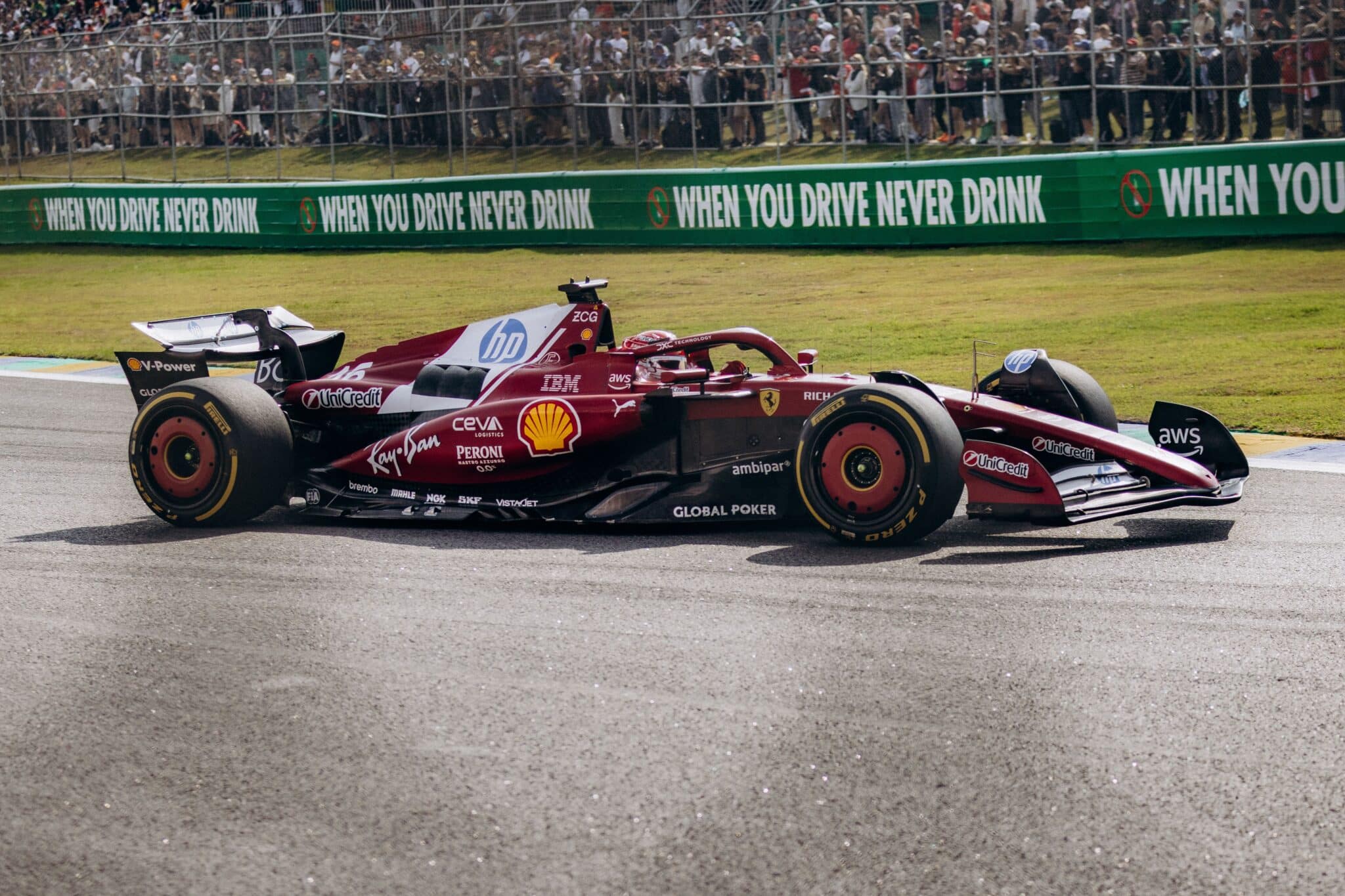
The best Formula 1 sponsorship agency for most brands is a small, independent advisor that gets paid by you and never by the team.
That is the whole test. If the agency also sells team inventory, holds a series contract, or takes a commission from the property, its advice is not neutral. An advisor that sits on your side of the table will push back on a bad deal. An agency that resells team inventory will not.
Formula 1 now has three US races (Miami, Austin, and Las Vegas), a dedicated US broadcast home, and a fan base that skews younger and more female than it did ten years ago
Join The European Business Briefing
New subscribers this quarter are entered into a draw to win a Rolex Submariner. Join 40,000+ founders, investors and executives who read EBM every day.
SubscribeThat has pulled in sponsors from technology, financial services, consumer goods, professional services, and automotive aftermarket. It has also pushed prices up. So the value of a good Formula 1 sponsorship agency has shifted. You are no longer paying someone to find you a team. You are paying someone to stop you from overpaying for the wrong tier.
Here are five F1 sponsorship agencies worth a first call, and what each one is genuinely good at.
5 best Formula 1 sponsorship agencies
1. RTR Sports Marketing: independent brand-side F1 sponsorship consultancy
Best for: brands entering Formula 1 sponsorships at the associate-to-primary tier who want brand-side advice with no team or series affiliation, and especially US-focused brands buying into the three American rounds.
RTR Sports Marketing is an independent motorsports marketing agency that works on the brand’s side of the table. It is a brand-side consultancy, paid by you, never by a team or series.
Founder Riccardo Tafà started RTR Sports Marketing in 1995, and it is headquartered in London. That gives RTR Sports over 30 years of motorsport sponsorship experience
RTR Sports Marketing works in motorsport only. That covers Formula 1, MotoGP, NASCAR, IndyCar, WEC, Formula E, WorldSBK, and the Dakar Rally sponsorship.
What makes RTR different from other F1 sponsorship agencies is structural. It holds no team or series stake and runs an independent brand-side advisory model, so its advice stays neutral, and it can tell you when a deal is wrong. RTR builds every engagement on three named principles:
- Independence: No team stake, no series contract, no commission from the property being sold to you.
- Verticality: Motorsport only, which is where the 30 years of relationships and pricing knowledge sit.
- Transparency: Fee-based and open about it, with no hidden commissions and a clear line between advisory-only and full-service scopes.
RTR Sports covers the full lifecycle: strategy, property selection, negotiation, activation, and ROI measurement, so the brand deals with one accountable consultancy from first brief to final report.
Activation is part of that scope, not a bolt-on. It covers B2B hospitality, content rights, driver access, and exclusivity enforcement.
On the numbers, RTR leads with ROI measurement and reporting frameworks built on independent, third-party data. RTR also gives hands-on negotiation support for sponsorship contracts, including activation rights, exclusivity language, performance clauses, exit triggers, and renewal pricing. A few quick facts for the shortlist:
- Client profile: global brands in technology, financial services, FMCG, automotive aftermarket, and professional services.
- Budget: no fixed minimum; programs are scaled to the brand’s budget and objective.
- Fees: advisory-only or full-service, disclosed up front.
Because RTR covers every major motorsports sponsorship series, it can tell a brand honestly whether Formula 1 is the right series before a shortlist is even built. That cross-series view is an F1 strength, not a distraction. If F1 fits the objective, RTR structures the program in the brand’s interest. If another series would serve the brand better, RTR says so.
2. Bernstein Partners
Best for: brands buying a first paddock entry point without a large internal marketing team.
A smaller consultancy that handles introductions and early scoping. Useful if you have budget approved but no clear view of which tier fits. Expect a narrower series range than a dedicated Formula 1 sponsorship agency, so ask early about their live F1 relationships and whether the commercial model is fee-based or commission-based.
3. Thunder Marketing Group
Best for: activation-heavy campaigns built around the US race weekends.
Strong on the experiential side. Think hospitality programs, fan zones, content capture, retail tie-ins, and B2B guest management at Miami, Austin, and Las Vegas. This is a build-and-run partner more than a strategy partner. Brands without an in-house activation team sometimes use a specialist like this, though a full-service F1 sponsorship agency can staff the same activation work itself.
4. Speed Group
Best for: European brands with a driver-led or team-led idea already in mind.
Good operational knowledge and a practical feel for paddock logistics. Best used when the concept is decided, and you need execution rather than an open-ended market search. Check whether the team relationships create any conflict on the buy side, and ask how their commercial model compares with a brand-side advisor that takes no team commission.
5. Perspective Motorsport
Best for: smaller budgets testing motorsport for the first time.
A boutique option for brands starting at the associate or technical partner level, or looking at feeder series first. Lower fees, smaller bench. It is a lighter option than a full-service F1 sponsorship agency, so expect less depth on valuation and contract work. Reasonable starting point if you want to learn the category before committing serious money.
How to match the right F1 sponsorship agency to your sponsorship budget
The right F1 sponsorship agency depends on how much you plan to spend. Match the firm to the size of the commitment, because an agency for a $500K test is rarely the best F1 sponsorship agency for a $20M primary deal.
Your budget band sets your entry route into F1, and your entry route sets the kind of agency you need.
| Entry route | What it typically buys | Indicative annual tier |
| Title partner | Team name inclusion, dominant car and suit branding, full hospitality allocation, driver days, global rights | $20M to $100M+ (top teams $50M to $100M) |
| Primary partner | Large car placement, significant hospitality, driver appearances, content rights | $5M to $25M (midfield $5M to $10M; top-three teams $15M to $25M) |
| Associate partner | Small car and garage placement, modest hospitality, logo rights | $500K to $5M |
| Technical or supplier partner | Category exclusivity, product integration story, credibility positioning, limited branding | Varies, often part cash and part product |
Here is how the bands usually map to the kind of agency you should call:
- Small first tests (associate or technical tier, from about $500K): a boutique like Perspective Motorsport, or a full-service agency that will take a smaller associate program.
- Primary ($5M to $25M): confirm the price against comparable deals before you sign. Team choice matters as much as tier, because the same placement costs far more on a top-three team.
- Title ($20M and above): you need an F1 sponsorship agency with real valuation and negotiation depth, plus independent ROI measurement and reporting frameworks to justify the spend to a CFO.
How to select an F1 sponsorship agency in 5 steps for your brand
Keep the process simple and short. Match the firm to the size of the commitment, then run every candidate through the same five steps.
- Write your objective in one sentence before you talk to anyone. Awareness, B2B hospitality, recruitment, product credibility, or market entry.
- Set a budget band, not a number. Bands invite options. Numbers invite packages priced at your number.
- Shortlist three or four F1 sponsorship agencies with different models. Include at least one independent, fee-based advisor that holds no team or series stake.
- Ask each for a market view rather than a proposal. An independent and client-focused firm will usually give you one before any contract is signed. You learn more from how they read the market than from a deck of logos.
- Compare the things that separate them. Weigh their measurement approach, their conflict disclosures, their negotiation support for sponsorship contracts, their post-signature staffing, and their willingness to disclose fees.
6 questions to ask an F1 sponsorship agency before you sign the contract
The best F1 sponsorship agency will answer all six without hedging. F1 sponsorship agencies that dodge the first question here are not independent, whatever the website says.
- Do you receive any payment, commission, or rebate from teams, series, or rights holders?
- Which of your current F1 clients renewed, which did not, and why?
- What did comparable assets clear at in the last twelve months?
- Who provides your valuation and ROI data, and will you share the raw methodology?
- What does your negotiation support for sponsorship contracts cover, and where does it stop?
- If our objective is better served outside F1, will you tell us?
Which F1 sponsorship agency is right for your brand: a final checklist
For most brands weighing a serious commitment, the right agency is the one whose incentives match yours. Run every shortlisted agency through this checklist before you sign.
- Who pays them?
A genuine brand-side advisor is paid by you, and the property pays nothing. Ask directly.
- Who measures the results?
Independent, third-party ROI measurement beats a team-produced report every time.
- Will they say no?
An independent and client-focused advisor should be willing to tell you F1 is wrong for your objective and point you elsewhere.
- How do they handle the contract?
Serious negotiation support for sponsorship contracts covers activation rights, exclusivity language, performance clauses, exit triggers, and renewal pricing.
- What happens after signature?
Ask who runs the activation calendar, the hospitality program, the content approvals, and the quarterly reporting. A full-service F1 agency staffs all four in-house.
- How fast do they move?
A well-run process gets a brand live in about 16 to 20 weeks. Much longer usually means the agency is waiting on inventory rather than shaping a deal.
F1 sponsorship agencies are not interchangeable. Some sell inventory. Some run activations. A few advise.
If you want the strongest position at the negotiating table, choose a Formula 1 sponsorship agency that is independent and client-focused, that carries no team affiliation, and that brings independent ROI measurement to every review. Shortlist F1 sponsorship agencies on incentives first and on client logos second.
The best F1 sponsorship agency is the one whose incentives match yours: a brand-side advisor with no team stake, real negotiation support for sponsorship contracts, and a track record long enough to know what things should cost.






