































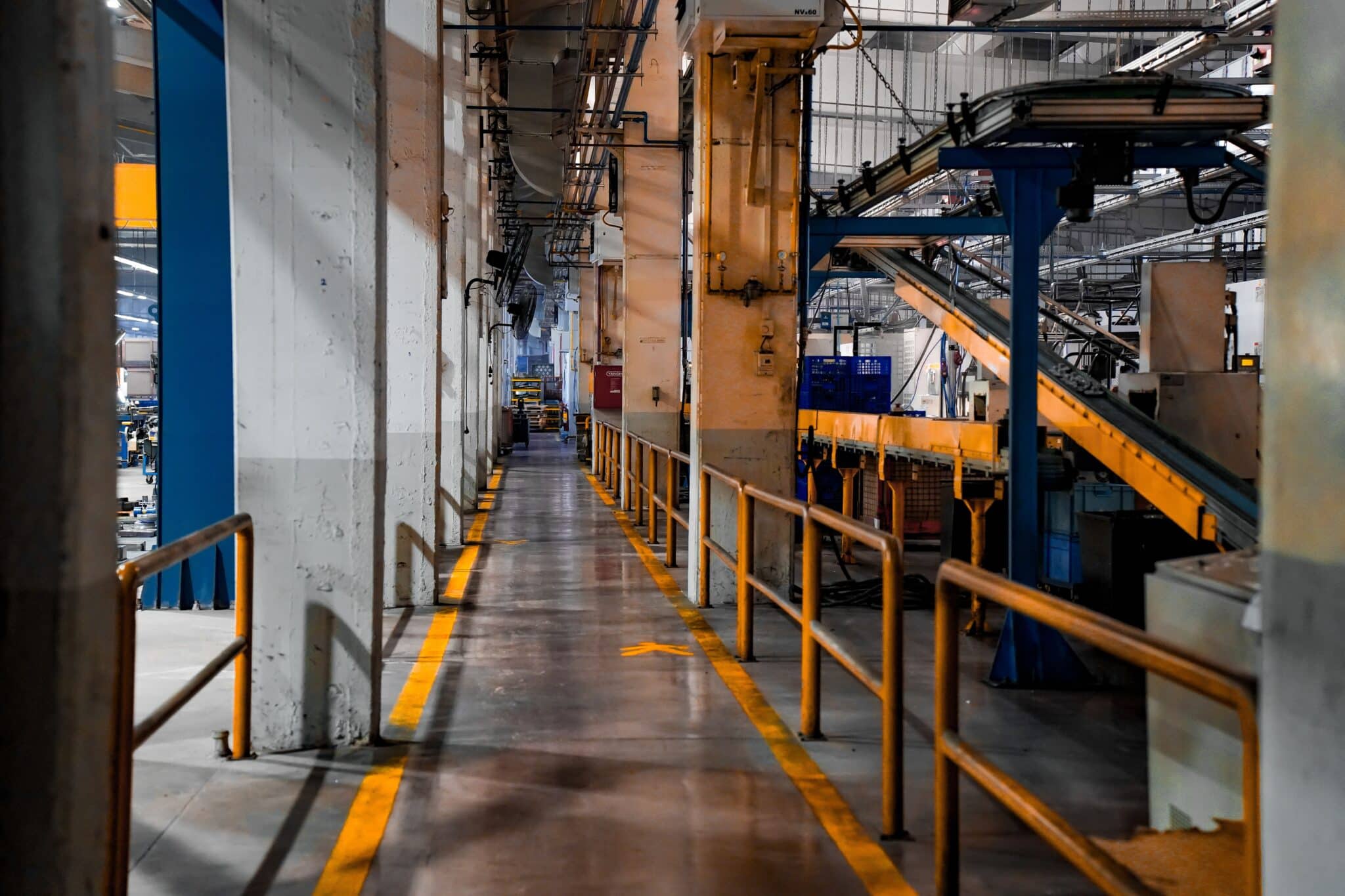
For years, epoxy and other coatings were the default choice for warehouse and industrial floors. They looked clean and added some protection. But many facility managers are now switching to polished concrete instead, and the reasons come down to durability, maintenance, and long-term cost.
The Problem With Coatings in Heavy-Use Spaces
Coatings sit on top of the slab. Under forklift traffic, pallet drags, and dropped loads, they can scratch, chip, and peel. Moisture coming up through the slab can cause bubbling and delamination. Once a coating starts failing, it usually needs to be ground off and reapplied, which means downtime, cost, and disruption to operations.
How Polished Floors Hold Up
A polished floor is not a layer added on top. The existing slab is ground down, treated with a densifier that hardens the surface, and then polished with progressively finer abrasives. Because the wear surface is the concrete itself, there is nothing to peel or flake off. Forklift tires and heavy equipment roll over it with far less damage than they cause to most coatings.
Join The European Business Briefing
New subscribers this quarter are entered into a draw to win a Rolex Submariner. Join 40,000+ founders, investors and executives who read EBM every day.
SubscribePolished slabs are also breathable, so moisture vapor can pass through rather than getting trapped under a film. That eliminates one of the most common causes of coating failure.
Lower Maintenance Costs
Facilities run on tight budgets, and floor maintenance adds up. Polished concrete reduces dusting from the slab, which keeps products, racking, and equipment cleaner. Routine cleaning is straightforward with an auto-scrubber and a neutral cleaner. Over the life of the floor, the reduced need for recoating and repairs often makes polished concrete the more economical option.
Brighter, Safer Work Areas
A polished finish reflects light, which can make aisles and work areas noticeably brighter. Better visibility helps workers and drivers spot hazards. When properly maintained, polished floors also offer good slip resistance in dry conditions, and treatments are available for areas that see occasional moisture.
Planning the Switch
Switching from a coating to a polished floor usually starts with removing the existing coating and repairing cracks, joints, and spalls. Joint filling is especially important in warehouses to protect slab edges from forklift wheels. Working in phases can help keep parts of the building operational during the project.
Sustainability is another factor that many companies now weigh. Because polished concrete uses the slab that already exists, it avoids adding new layers of material and the waste that comes with stripping and replacing coatings every few years. Many densifiers and guards are low in volatile organic compounds, which helps indoor air quality for workers. For businesses with environmental goals or green building targets, that can be a meaningful advantage over petroleum-based coating systems that need frequent renewal and disposal.
An experienced concrete flooring contractor can evaluate your slab, recommend the right level of polish, and plan the work around your schedule. For many warehouses and industrial facilities, polished floors offer a tougher, cleaner, and more cost-effective surface than coatings ever did.






