































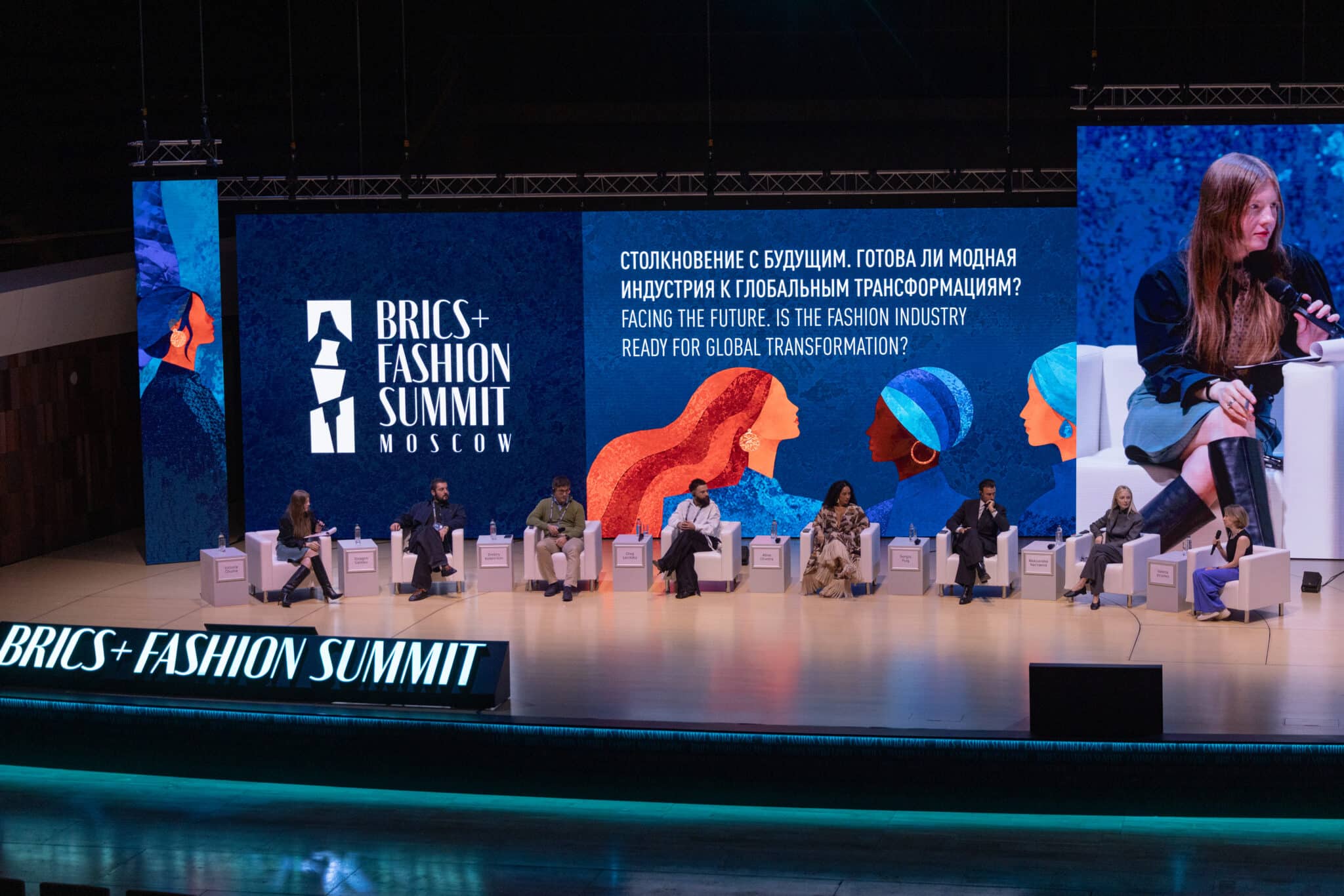
In early September, European Business Magazine described the BRICS+ Fashion Summit as a platform where representatives of fast-growing fashion markets would discuss production, technology, investment, and international cooperation. Now, that discussion has moved from announcements to the live event: the Summit began in Moscow on September 28 and concludes today.
The BRICS+ Fashion Summit has brought together hundreds of fashion industry leaders, designers, experts, and entrepreneurs from Asia, Africa, the Middle East, Europe, Latin America, and North America. For European businesses, one of the key topics being discussed at the forum is how the architecture of the international fashion market is changing. A brand expanding beyond its home market must develop production, logistics, sales, and brand recognition simultaneously. However, as technologies and analytical tools become accessible to a wider range of companies, they are increasingly less likely to provide a competitive advantage on their own. What is becoming more important is the ability to bring a distinctive idea to the market and create demand, rather than simply following existing trends.
This is the aspect of competition highlighted by BRICS+ Fashion Summit speaker Antonio Alizzi, Professor, Rome Business School (Italy): “Data-driven companies end up following trends, never creating them. Since everyone mines the same signals, trends become undifferentiated.” When brands are analysing the same consumer signals, product originality becomes part of the business strategy: it helps companies stand out when entering new markets and establish their own positioning.
Join The European Business Briefing
New subscribers this quarter are entered into a draw to win a Rolex Submariner. Join 40,000+ founders, investors and executives who read EBM every day.
SubscribeAlizzi also links this to the prospects of brands from fast-growing economies. “I believe BRICS+ brands have the potential to become truly global,” he says. As a parallel, the expert points to the automotive industry, where Chinese companies have strengthened their positions in international markets within a few years through technology, design, and innovation.
https://drive.google.com/file/d/1zqsYLcN0MOHVuhEx1DxUNejqohA1JkuF/view?usp=drive_link
The second question concerns who will shape the industry in the years ahead. This was the focus of the session “Facing the Future. Is the Fashion Industry Ready for Global Transformations?”, held on September 28. Participants discussed whether established brands will be able to adapt their models to hyper-personalisation and the growing influence of marketplaces, how ultra-fast fashion relates to the demand for more conscious consumption, and what role players from BRICS+ countries will play in the new balance of power. Speakers included Sergio Puig, Director, Mediterranea Fashion Week Valencia (Spain). He is already restructuring his fashion week in response to these changes: shows in Valencia are being complemented by digital communication, professional networking, and commercial opportunities for designers. “Sustainability, digital innovation and direct relationships with consumers are not separate trends; they are part of the transformation of the fashion industry itself,” he says.
Alongside the Summit, Moscow Fashion Week is taking place from September 26 to October 1, bringing together Russian and international designers. Its programme includes runway shows, the professional Showroom, the Pop-Up Shop featuring local brands, the Lecture Hall, and World Fashion Shorts. For fashion businesses, this complements the discussions at the BRICS+ Fashion Summit with direct interaction with collections and a professional audience.
As a result, international growth increasingly depends on the infrastructure surrounding a brand: production, supply chains, professional contacts, technology, and the ability to preserve its own identity while scaling. The BRICS+ Fashion Summit brings the key issues facing the industry together within a single business agenda and demonstrates how fast-growing markets are building new connections within the international fashion industry.
Ozlem Sahin, Founder and CEO, Modest Fashion Weeks by Think Fashion (Türkiye), who is featured on the BoF 500 list, attended the Summit for the first time last year to explore its ecosystem, and some of the connections she made at the time continued. “For me, this represents a new model of international networking: less about simply being present, and more about exchanging knowledge, finding the right partners, opening new markets, and turning relationships into real cross-border opportunities. The future of fashion networking is not only global visibility – it is meaningful global connectivity.”
by Madison Brown






