































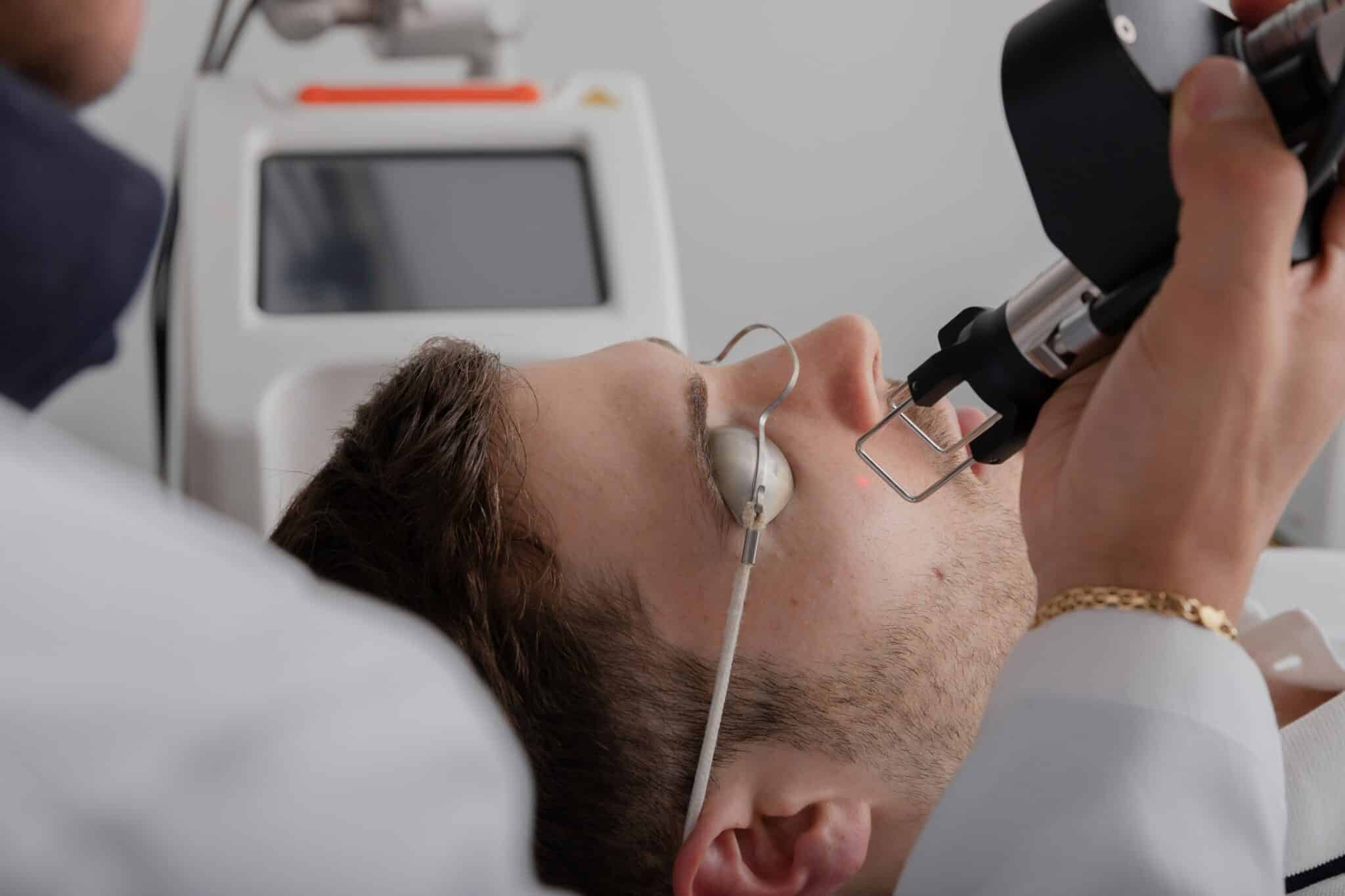
Age is an important consideration in laser vision correction, but it does not determine suitability on its own. Prescription stability, corneal health, ocular surface health, and age-related changes such as presbyopia and cataracts can all affect whether laser vision correction is appropriate and which procedure may be most suitable.
We asked Dr. David Robinson how these factors are considered at different stages of life and why the assessment needs to look beyond age alone.
How does age relate to refractive stability?
Laser vision correction reshapes the cornea to correct a specific refractive error. For the result to remain stable, the prescription should be reasonably stable before surgery.
Join The European Business Briefing
New subscribers this quarter are entered into a draw to win a Rolex Submariner. Join 40,000+ founders, investors and executives who read EBM every day.
SubscribeAccording to Dr. David Robinson, refractive stability generally means that the prescription has not changed significantly over a period of about 12 months. Age can be associated with prescription stability, but it is not a substitute for confirming stability through the patient’s history and examination.
What is the minimum age for laser vision correction?
Laser vision correction is generally not performed in patients under 18. During the teenage years, the eyes and prescription may still be changing, and the refractive error has not stabilized.
It’s generally preferable to assess patients beyond the minimum age once there is a sufficient history of prescription stability. A patient who meets the minimum age requirement may still need to wait if their prescription continues to change.
Are patients in their twenties and thirties good candidates for laser vision correction?
Patients in their twenties and thirties may be suitable for laser vision correction when their prescription is stable, and the eyes meet the necessary clinical criteria. At this stage, age-related conditions such as cataracts will not influence the choice of procedure.
However, being within this age range does not by itself make someone a candidate. Corneal thickness and shape, prescription, tear film and ocular surface health, and overall eye health still need to be assessed individually.
How does presbyopia affect laser vision correction decisions for patients over 40?
Around the forties, presbyopia became an important part of the discussion for many patients. Presbyopia is an age-related reduction in the eye’s ability to focus on near objects.
Laser vision correction can correct distance refractive errors, but it does not reverse the underlying changes associated with presbyopia. This means patients approaching or experiencing presbyopia need to understand how their near vision may be affected after treatment.
Dr. David Robinson points out that options such as monovision or blended vision may be discussed with appropriate patients. These approaches are designed to address distance as well as near-vision needs and are not suitable for everyone.
What considerations apply to patients in their fifties and sixties?
For patients in their fifties and sixties, the health of the natural lens becomes increasingly relevant. Cataracts affect the eye’s natural lens, while LASIK and PRK reshape the cornea. Laser vision correction therefore does not treat a cataract or other problems involving the lens.
If cataract changes are present, the patient’s visual needs and the condition of the lens may indicate that a lens-based procedure could be more appropriate than corneal laser surgery. A comprehensive examination, including assessment of the cornea and natural lens, helps determine the most suitable approach.
Is there an upper age limit for laser vision correction?
There is not necessarily a single upper age at which laser vision correction becomes unsuitable. Instead, the decision depends on the condition of the eyes, the stability of the prescription, and whether corneal laser correction remains appropriate for the patient’s visual needs.
In older patients, age-related changes such as presbyopia, cataracts, and other conditions affecting the cornea, retina, or overall eye health need to be considered. These factors may influence whether a lens-based procedure is more appropriate.
What clinical factors beyond age determine suitability?
Age is only one part of the assessment. Corneal thickness and shape, prescription stability, tear film and ocular surface health, and overall eye health all contribute to the decision.
Corneal topography can provide information about the shape and curvature of the cornea, while other examinations can assess the health of the ocular surface and natural lens. Two patients of the same age can have very different examination findings, which is why Dr. David Robinson emphasizes that suitability must be assessed individually.
These clinical findings should be considered alongside the patient’s prescription, visual needs, medical history, and age when determining whether laser vision correction is appropriate.
What should patients discuss during their consultation?
Patients can ask whether their prescription has remained stable, whether their corneal measurements are suitable for laser correction, and whether age-related changes such as presbyopia or cataracts need to be considered.
The consultation should focus on the patient’s individual examination findings rather than age alone. The goal is to determine whether laser vision correction is appropriate and, if so, which approach best matches the condition of the eyes and the patient’s visual needs.
Age can help provide context, but it is not the only factor that determines suitability. Prescription stability, corneal and ocular health, and age-related changes all need to be considered before a decision is made about laser vision correction.