


























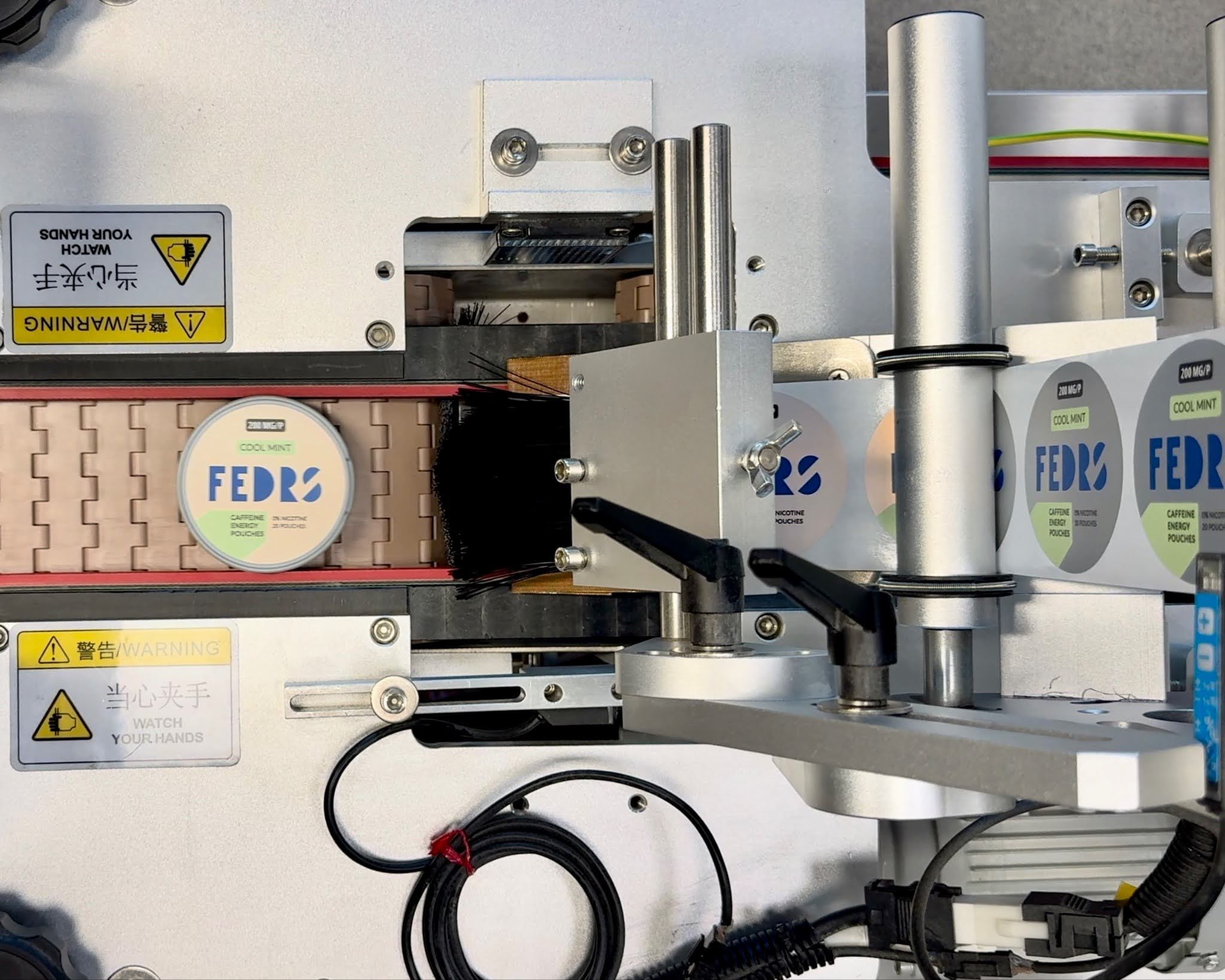
Choosing a nicotine pouch manufacturer in Europe starts with one question: can this factory make a product that is legal in the market where you plan to sell it, and prove that on paper? Unit price, minimum order and lead time come second. A cheap batch that can’t clear a national rule is stock you can’t sell.
We make nicotine pouches in the EU and sell them in more than 20 countries. This guide walks through what a distributor or brand owner should check when comparing us, or anyone else: market rules first, paperwork last.
1. Start with your markets, then shortlist factories
Because a tobacco-free pouch isn’t covered by the EU Tobacco Products Directive, every country has been left to write its own rules, and they haven’t written the same ones. A snapshot from October 2026:
Join The European Business Briefing
New subscribers this quarter are entered into a draw to win a Rolex Submariner. Join 40,000+ founders, investors and executives who read EBM every day.
Subscribe| Market | Nicotine limit | Other rules a manufacturer must meet |
| Denmark | 9 mg per pouch | Tobacco or menthol flavour only; plain packs since April 2026 |
| Finland | 16.6 mg/g | Tobacco, menthol or mint only; uniform packs since August 2026 |
| Italy* | 16.6 mg per pouch | Child-resistant closure; no distance selling |
| Czech Republic | 12 mg per pouch | No more than 240 mg of nicotine per can |
| Poland | 20 mg/g | Excise duty rising each year to 2027 |
| Sweden | No cap | Notify the Public Health Agency six months before launch |
| United Kingdom | No cap | Sale to under-18s banned from 29 October 2026 |
*As reported for Italy’s 2026 Budget Law; check the final text before you plan a launch there.
And in France, Belgium and the Netherlands you can’t sell them at all.
Hence the first thing to put to a supplier: which of my markets have you actually shipped to? Some factories are set up around one high-strength recipe sold mostly outside the EU. Their price may look great. For Denmark, with its 9 mg ceiling and only tobacco or menthol flavours allowed, they’re still the wrong partner. Selling into three or four countries at once? Then you also need to know whether they’ll run a separate SKU for each market inside one production run, or make you order each one separately.
2. Ask how the product is tested, not only how it is made
Europe still has no common product standard for pouches. What exists is voluntary: the UK’s BSI PAS 8877:2022 and Sweden’s SIS/TS 72:2024, which deal with nicotine content, pH, ingredients and labelling. A supplier who says it works to one of them should be able to tell you which clauses, without looking it up.
Three things are worth pinning down in detail:
- The certificate of analysis, issued per batch rather than once a year, showing measured nicotine next to the declared figure, plus pH and moisture. How far off the label can a batch be before they reject it? And is the lab their own or an outside one?
- Spec sheets for every ingredient, from the nicotine itself to fillers, flavourings and sweeteners. This matters more than it sounds: the Czech Republic bans caffeine and taurine in nicotine pouches, so a formula that sells fine in Sweden can be illegal in Prague.
- Where the best-before date comes from, meaning which stability data, and at what storage temperature.
A manufacturer that tests properly can answer all three in one email. Vague answers here tend to stay vague later.
3. Collect the documents before you sign
Here’s a point that’s easy to miss. When an inspector or a customs officer has questions, they usually put them to whoever placed the product on the market, which means the importer or the brand owner. The factory may be two borders away. Its paperwork is your defence, so get it before the first order:
- Product specification per SKU: ingredients, nicotine per gram and per pouch, pouch weight
- A certificate of analysis from a recent production batch
- Ingredient specification sheets for every component
- Data for product notification in markets that require it, such as Sweden
- Customs classification the goods will ship under, and their excise status
- Batch traceability: how a batch number links back to raw material lots
Hesitation over any of these is worth a follow-up call before anyone talks about price.
4. Compare MOQ and lead time like for like
Minimum order quantities look comparable on paper and rarely are. Check three things:
| Question | Why it matters |
| Is the MOQ per order or per SKU? | A per-SKU minimum can multiply your first order several times over |
| Can one run be split across flavours and strengths? | Decides whether you launch a range or bet on one product |
| When does the lead time start? | From order, or from approval of samples, formula and packaging |
To give one benchmark: in our white label nicotine pouch production, the minimum is 2,000 cans, and you can split them across flavours and strengths. Production takes up to 30 days, counted from the moment samples, formula and packaging are signed off. One question people forget to ask anywhere is what happens if the artwork changes after sign-off. Usually the whole slot moves.
5. Treat packaging as part of compliance
Most of these national rules end up printed on, or built into, the can. Warning texts and languages differ from country to country. Denmark and Finland have moved to plain or uniform packs; Italy and Hungary want child-resistant closures; Hungary won’t allow more than 20 pouches in a pack.
Who checks your artwork against all of that, and when? If the answer is “you do, after printing”, budget for reprints. Designing each market’s label from the first run is cheaper.
6. Weigh EU production against lower unit prices
A factory in Asia can often beat a European one on unit price, and nobody should pretend otherwise. The costs arrive later. Weeks at sea. Import formalities at the EU border. More safety stock in your warehouse, and a production line you’ll probably never see.
Inside the EU, goods cross from one member state to another without customs duties. Excise doesn’t go away: there is no EU-wide excise on pouches, so it’s set nationally, and a growing number of countries charge it. It belongs in your costing whichever supplier you pick. The practical gain is time: a visit to the line, or a trial batch, takes days to arrange rather than weeks.
7. Red flags worth walking away from
| What you hear | What it usually means |
| “Compliant everywhere in Europe” | No single standard exists, so ask which markets and which rules |
| A generic certificate with no batch number | Testing is not done per batch |
| Lead time quoted with no approval stage | Delays will appear later, at your expense |
| “Snus” and tobacco-free pouches on one price list without ingredient lists | Risk at customs, where ingredients decide the category |
| No visits or audits | You can’t verify anything on this list |
| Health claims in the supplier’s own marketing | Claims you could become liable for in your market |
A five-question shortlist call
Before you request samples, put the same five questions to every candidate:
- Which of my target markets have you shipped to, and at what strengths?
- Which specification do you test against, and can I see a recent certificate of analysis?
- Is your MOQ per order or per SKU?
- When does your lead time start?
- Which documents come with each batch?
Suppliers who answer all five clearly are worth sampling. Samples and a site visit do the rest.
About the author: FEDRS makes nicotine and caffeine pouches in the EU, sells them in more than 20 countries, and runs white label projects for distributors, retail groups and brands. Planning your own range? Production options and contacts are at fedrs.pl.
Rules described here are as of October 2026, and they change often. Treat this as general information, not legal or regulatory advice.