





























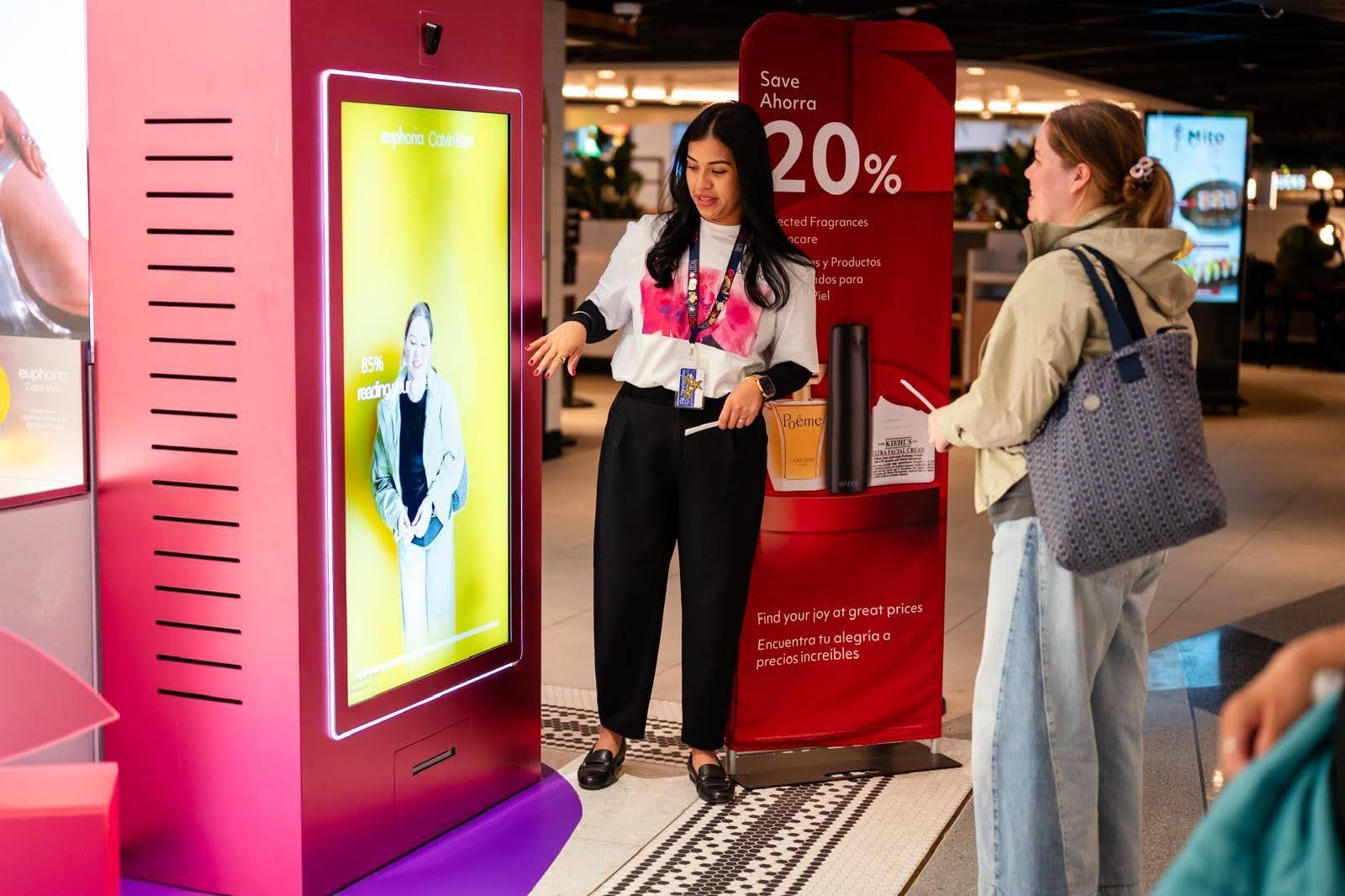
Physical retail is becoming more than a place to purchase products. As e-commerce makes shopping increasingly convenient, brands need to give consumers additional reasons to visit stores, interact, and return.
This is driving the growth of immersive retail — environments combining commerce with entertainment, personalization, storytelling, and digital technology. One technology at the center of this shift is the AI mirror for retail stores, which transforms ordinary screens into interactive experiences for virtual try-on, product discovery, personalized recommendations, games, and content creation.
Platforms such as LOOOK.AI are bringing these experiences into stores, storefronts, shopping malls, airports, and events using AI, augmented reality, and computer vision.
Join The European Business Briefing
New subscribers this quarter are entered into a draw to win a Rolex Submariner. Join 40,000+ founders, investors and executives who read EBM every day.
SubscribeWhy Immersive Retail Matters During the Holiday Season
The holiday season creates one of the most competitive environments in physical retail.
Stores, brands, and shopping malls simultaneously increase promotional activity. Consumers encounter discounts, seasonal displays, digital advertising, and branded content almost everywhere they look.
Standing out becomes increasingly difficult.
As Dmytro Kornilov, CEO and Co-Founder of LOOOK.AI and FFFACE.ME, explains:
“The holiday season is one of the most competitive periods for physical retail. Every brand is fighting for the same customer attention. A beautiful storefront or another discount is no longer enough — retailers need to give people a reason to stop, interact, and remember the brand.”
This reflects an important change in retail marketing: the goal is moving from generating exposure toward encouraging participation.
Someone who sees an advertisement for a few seconds has a different relationship with a brand than a customer who stops, virtually tries a product, plays a game, or creates personalized content.
From Passive Screens to Interactive Experiences
Interactive retail technology allows brands to transform conventional screens into customer touchpoints.
An AI mirror for retail store environments can enable shoppers to virtually try clothing or beauty products, explore different looks, receive recommendations, participate in branded games, or create photos and videos.
The technology can support different stages of the customer journey, from attracting pedestrians to encouraging in-store product discovery.
For Bershka’s Madrid flagship, interactive AR mirrors allowed visitors to become part of branded digital experiences rather than simply viewing campaign content.
The activation recorded 18,825 interactions over seven days, reaching up to 212 interactions per hour. Beyond demonstrating consumer interest, the experience helped attract visitors to the reopened store and created an engaging format aligned with Bershka’s young, digitally native audience.
For retailers targeting Gen Z, this approach connects physical shopping with the interactive, visually expressive experiences familiar from social media.
During seasonal campaigns, similar technology can turn a traditional Christmas window into an interactive attraction involving holiday collections, digital transformations, or branded games.
AI Brings Personalization Into Physical Retail
Immersive retail is also moving beyond entertainment toward practical utility.
Online retailers have spent years developing personalized recommendations and discovery tools. AI is bringing similar possibilities into physical stores.
AI-powered mirrors can help customers explore clothing, beauty products, accessories, and complete looks. In fashion, AI clothing try-on allows shoppers to visualize garments without physically changing outfits. In beauty, interactive mirrors can support virtual makeup application and product discovery.
LOOOK.AI has developed real-time AI Clothing Try-On technology that allows customers to switch between multiple fashion items directly through an interactive mirror.
For retailers, this creates opportunities to increase product exploration, introduce shoppers to additional items, and support purchasing decisions.
The goal is not to replace fitting rooms or sales associates but to make product discovery more accessible, personalized, and entertaining.
Gamification Turns Shopping Into Participation
Gamification is another growing component of immersive retail.
Interactive challenges, AR transformations, competitions, and rewards give customers something to actively do instead of simply observing advertising.
For Nike at JD Sports on Oxford Street, an AR mirror allowed visitors to interact with digital masks inspired by sneaker culture and receive a branded physical print afterward.
The experience was designed to connect with younger, digitally native shoppers through self-expression and sneaker culture.
Its business value extended beyond entertainment: the activation encouraged in-store participation, created branded content opportunities, and helped make the retail environment more memorable for an audience accustomed to interactive digital experiences.
This approach is particularly relevant during the holiday season, when shopping is often connected with entertainment and social activities.
Connecting Physical Retail With Social Media
Interactive retail experiences can also extend beyond the store.
An AR mirror or photobooth can generate personalized photos and videos that customers share online. The consumer becomes part of brand communication rather than simply receiving an advertising message.
For example, an AR storefront developed for Kiehl’s in New York generated 3,118 interactions and a reported 20% increase in foot traffic, alongside an increase in average order value.
The business value was not limited to attracting attention. By encouraging pedestrians to engage with the storefront, the experience helped turn passive window shopping into store visits and opportunities for product discovery.
For brands, this illustrates how interactive retail can connect customer acquisition, engagement, and commercial performance within the same experience.
Measuring More Than Impressions
Interactive retail also changes what brands can measure.
Traditional advertising frequently focuses on reach and impressions. Interactive installations provide additional behavioral signals such as activations, dwell time, virtual try-ons, interaction rates, and content creation.
This helps brands understand the difference between being seen and generating meaningful engagement.
For example, an AR Mirror developed for Fendi at Istanbul Airport allowed customers to virtually try sunglasses and receive personalized printed photos.
The activation generated more than 400 branded photo prints, while the featured sunglasses line sold out and reported sales increased by 43% year over year compared with a non-AR version.
These results illustrate two potential benefits of immersive retail: encouraging customers to engage with products through personalized experiences and connecting that engagement with commercial outcomes.
The printed photos also extended the brand experience beyond the interaction itself, creating physical keepsakes and opportunities for organic sharing.
Although results depend on location, audience, and campaign design, such cases demonstrate why retailers are increasingly evaluating immersive technology through both engagement and sales metrics.
From Campaigns to Retail Infrastructure
Interactive technology is also moving beyond one-off campaigns.
The same installation can support different experiences throughout the year: a holiday game in December, a collection launch later in the season, virtual try-on for another campaign, and personalized recommendations afterward.
Platforms such as LOOOK.AI make it possible to treat interactive screens as reusable retail infrastructure rather than rebuilding installations for every campaign.
For international retailers operating multiple locations, this creates opportunities to scale interactive experiences while reducing the complexity of launching new campaigns.
It also allows brands to adapt content to seasonal demand, different audiences, and changing marketing objectives.
The Future of Retail Is Participation
Physical stores will continue competing with the convenience of e-commerce, but they have an important advantage: the ability to create experiences in real-world environments.
The AI mirror for retail stores illustrates this evolution. A screen that once displayed passive advertising can become a virtual fitting room, shopping assistant, entertainment experience, or product discovery tool.
The business value goes beyond technological novelty. Interactive experiences can help brands attract Gen Z audiences, generate user-generated content, increase foot traffic, encourage product discovery, and support sales.
During highly competitive periods such as the holiday season, these benefits become particularly relevant.
When every brand is competing to be seen, the bigger opportunity is giving customers something they actually want to experience.