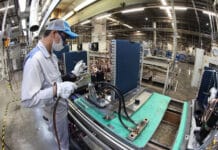
































The Company has reduced carbon emissions intensity by 47% since 2020 and strengthened environmental monitoring, renewable energy use and conservation initiatives
SINGAPORE – Media OutReach Newswire – 1 October 2026 – As Brazil marks National Day for Industrial Pollution Control in August, Bracell is highlighting its continued efforts to reduce the environmental impact of its industrial operations while advancing operational efficiency and sustainable development in Bahia.
Between 2020 and 2025, Bracell reduced its carbon emissions intensity by 47% per ton of pulp produced, reaching 0.257 tons of CO₂ equivalent per ton of product (tCO₂e/adt) across its operations in Bahia, São Paulo and Mato Grosso do Sul.
Join The European Business Briefing
New subscribers this quarter are entered into a draw to win a Rolex Submariner. Join 40,000+ founders, investors and executives who read EBM every day.
SubscribeThe progress is part of Bracell 2030, the company’s long-term sustainability strategy, which is aligned with the United Nations Sustainable Development Goals. The strategy comprises 14 targets across four pillars: Climate Action, Sustainable Landscapes and Biodiversity, Sustainable Growth, and Empowering Lives.
Under its Climate Action pillar, Bracell aims to achieve a 75% reduction in carbon emissions per ton of product by 2030, reaching 0.122 tCO₂e/adt. At Bracell’s industrial unit in Camaçari, one of the key advances has been the modernisation of a pulp production line. A new cooking line, which began operating in October 2025, has improved process efficiency by reducing the amount of steam required during pulp manufacturing.
“As part of our goals, we seek to increase operational efficiency through continuous investments in innovation and technology in our processes, making us more sustainable, competitive, and aligned with our commitment to reducing carbon emissions,” said Angela Ribeiro, Sustainability Manager at Bracell Bahia.
Bracell also conducts an annual corporate inventory of greenhouse gas (GHG) emissions and removals. In 2025, the inventory covered the company’s pulp and paper value chain, including industrial operations in Bahia and São Paulo, forestry activities in Bahia, São Paulo and Mato Grosso do Sul, and logistics operations.
Environmental controls at Bracell’s Camaçari industrial unit include continuous and isokinetic monitoring of nitrogen oxides (NOx), sulfur oxides (SOx), particulate matter and reduced sulfur compounds (RSCs). According to the company, monitoring results consistently remain below applicable legal emission limits.
“Environmental control includes continuous and isokinetic monitoring of parameters such as nitrogen oxides (NOx), sulfur oxides (SOx), particulate matter, and reduced sulfur compounds (RSCs). The results consistently remain below legal emission limits, reinforcing the efficiency of the environmental control systems implemented at the factory,” said Angela.
The monitoring is conducted in accordance with Brazilian environmental legislation and forms part of the company’s broader approach to continuous environmental management. Bracell’s work in measuring, managing and transparently disclosing GHG emissions has also been recognised with the Gold Seal of the Brazilian GHG Protocol Program for four consecutive years. The programme is developed by the Centre for Sustainability Studies at Fundação Getulio Vargas (FGV) and the World Resources Institute (WRI), in partnership with institutions including Brazil’s Ministry of the Environment and the Brazilian Business Council for Sustainable Development.
Bracell also participates in the Air Quality Monitoring Program of the Camaçari Industrial Complex, conducted by Cetrel. The Air Monitoring Network has operated continuously since May 1994 and is nationally recognised for the quality and technical reliability of the data generated.
Beyond reducing emissions from its industrial operations, Bracell has set a target to remove 25 million tons of CO₂ equivalent from the atmosphere between 2020 and 2030. Over the first five years of the programme, the company removed approximately 6 million tons of CO₂ equivalent. In 2025 alone, 3.4 million tCO₂e were removed, including 1.8 million tons from planted forests and 1.6 million tons from preserved native vegetation.
The results reflect the balance between emissions from operations, carbon sequestration in eucalyptus plantations and the conservation of native vegetation managed by the company, as well as areas conserved in partnership with governments in the states where Bracell operates.
“One of the most relevant milestones in our sustainability agenda is the progress of the One for One Commitment, through which we support the conservation of one hectare of native forest for every hectare of eucalyptus planted,” said Meryellen Baldim, Environment and Certifications Manager at Bracell Bahia.
By 2025, Bracell, a member of the RGE group of companies founded by Sukanto Tanoto, had contributed to the protection of approximately 301,000 hectares of native vegetation across the states where it operates, achieving its established goal ahead of schedule.
In Bahia, the company owns four Private Natural Heritage Reserves (RPPNs). One of these is Lontra, located on the North Coast, which protects 1,377 hectares of Atlantic Forest, a biome of strategic importance for water and climate security. The reserve is recognised as an Advanced Post of the Atlantic Forest Biosphere Reserve (RBMA) by UNESCO.
Bracell’s climate strategy also focuses on increasing the efficiency of its industrial operations and reducing reliance on fossil fuels. At its industrial unit, approximately 90% of the energy consumed comes from renewable sources, supporting the company’s efforts to reduce carbon emissions and the environmental impacts associated with industrial activity.
Together, investments in process efficiency, emissions monitoring, renewable energy, carbon removal and native vegetation conservation form part of Bracell’s broader commitment to developing more sustainable industrial practices while contributing to economic development and environmental responsibility.
Hashtag: #RGE #Bracell #Bracell2030 #Sustainability #Carbon #Environment #Renewable #Emissions
The issuer is solely responsible for the content of this announcement.
About Bracell
Bracell is a global leader in the production of dissolving pulp and specialty cellulose with two main mill operations in Brazil in Bahia and São Paulo. In addition to its operations in Brazil, Bracell has a management office in Singapore and sales offices in Asia, Europe and the U.S.
Please visit Bracell’s website for more information.