































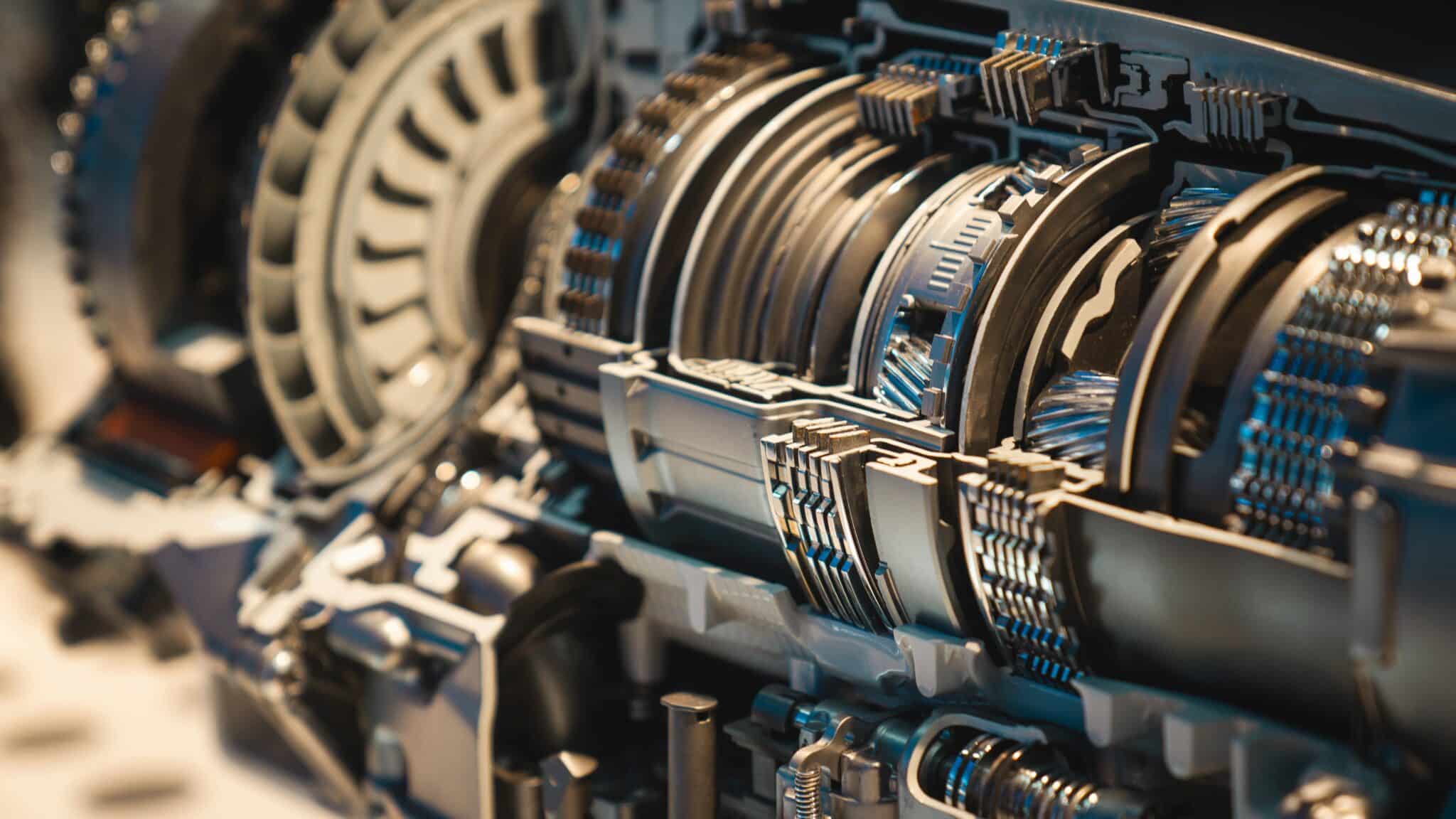
Electric motors are at the heart of countless modern machines, from factory automation and robotics to medical equipment and specialized industrial systems. But the motion produced by a motor is rarely the motion the application actually needs.
Many electric motors operate efficiently at relatively high rotational speeds. The machine connected to them may instead need slower movement, greater torque, controlled acceleration, or repeatable positioning. Bridging that gap is one of the fundamental tasks of mechanical transmission design.
A motor provides power. The transmission determines how that power becomes useful motion.
Join The European Business Briefing
New subscribers this quarter are entered into a draw to win a Rolex Submariner. Join 40,000+ founders, investors and executives who read EBM every day.
SubscribeWhy Motor Speed and Machine Speed Rarely Match
Choosing a motor involves balancing speed, torque, size, efficiency, and operating conditions. Yet the final movement required by the machine can be very different from the motor’s natural operating range.
A conveyor may need to move slowly while carrying a substantial load. A robotic joint may require controlled movement and significant torque. An automated actuator may need to perform thousands of repeated movements without sacrificing positioning accuracy.
In each case, the required output speed and torque differ from what the motor produces directly.
This is where a gearbox changes the relationship between the motor and the load. By reducing rotational speed, the transmission can increase the torque available at the output and adapt the motor’s characteristics to the actual task.
How Gear Reduction Turns Speed Into Usable Torque
A gear reduction ratio describes the relationship between input and output speed. If the motor rotates faster than the application requires, the gearbox reduces that speed while increasing the torque available to move the load.
Different applications require different ratios. Some need only modest speed reduction, while others require several reduction stages before the output matches the intended movement.
This relationship affects more than headline performance. The selected ratio can influence acceleration, motor workload, efficiency, response time, and control.
For designers, this means that motor and gearbox selection cannot be treated as separate decisions. A powerful motor paired with an unsuitable transmission may still produce disappointing results, while a well-matched drivetrain can make better use of the motor’s operating characteristics.
Why Planetary Gearboxes Work in Compact Motion Systems
Different gearbox architectures solve different mechanical problems. Planetary systems are particularly useful where engineers need to combine high torque density, multiple reduction ratios, compact dimensions, and precise motion.
Their internal layout distributes force across several gears, making it possible to achieve significant reduction within a relatively compact assembly.
For engineers comparing small planetary gearboxes, physical size is only one consideration. The choice also depends on required torque, input speed, reduction ratio, backlash, operating cycle, and motor technology.
A gearbox used for occasional positioning may face very different requirements from one operating continuously in automated equipment. Likewise, an application requiring frequent reversals may place greater importance on backlash than a system rotating mainly in one direction.
The correct transmission is therefore defined by the motion profile, not simply by the available space.
Why Backlash Matters in Precision Motion
Whenever gears engage, a small amount of clearance is necessary between their teeth. This can create backlash, meaning a slight delay between reversing the input direction and seeing the corresponding movement at the output.
In many machines, limited backlash has little practical consequence. In precision positioning systems, however, it can affect repeatability and responsiveness.
Consider a robotic axis that repeatedly changes direction. The control system may command the motor immediately, but mechanical clearance within the drivetrain can introduce a small difference between commanded and actual movement.
Reducing backlash helps create a more direct relationship between motor input and output motion. This is particularly important where movement must be smooth, predictable, and repeatable.
Transmission Design Affects the Entire Machine
Gearbox selection influences more than the drivetrain itself. A different reduction ratio may allow engineers to use a motor with different speed or torque characteristics. A compact transmission can change how components are arranged within the machine. Lower backlash can support more precise control, while operating conditions can affect efficiency and service life.
For this reason, effective motion system design requires engineers to consider the motor, gearbox, load, controller, and mechanical structure as parts of the same system. Optimizing one component in isolation does not necessarily optimize the machine.
Designing Around the Motion the Machine Actually Needs
Electric motors and modern control systems can manage speed and position with remarkable precision. Yet software cannot change the basic mechanical relationship between motor speed, torque, and load. That relationship is shaped by the transmission.
The most effective drivetrain is therefore not necessarily the one with the largest motor or the highest theoretical torque. It is the combination that converts available power into the speed, force, accuracy, and responsiveness the application actually requires. A motor creates rotation. Transmission design turns that rotation into useful work.






