





























BRUSSELS, 25 September 2026 — EBM Newsdesk Analysis-Nick Staunton
Europe’s car industry is facing a crisis that is no longer confined to falling sales or the difficult transition to electric vehicles. Chinese competition, high European production costs, weak profitability, tariffs and years of overcapacity are forcing some of the continent’s biggest manufacturers to rethink the industrial model that made them global leaders. Now, as Europe dramatically increases defence spending, an unexpected question is emerging: could the threat of war help rescue parts of the automotive industry?
The argument is not as far-fetched as it first sounds. Europe has enormous industrial capacity, highly skilled engineers and a vast network of factories and component suppliers. But much of that infrastructure was designed around a car market that is no longer producing the volumes or margins it once did.
Join The European Business Briefing
New subscribers this quarter are entered into a draw to win a Rolex Submariner. Join 40,000+ founders, investors and executives who read EBM every day.
SubscribeThe Car Industry’s Structural Problem
Volkswagen is the clearest example. Europe’s largest carmaker is undertaking the biggest restructuring in its history, with around 100,000 job reductions now associated with its transformation plans. The group is also grappling with excess manufacturing capacity, declining profitability and a dramatic deterioration in its position in China.
EBM has previously examined Volkswagen’s job cuts and the wider consequences for German manufacturing. The problem extends far beyond Wolfsburg. Germany’s automotive industry lost 42,300 jobs in the year to June, with employment among manufacturers and suppliers falling sharply.
At the same time, Chinese manufacturers are moving aggressively into Europe. Chinese-branded vehicles accounted for about 9% of EU sales in the first half of 2026, according to Reuters, while some analysts expect their share of the wider European market to rise substantially over the coming decade.
China Has Changed the Competitive Equation
The uncomfortable reality for European manufacturers is that the threat is no longer simply Chinese cars being imported into Europe.
Chinese companies are increasingly establishing production inside Europe itself. BYD, Chery and Geely are building or expanding European manufacturing operations, while Stellantis has gone further by opening parts of its European industrial footprint to Chinese brands.
EBM recently examined how Stellantis is opening European factories to Chinese rivals, a development that illustrates the underlying problem: European factories have capacity, but European manufacturers do not necessarily have enough profitable vehicles to fill them.
The result is an extraordinary industrial contradiction. Europe has factories that need work and workers who need employment, while simultaneously importing or hosting competitors capable of producing vehicles at lower costs.
Could Defence Provide an Answer?
This is where Europe’s security crisis changes the calculation.
Governments across Europe are committing substantially more money to defence as the continent reassesses its military capabilities and its dependence on the United States. That spending requires manufacturing capacity — from vehicles and engineering systems to electronics, precision components, robotics and advanced materials.
Volkswagen has already provided a real-world example. Its Osnabrück plant, where car production is scheduled to end in 2027, is being considered for conversion into defence production. A proposed deal involving Israel’s Aurelius Capital and the German state of Lower Saxony could preserve around 1,400 of the plant’s 1,800 jobs, with the facility potentially producing components for air-defence systems.
That could become a template for other struggling industrial sites.
From Cars to Defence
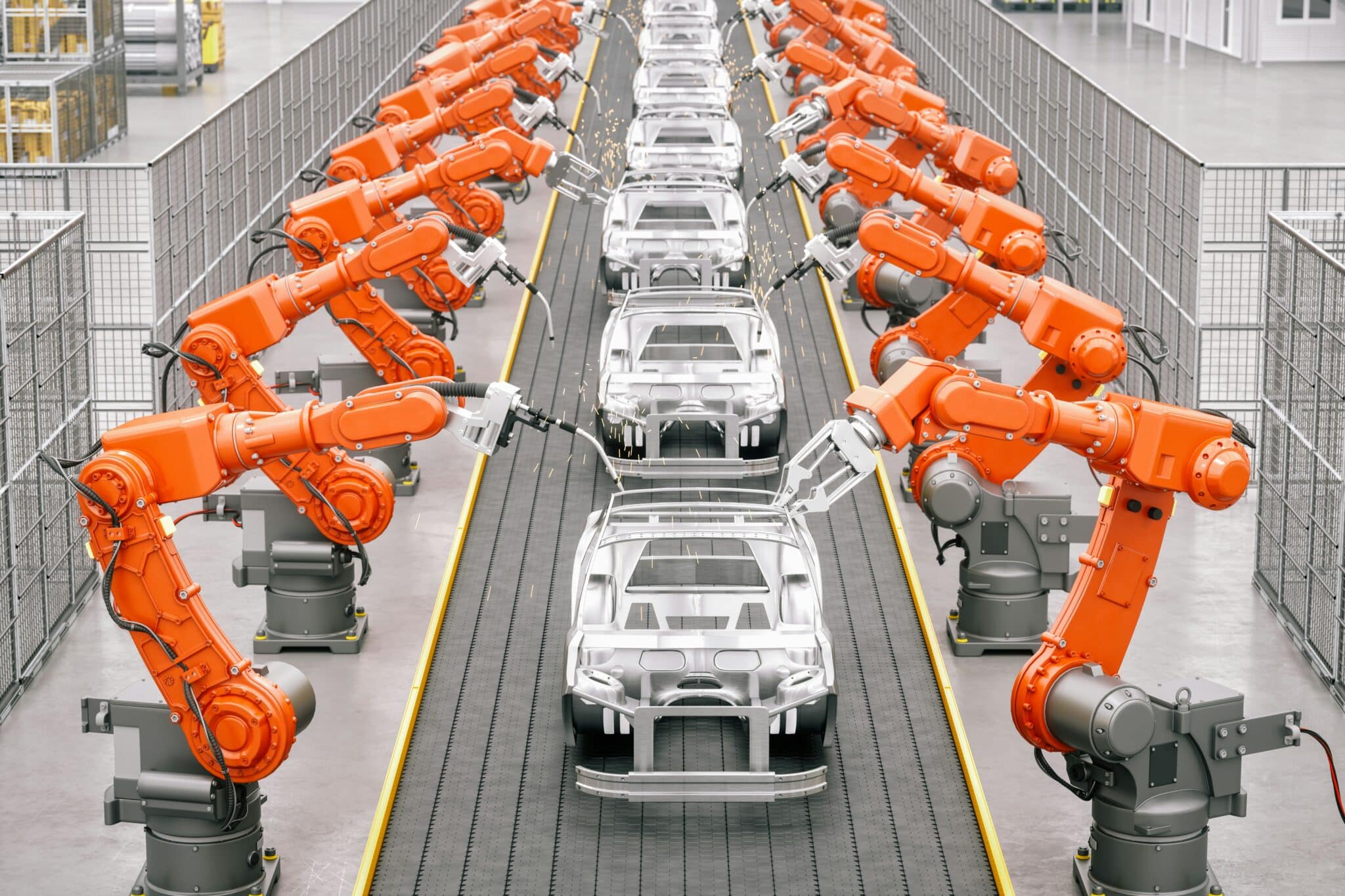
Europe’s automotive supply chain is particularly interesting because many of the capabilities required by modern defence industries overlap with those already found in car manufacturing: precision engineering, batteries, electronics, software, sensors, robotics, logistics and advanced materials.
EBM has already reported how German automotive suppliers are moving into defence and aerospace as traditional automotive demand weakens. This is potentially one of the most important consequences of Europe’s rearmament programme: it could prevent industrial capabilities from disappearing altogether.
But defence spending cannot simply replace the European car market.
A factory designed to produce hundreds of thousands of vehicles cannot necessarily be transformed overnight into a profitable defence operation. Defence procurement also operates on longer cycles, involves strict certification requirements and depends heavily on government budgets.
Europe’s Industrial Policy Is Changing
The bigger issue is therefore whether Europe can use the current crisis to redesign its industrial base rather than simply protect existing companies.
Brussels is already moving in that direction. Its proposed Industrial Accelerator Act includes “Made in EU” provisions designed to strengthen European manufacturing and reduce dependence on China in strategically important sectors, including electric vehicles.
EBM’s analysis of China’s growing share of Europe’s car market has highlighted the scale of the challenge. Meanwhile, the EU is even considering restrictions on Chinese hybrid imports as competition intensifies.
The question is whether these policies can give European manufacturers enough time to become genuinely competitive again.
A Defence Dividend for Europe’s Car Industry?
The threat of war may therefore provide an unexpected industrial lifeline — but not necessarily by saving the traditional car business.
The more plausible outcome is that Europe’s automotive ecosystem becomes something broader: part automotive, part defence, part advanced manufacturing. Factories that cannot compete producing conventional cars may find new purposes producing military vehicles, components, electronics, batteries or aerospace systems.
That would not solve Europe’s automotive crisis. But it could prevent the loss of industrial capabilities that took generations to build.
And that may ultimately be the real strategic prize.