































It never starts at the loading dock. Transport risk gets designed into an industrial project months earlier, in the drawings, the procurement schedule and the route survey nobody commissioned in time.
A crane pad poured to the wrong dimensions or a permit filed a week late rarely looks like a logistics failure at the moment it happens. By the time anyone traces it back, the load is already parked at a weigh station.
The seven risks below recur across industrial builds, from process plants to wind farms. Plan for each before ground breaks, and the transport plan stops being a guess.
Join The European Business Briefing
New subscribers this quarter are entered into a draw to win a Rolex Submariner. Join 40,000+ founders, investors and executives who read EBM every day.
Subscribe1. Incomplete Cargo Dimensions and Weight Data
Every routing decision starts with three numbers: length, width and weight, and plenty of projects cannot supply all three with confidence at the quoting stage. A vendor’s shipping weight often excludes crating, skids or temporary bracing, and that gap can push a load into a higher permit class overnight.
Get the certified numbers first. A carrier who plans around the wrong axle weight distribution finds out at a weigh station, not before, and that single mismatch can strand a transformer or a reactor vessel for days.
Confirm dimensions and weight, packaging included, before a route is quoted rather than after a trailer is booked. A figure revised late is a change order waiting to happen.
2. Urgent Replacement Parts and Time-Critical Equipment
Dimensions are not the only variable: even a well-planned project loses a bearing, a control module or a gearbox mid-build, and the standard freight network is built around schedules, not emergencies. A full truckload carrier plans days ahead, and a less-than-truckload run adds stops that a failed part cannot wait through.
When a compressor fails, the fix cannot wait for a scheduled truckload, a consolidated LTL pickup or a flight. Titan Worldwide Logistics’ time-critical hotshot trucking is that category: one dedicated truck, on the road within hours.
Decide which supplier can dispatch within the hour before the part fails, not after. Waiting until the outage to make that call adds hours nobody has.
3. Route, Bridge and Access Constraints
Beyond those dispatches, routing still decides the move: a route that works on a map can fail at one bridge, roundabout or low railway crossing that no standard GPS routing tool ever flags. Bridge postings, vertical clearances and weight limits on secondary roads are the usual points where an otherwise sound plan comes apart.
Site access compounds it. A gate built for delivery vans does not swing a 130-foot load the way it swings a flatbed, and the turning radius at the final quarter mile matters as much as the miles of highway before it.
Width alone can trigger an escort, and the threshold shifts by state, commonly somewhere between 12 and 14 feet. A load that clears width comfortably in one state can still need a trailing police escort three miles past the next border.
Commission a route survey that walks the actual path. A desktop review misses the low bridge every time.
4. Permits and Jurisdictional Lead Times
An oversize or overweight load leaving the federal 80,000-pound gross limit on the Interstate system needs a state permit, and every state runs its own process on its own clock. A superload crossing three states can mean three applications, three fee schedules and three sets of escort rules that rarely line up on one calendar.
The clock is not generous. Oversize permits often need five to ten business days’ notice, longer for a superload, so file against the construction schedule, not the transport one.
| Key Insight: A permit rejected for one dimension error restarts the state’s clock rather than pausing it. |
5. Carrier and Trailer Suitability
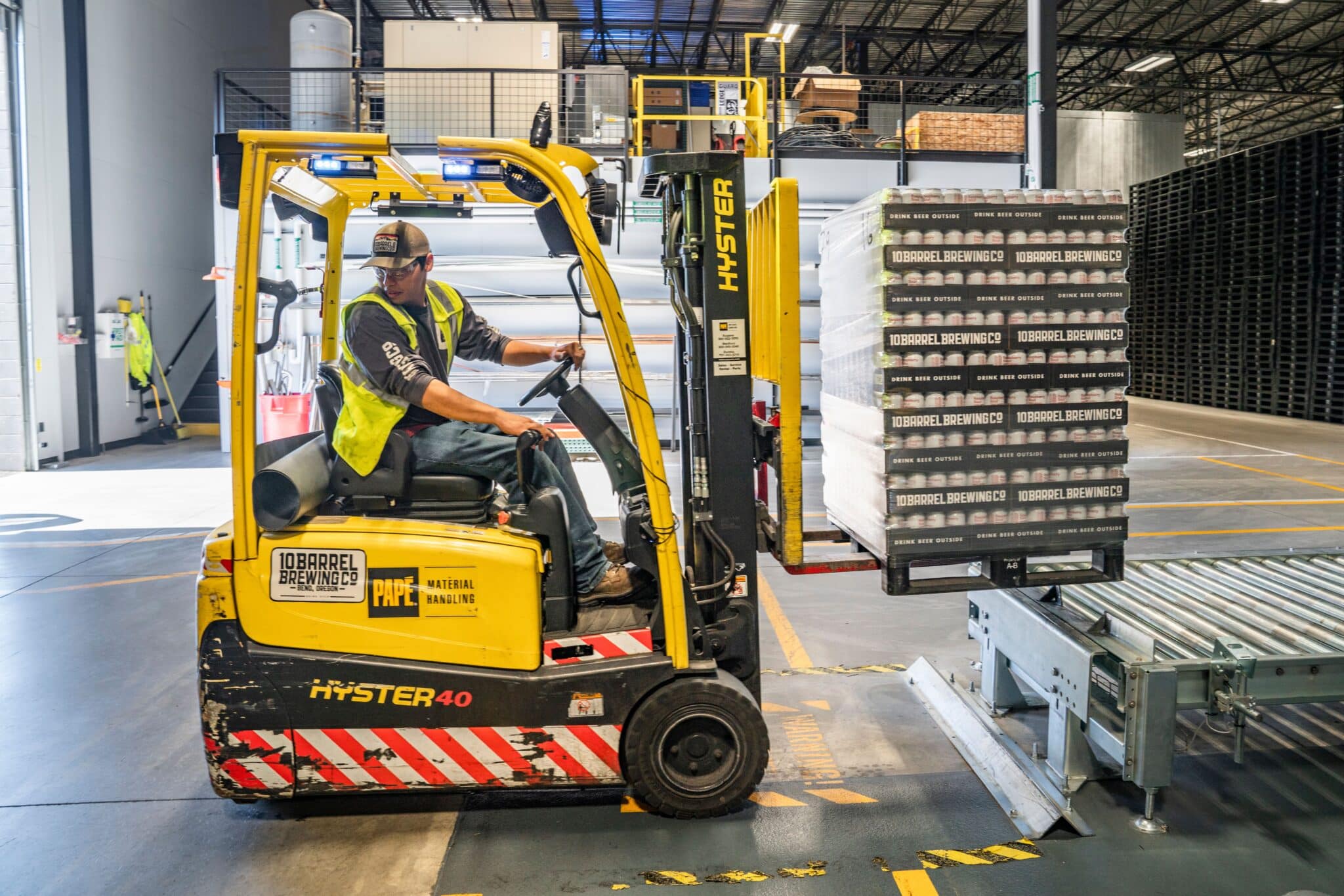
A standard flatbed does not move a 14-foot-tall reactor vessel. The difference between a step-deck, a double-drop and a removable-gooseneck trailer is not cosmetic, since deck height decides whether the load clears the bridges the route survey already flagged.
Rigging carries its own standard. OSHA’s rigging equipment rule, 29 CFR 1926.251, covers the slings, shackles and chains used to lift and tie down industrial loads, and a carrier who cannot produce current inspection records on that equipment is not qualified for the job.
Ask for the carrier’s permit history on this exact corridor, not a fleet list. A trailer that fits the load is only half the qualification.
6. Weather, Security and Handoff Contingencies
A crew that has cleared every permit can still lose a day to a storm front, a wildfire closure or a security escort that could not be arranged on short notice. Wide loads travel slower and stop for weather limits a standard truck ignores, so a six-hour delay can become a two-day hold once curfews and escorts are added in.
Handoffs are the weak point. A load that changes carriers at a port, rail yard or state line without a documented inspection arrives with damage nobody can trace to a cause.
Build weather and escort contingency into the schedule as a fixed line, not a footnote. A plan that assumes clear roads every day is planning for the best case only.
7. Communication, Escalation and Proof-of-Delivery Controls
A load in transit raises questions the project office cannot answer without a live channel to the driver and the carrier’s own dispatcher. Delays compound fast when the first person to spot a problem has no clear, agreed path to escalate it before the site crew is standing idle waiting on the part.
Live GPS tracking and automated milestone alerts turn a phone call into a shared record everyone can check. A carrier who cannot provide either is asking the project office to trust a static ETA typed into an email three days ago.
A signature is not proof. Photographs of the load on arrival, a documented condition check and a timestamped handoff protect both sides when a damage dispute surfaces weeks later.
Set the escalation chain and the delivery documentation standard inside the transport contract, not after the first miss. A carrier who agrees to both before the first load moves is far easier to hold to them later.
Your Next Steps
Skip the register and you are guessing. Put these seven risks into a single pre-mobilisation register before ground breaks, one line per risk, with an owner, a trigger date and a fallback carrier or route in case the first plan fails.
Review it at every major schedule gate, not just at kickoff, because dimensions change, permits expire and carriers get reassigned mid-project. The projects that avoid a transport crisis mid-build are the ones that keep working the register instead of filing it after the first draft.






