































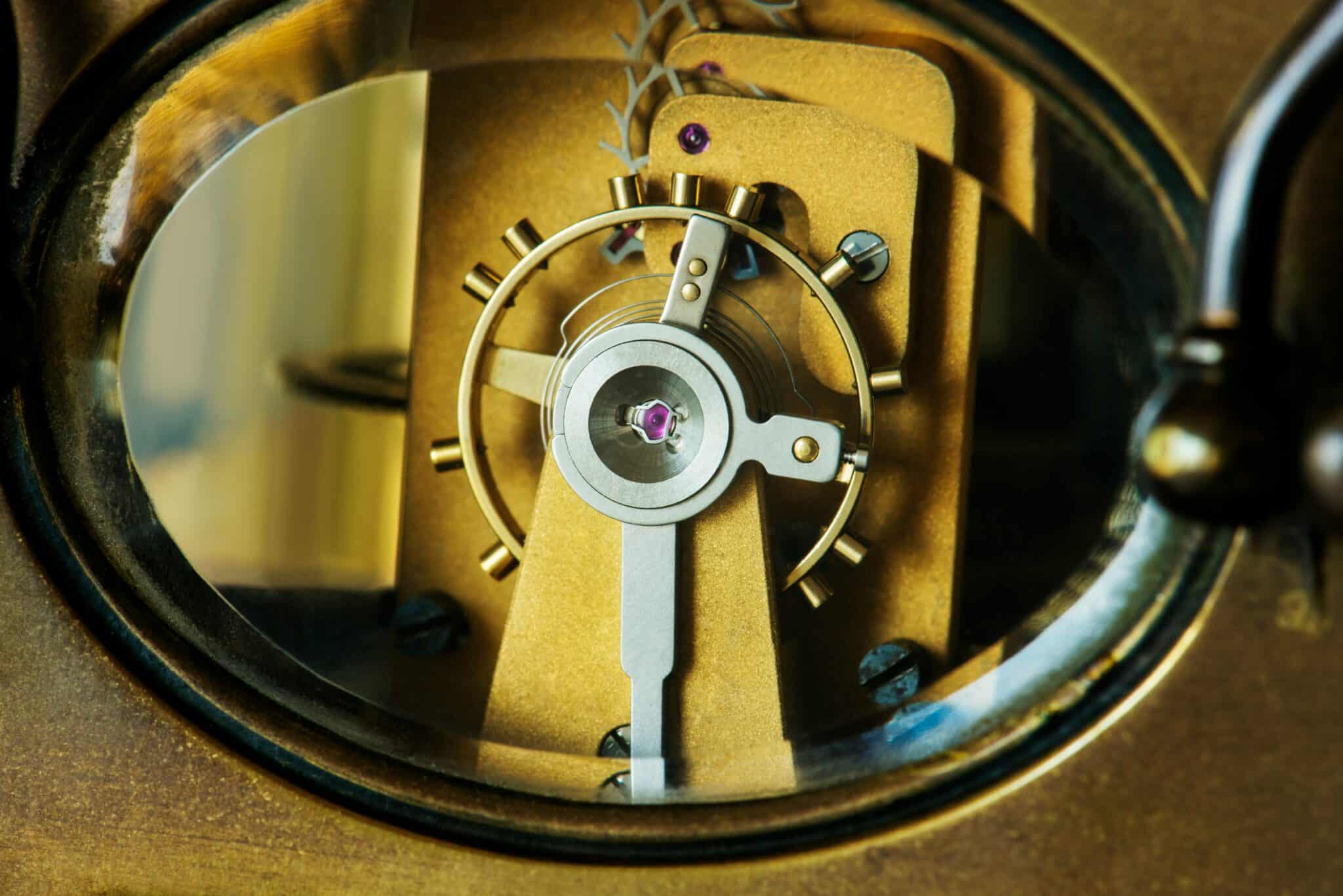
Most people know that an automatic watch is powered simply by the movement of the wearer’s wrist. Every step, gesture, or change in direction helps keep the watch running without the need for a battery. Understanding how this process works also explains why accessories such as single watch winders have become a practical solution for many automatic watch owners. Yet few people stop to consider how this seemingly effortless process actually works.
Behind every automatic movement lies one of the most ingenious mechanical inventions in modern horology, the rotor. At first glance, it appears to be little more than a semicircular piece of metal that swings freely inside the case. In reality, it is a carefully engineered component responsible for converting unpredictable human motion into a controlled source of energy capable of powering hundreds of precisely manufactured parts.
The design of the rotor influences far more than whether a watch stays wound. Its weight, shape, materials, and interaction with the winding system all affect winding efficiency, power reserve, movement thickness, and even the wearing experience itself. Different manufacturers approach these challenges in different ways, which is why two automatic watches can behave quite differently despite sharing the same basic principle.
Join The European Business Briefing
New subscribers this quarter are entered into a draw to win a Rolex Submariner. Join 40,000+ founders, investors and executives who read EBM every day.
SubscribeUnderstanding the engineering behind the rotor offers a deeper appreciation of automatic watches. It reveals that one of the simplest-looking components inside the movement is also one of the most sophisticated, combining physics, precision engineering, and decades of horological innovation into a mechanism that quietly works every time the watch is worn. This attention to the mechanics of automatic watches is also reflected in solutions developed by Barrington Watch Winders, whose products are designed to support the everyday use of self-winding mechanical timepieces.
The Rotor: The Heart of Every Automatic Movement
Before the invention of automatic winding systems, mechanical watches depended entirely on manual winding. Owners needed to turn the crown regularly to tighten the mainspring and maintain enough stored energy for the movement to operate. While this approach had worked for centuries, it relied on consistent user attention and offered little convenience for everyday wear.
The breakthrough came with the development of the self-winding rotor. Instead of relying solely on manual input, engineers created a mechanism capable of harvesting the wearer’s natural movements throughout the day. This innovation transformed automatic watches from precision instruments that required regular intervention into timepieces that could maintain themselves during normal use.
The rotor is immediately recognizable inside an automatic movement. It is typically a semicircular weight mounted on a central pivot, allowing it to rotate freely through almost a full circle. Its distinctive shape is not an aesthetic choice but an engineering solution. By concentrating most of the mass on one side, the rotor remains deliberately unbalanced. Gravity and wrist motion naturally cause the heavier side to swing, generating the rotational movement needed to drive the winding system.
A full circular disc might appear to provide more material, but it would distribute weight evenly around the center and significantly reduce the rotational force created by changing wrist positions. The familiar half-moon design maximizes inertia while leaving much of the movement visible and keeping overall thickness under control. Over decades of refinement, this balance between efficiency, visibility, and compactness has made the semicircular rotor the dominant solution in automatic watchmaking.
The rotor itself does not power the watch directly. Instead, it acts as the first link in a carefully engineered chain that transfers kinetic energy through a series of gears before eventually winding the mainspring. Every rotation contributes a small amount of stored energy, and thousands of these tiny movements throughout the day combine to keep the watch running.
From Wrist Motion to Stored Energy: What Really Happens Inside
One of the most remarkable aspects of an automatic watch is that it transforms completely unpredictable human movement into a stable and reliable source of power. Every motion of the wrist is different. Some movements are slow and deliberate, while others are quick and energetic. Despite this randomness, the winding system continuously converts these motions into controlled mechanical energy.
This process happens through a carefully coordinated sequence of components rather than through the rotor alone. Each part has a specific function, and even small inefficiencies at one stage can affect the overall performance of the movement.
The journey from wrist motion to stored energy can be broken down into several steps:
- The wearer’s wrist moves naturally throughout the day, whether walking, driving, typing, or performing countless other everyday activities.
- The rotor begins to rotate as gravity and inertia act on its off-center weight, allowing it to swing freely around its pivot.
- The rotor transfers its motion through a series of carefully engineered gears that regulate both the speed and direction of the winding process.
- The winding mechanism gradually tightens the mainspring inside the barrel, where mechanical energy is stored until it is needed.
- The escapement and balance wheel release that stored energy in precise, controlled intervals, allowing the hands to move at a consistent rate and keeping accurate time.
Although the process appears simple, every stage depends on precise manufacturing and efficient energy transfer. Even small improvements in friction reduction, lubrication, and gear design can significantly improve winding performance over time.
Why Not All Rotors Are Built the Same
Although every automatic rotor performs the same basic task, not all rotors are engineered in the same way. Over decades, watchmakers have refined rotor design to improve winding performance, reduce movement thickness, increase durability, and explore different technical solutions. As a result, different watches often use completely different approaches to achieve the same goal.
One key difference lies in how energy is captured from rotor movement. Some movements use unidirectional winding, where energy is transferred only when the rotor spins in one direction. In the opposite direction, the rotor moves freely without generating power. This simpler approach reduces mechanical complexity.
Other calibers use bidirectional winding, where energy is generated regardless of rotor direction. This requires a more complex gear system, but it can improve overall winding efficiency during normal wear.
Rotor architecture also varies significantly between brands:
| Rotor type | Main characteristics | Examples |
| Central rotor | Mounted above the movement; highly efficient and widely used | Rolex, Omega, Tudor |
| Micro-rotor | Integrated into the movement to reduce thickness while maintaining visibility | Patek Philippe, Bulgari, Chopard |
| Peripheral rotor | Rotates around the edge of the movement for thin profile and open design | Carl F. Bucherer, Breguet |
Material choice is another important factor. Since rotors rely on mass and inertia, manufacturers often use dense materials to improve efficiency. Stainless steel is common in reliable mass-produced movements, while higher-end watches may use tungsten, gold, or platinum to increase weight without enlarging the component.
Design also plays a visual role. Some rotors are heavily skeletonized to reveal the movement beneath a sapphire caseback, while others use solid structures to maximize inertia. Finishing techniques such as engraving, Geneva stripes, perlage, or decorative inserts further enhance visual appeal without affecting function.
Ultimately, there is no single “best” rotor design. Each configuration represents a balance between efficiency, thickness, durability, aesthetics, and intended use. A dress watch, a dive watch, and a haute horlogerie piece will all prioritize different engineering goals.
Why Some Watches Wind Faster Than Others
Many watch owners assume that all automatic watches wind at roughly the same rate. In reality, two watches worn under identical conditions can build very different power reserves. The reason is that winding performance depends on far more than the rotor itself.
The wearer’s lifestyle also makes a noticeable difference. Someone who spends the day walking between meetings or working with their hands will usually generate more rotor movement than someone sitting at a computer for eight hours. However, more activity does not always mean proportionally more winding, since modern movements are designed to make efficient use of ordinary daily motion.
The watch itself also influences how quickly energy is stored. Larger or heavier rotors can generate greater inertia, while movements with longer power reserves often require more energy before reaching full capacity. Watches with additional complications may also consume more power as they drive extra mechanical functions.
The table below summarizes some of the factors that influence winding efficiency.
| Factor | Effect on winding performance |
| Movement design | Determines how efficiently rotor motion is converted into stored energy |
| Rotor mass | A heavier rotor generally creates greater inertia, although it also increases mechanical loads |
| Daily activity | More natural wrist movement usually generates more winding energy |
| Power reserve | Longer power reserves typically require more stored energy before reaching full capacity |
| Complications | Additional functions may increase overall energy consumption |
Winding speed should not be viewed as a measure of quality. Different movements are designed with different priorities, including power reserve, movement thickness, durability, and overall efficiency.
What Happens When an Automatic Watch Is Left Unworn
When an automatic watch is left unworn for several days, the mainspring eventually releases all of its stored energy, and the movement stops. While restarting a simple three-hand watch takes only a few seconds, watches with complications such as GMT displays, moon phases, or perpetual calendars may require considerably more time to reset.
Fortunately, allowing an automatic watch to stop does not normally damage the movement. Modern mechanical watches are designed to start again as soon as power is restored. The inconvenience lies not in restarting the movement itself, but in restoring all of the watch’s functions to their correct settings.
For simple time-and-date watches, this process is usually quick and straightforward. However, when a watch is left unworn for longer periods, especially those with multiple complications, resetting can become noticeably more time-consuming.
For this reason, many enthusiasts choose to keep certain watches running between wears. One option is a single watch winder, which rotates the watch at carefully controlled intervals to simulate the natural movement of the wrist. Rather than spinning continuously, quality watch winders operate according to programmed cycles that match the winding requirements of different automatic movements.
Modern models, such as those offered by Barrington Watch Winders, allow users to adjust turns per day (TPD), select clockwise, counterclockwise, or alternating rotation, and operate with quiet motors suitable for everyday use. Compact single-watch models are particularly practical for owners who regularly rotate one favorite automatic watch while wanting it to remain ready to wear without repeated resetting.
Ultimately, whether an owner chooses regular wear, occasional manual winding, or a watch winder, the goal remains the same: ensuring the movement stays powered so the rotor and winding system can operate as intended.
Conclusion
The automatic rotor is one of the defining innovations of modern mechanical watchmaking. By transforming everyday wrist movement into stored energy, it allows an intricate mechanical movement to operate without batteries while demonstrating the precision and ingenuity that make automatic watches so fascinating to own.
Understanding how the rotor works also helps owners make informed decisions about everyday use. Whether through regular wear, manual winding, or accessories designed to keep automatic movements running, such as those developed by Barrington Watch Winders, the goal is the same: keeping a finely engineered mechanical watch ready to perform as its makers intended.