































EBM NEWSDESK ANALYSIS-Nick Staunton, Editor-in-Chief
Six billion global engagements, $871 million in prize money, $3.8 billion in broadcast rights. The 2026 FIFA World Cup is the most commercially engineered sporting event in history. The numbers behind it tell a story football’s governing body would rather you didn’t read too carefully.
The 2026 FIFA World Cup kicks off in Mexico City tomorrow. Forty-eight teams, 104 matches, 16 host cities across three countries, 39 days of competition ending at MetLife Stadium in New Jersey on 19 July. The football is the spectacle. The business behind it is something more consequential — a $13 billion commercial cycle built on broadcast rights, sponsorship architecture, prize money distributions and advertiser ROI calculations that have been running since the bids closed in 2018.
Here is what the tournament is actually worth, to whom, and what the numbers mean.
Join The European Business Briefing
New subscribers this quarter are entered into a draw to win a Rolex Submariner. Join 40,000+ founders, investors and executives who read EBM every day.
SubscribeThe Audience
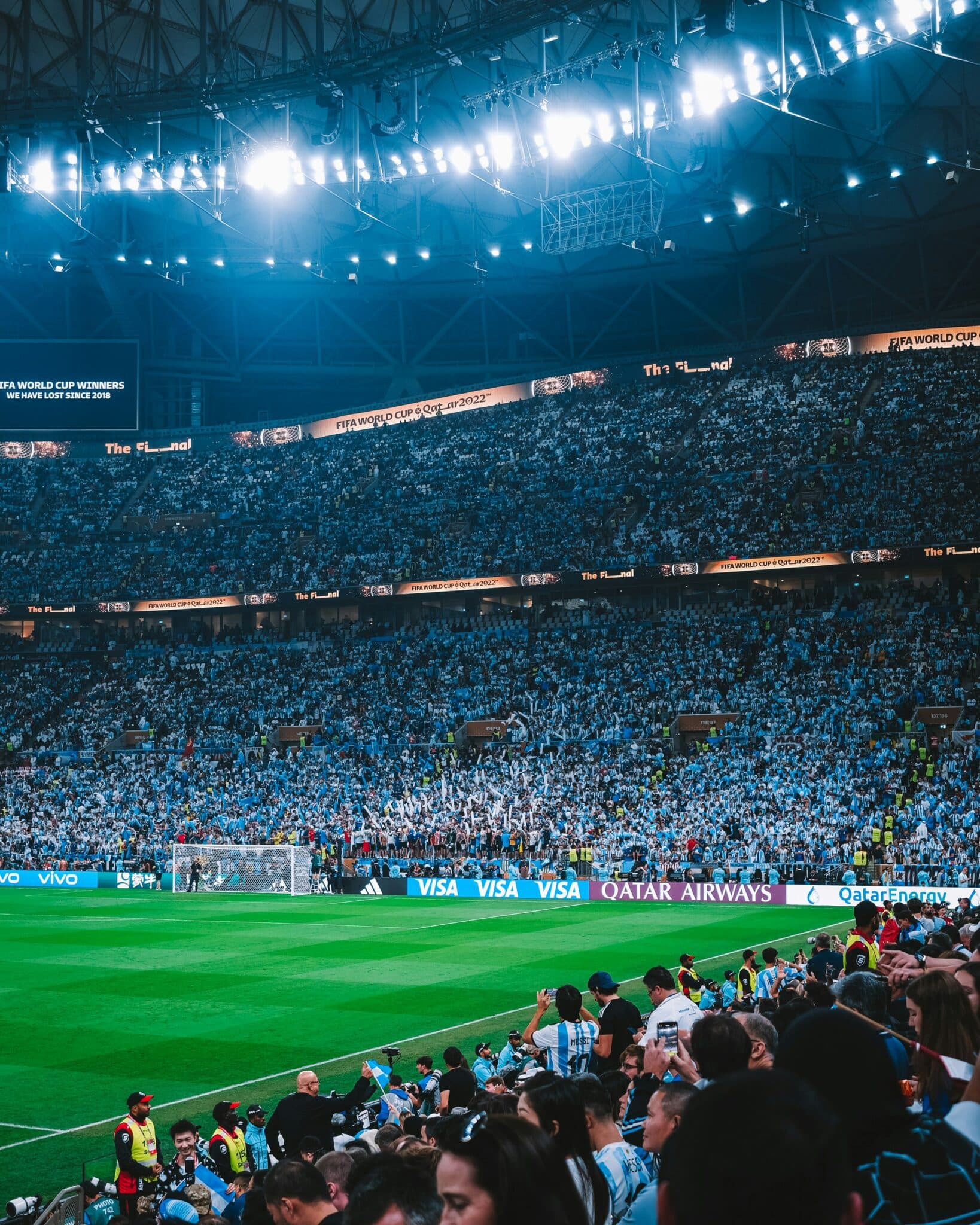
The benchmark is Qatar 2022. FIFA’s verified Global Audience and Engagement Report recorded five billion people engaging with that tournament. The final between Argentina and France drew 1.5 billion viewers — the largest single audience in the history of television. The 2026 edition is built to exceed both figures.
FIFA’s official projection is six billion global engagements. That number requires context. Modern audience measurement bundles live broadcast, streaming, digital platform interaction, social media consumption and out-of-home viewing into a single composite figure. It is not 6 billion people watching simultaneously. It is 6 billion instances of engagement across 39 days and 104 matches — a meaningful distinction when advertisers are making ROI calculations.
The pure live broadcast audience is harder to pin down but the structural drivers are clear. The North American time zones push primetime matches into accessible evening slots for European viewers and daytime slots for parts of Asia — a scheduling advantage Qatar’s November tournament could never offer. The expansion to 48 teams means more nations have skin in the game. More nations means more broadcasters invested, more advertising markets activated and more emotional engagement sustained deeper into the tournament.
The US market alone signals the scale of the shift. Fox Sports holds exclusive English-language rights for all 104 matches. Telemundo broadcasts 92 matches on free-to-air Spanish-language television. The World Cup Final Draw earlier this year drew 1.23 million viewers on Fox — up 242% on the equivalent 2022 broadcast. That is the pre-tournament audience. The tournament itself will dwarf it.
The Broadcast Economics
The regional picture is more complicated. China — the world’s largest potential football market — offered $50 million for rights. FIFA had projected over $300 million. The North American time zones make most matches broadcast after midnight in China, collapsing the advertising market that would justify the rights fee. India faces a similar structural problem. Southeast Asia broadly mirrors it. FIFA’s $13 billion cycle target was revised upward from $11 billion but the Asian broadcast gap remains its most significant commercial underperformance.
DAZN has emerged as the primary streaming rights holder across Japan, Italy and Spain — a signal that linear broadcast’s grip on even the world’s most watched sporting event is loosening. FIFA has responded by striking preferred platform agreements with YouTube and TikTok, structured to channel social audiences toward licensed coverage while capturing a share of the advertising revenue those platforms generate. The broadcast model is fragmenting. FIFA is monetising the fragments.
What Advertisers Are Paying — and Why
The World Cup sells advertisers something no other property can match: a genuinely global, genuinely simultaneous audience with no meaningful demographic ceiling. The Super Bowl delivers 125 million US viewers. The World Cup delivers multiples of that across markets that do not overlap.
The CPM — cost per thousand viewers — commanded by World Cup broadcast inventory is among the highest in global media. In the US market, Fox Sports has priced 30-second spots in the final at figures analysts estimate between $600,000 and $800,000. European broadcast inventory commands lower absolute prices but higher reach-to-cost ratios given free-to-air coverage across major markets including Germany, France, the Netherlands and Belgium.
The sponsorship portfolio tells the same story. FIFA has projected $2.4 billion in tournament sponsorship revenues — the largest in World Cup history — with Chinese corporations including Mengniu Dairy, Hisense and Wanda Group among the most aggressive buyers despite the broadcast gap in the Chinese domestic market. For those brands, the World Cup is not a media buy. It is a global brand-building exercise using football as the vehicle. The return on that investment is measured in years, not campaign cycles.
The Prize Money Architecture
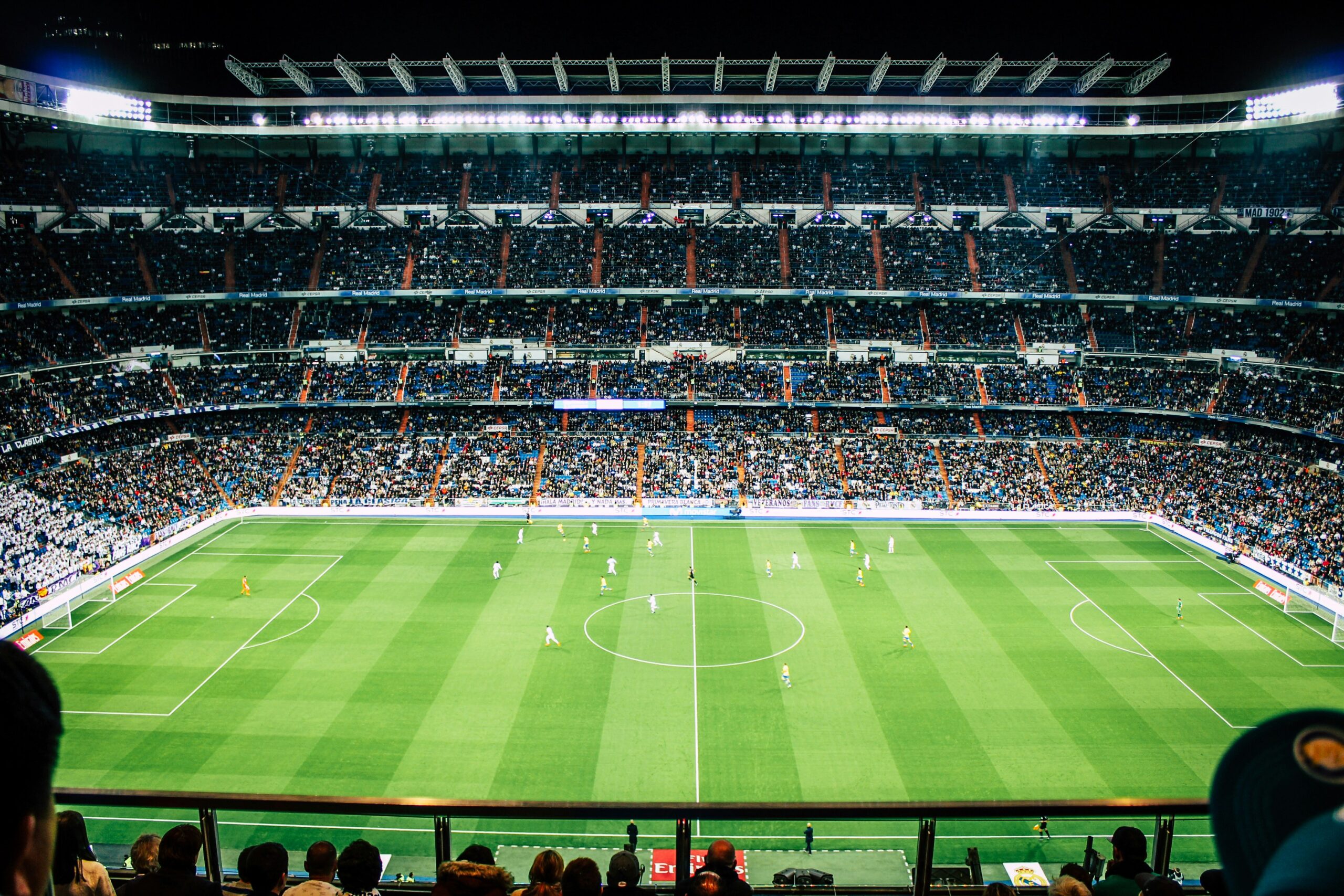 FIFA has confirmed a total prize fund of $871 million — a 65% increase on Qatar’s $440 million pool. Every nation is guaranteed $12.5 million simply for qualifying, plus a $10 million qualification payment and a $2.5 million preparation fee. The structure is designed to ensure that even the earliest eliminations generate meaningful revenue for smaller football federations.
The prize ladder escalates sharply with performance. Teams reaching the Round of 32 receive $11 million. The Round of 16 delivers $15 million. Quarter-finalists collect $19 million. Semi-finalists receive $27 million. The runner-up takes $33 million. The champion collects $50 million — up from $42 million in 2022 and nearly double what was awarded a decade ago.
FIFA pays national federations, not players. The distribution between federation reserves, development programmes and player bonuses varies by country. Most federations distribute between 30% and 50% of prize money to playing squads. On a 40% split across a 26-man squad, a World Cup winner would receive approximately $600,000 per player from prize money alone — before individual performance bonuses negotiated separately with federations and before the commercial uplift a World Cup win delivers to a player’s personal endorsement portfolio.
Clubs releasing players also benefit. FIFA is distributing $355 million to clubs whose players are called up — a figure that has grown significantly as the players’ union and club leagues have pushed harder for compensation during international windows.
Winners, Losers and the Broader Calculation
The clearest winner from the 2026 commercial structure is FIFA itself. Revenues in 2025 reached $2.66 billion with total assets rising 54% to $9.48 billion. The tournament’s $8.9 billion direct revenue projection — broadcast, sponsorship, ticketing, hospitality, digital — will substantially exceed anything the organisation has previously generated from a single event.
The clearest loser is the Asian broadcast market. The time zone problem is structural and FIFA’s pricing expectations were not adjusted to reflect it. The gap between the $300 million projected from China and the $50 million offered is not a negotiating failure. It is a fundamental misalignment between the tournament’s geographic location and its most commercially promising untapped audience.
For broadcasters who paid premium prices — Fox Sports and Telemundo in the US, ITV and BBC in the UK, ARD and ZDF in Germany — the return depends entirely on audience delivery and advertiser demand holding at projected levels. A deep run by the US national team, which is in the host group, would significantly amplify domestic commercial returns. An early US exit would not — but the 104-match schedule provides enough broadcast inventory across 39 days to absorb that risk more effectively than any previous 64-match format could.
The tournament starts tomorrow. The business case was closed years ago.
“The World Cup Final in Qatar drew 1.5 billion viewers — the largest single audience in television history. FIFA is projecting six billion global engagements for 2026. The business was built to exceed both numbers.”
RELATED READS:
- FIFA World Cup 2026: The $8.9bn Business Behind the Game — The full sponsor architecture and commercial framework behind the tournament.
- China’s Trade Imbalance With the EU Hits New High as Imports Fall — China’s broadcast gap mirrors the same structural dynamic shaping its broader commercial relationship with the west.
- SpaceX’s IPO Is Not a Tech Listing. It’s a Defence Privatisation. — The other $1.78 trillion story competing for institutional attention this summer.