



























EBM Newsdesk Analysis
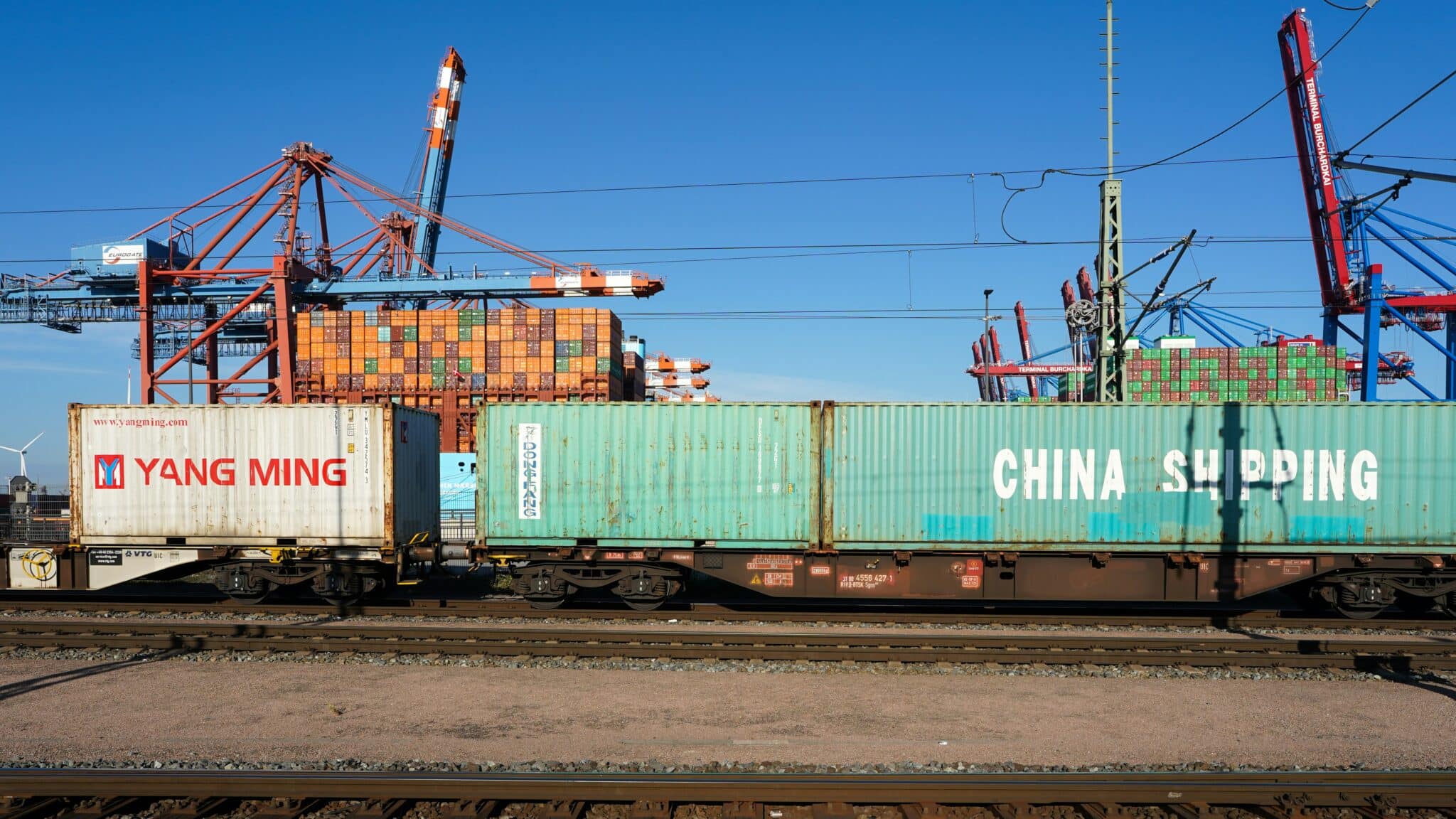
18 May 2026. Europe picked a fight with China over electric vehicles. It imposed tariffs of up to 35.3% on Chinese EV imports. China hit back with anti-dumping duties of 62.4% on European pork and launched investigations into cognac, dairy, and chemicals. Twelve months on, Brussels is quietly retreating — considering replacing the tariffs with voluntary export limits and minimum price agreements. The EV battle was supposed to prove that Europe could stand up to China on trade. Instead it has become a cautionary tale about what happens when the continent tries to fight on multiple fronts simultaneously without a coherent strategy behind it.
The short answer to whether Europe can stand up to China is: sometimes, partially, inconsistently, and at significant cost to itself. That is not the answer anyone in Brussels wants to give. It is, however, the accurate one.
What Europe Got Right
Join The European Business Briefing
New subscribers this quarter are entered into a draw to win a Rolex Submariner. Join 40,000+ founders, investors and executives who read EBM every day.
SubscribeThe EV tariffs were not wrong in principle. The European Commission ran a year-long investigation and concluded that Chinese EV manufacturers received state subsidies at a scale — roughly twice the EU’s own clean-tech subsidy rate as a share of GDP — that gave them a structural cost advantage European manufacturers could not match on a level playing field. Battery cell manufacturing in China costs 20 to 35% less than in Europe. If that advantage was allowed to run unchecked, ECB simulations suggested EU domestic EV production could decline by 70% and European producers’ global market share could fall by 30%. Those are not abstract risks. They are the kind of numbers that end industries.
So the Commission acted. The tariffs were legally grounded, WTO-compatible in design, and passed by a majority of member states. That represented genuine institutional spine — particularly given Germany’s open hostility to the measures, driven by its car industry’s deep dependence on the Chinese market for premium vehicle sales.
What Europe Got Wrong
The execution exposed every fault line in the European project simultaneously.
Germany voted against the tariffs — because BMW, Mercedes, and Volkswagen sell more cars in China than they do in several European markets combined. Spain signalled openness to Chinese investment regardless of EU-wide conditions, hoping to attract factory relocations from other member states. Hungary has been openly courting Chinese manufacturers for years. The EU presented a united front to Beijing while simultaneously fracturing internally — and Beijing noticed.
The retaliation was calibrated and effective. Chinese anti-dumping duties of 62.4% on European pork were not chosen randomly. They targeted French and Spanish agricultural producers — precisely the constituencies most likely to pressure their governments to soften the EV position. Investigations into European cognac, dairy, and chemicals followed. China was not retaliating blindly. It was applying pressure to the EU’s political weak points with surgical precision.
Chinese EV makers are now simply building factories in Europe to circumvent the tariffs entirely. BYD is establishing European production capacity. Chery has opened European headquarters in Liverpool. The tariffs slowed Chinese imports marginally. They did not stop Chinese market penetration — they redirected it. Chinese brands still hold around 13% of Europe’s EV market despite the duties. The Commission’s own analysis describes the results as “mixed but leans positive” — which is Brussels-speak for partial failure.
The Structural Problem
The deeper issue is not whether any specific tariff was well-designed. It is that Europe is trying to compete with China on trade while simultaneously depending on China for the raw materials it needs to transition away from that dependency.
China controls the supply of rare earth elements critical to EV battery production. When Brussels proposed phasing out Chinese telecommunications equipment — targeting Huawei and ZTE from critical infrastructure including solar energy systems and telecoms networks — it did so knowing that Chinese rare earth export controls could tighten in response. As of late 2025, less than a quarter of the rare earth export licence applications monitored by the EU Chamber of Commerce in China had been approved. China has since added five new rare earth elements and refining technology to its export controls list.
The EU’s Critical Raw Materials Act was designed precisely to address this vulnerability — reducing dependence on Chinese-controlled supply chains for lithium, niobium, and rare earths. But implementation has been agonisingly slow. Germany’s €1 billion critical raw materials fund has not approved a single project despite receiving roughly 40 applications. The 2025 budget allocated a paltry €13 million to the programme. The institutional machinery exists. The political will to fund it does not.
The Uncomfortable Trade-off
Europe faces a genuine dilemma that its official communications consistently refuse to acknowledge directly.
Chinese investment in European battery and EV supply chains brings real benefits — expanded production capacity, regional jobs, accelerated decarbonisation. It also brings strategic risks — market distortions from state-subsidised competition, data security vulnerabilities, and long-term economic dependency. Both of these things are simultaneously true. The same tension playing out in the EU-Mercosur deal — economic logic pulling toward engagement, political logic pulling toward caution — runs through every major EU trade decision right now.
The steel sector is next. The Commission is preparing to nearly halve import quotas and double tariffs to 50% on steel imports not covered by existing quotas — the closest Brussels has veered toward outright protectionism. A growing list of industries — machine tools, chemicals, textiles — is queuing for similar protection. Chinese clothing and textile imports to the EU grew 20% in value in the first half of 2025 alone, partly because US tariffs under Trump diverted Chinese exports toward the only major market still partially open.
The same forces reshaping European banking and European manufacturing — a world fragmenting into rival blocs, with Europe caught between American protectionism and Chinese strategic patience — are reshaping the trade relationship with Beijing faster than European institutions can respond coherently.
The Verdict
Can Europe stand up to China on trade? In specific sectors, with adequate political unity, and with a willingness to absorb retaliation — yes. The EV tariffs showed that. But sustainable strategic autonomy requires more than reactive tariffs applied inconsistently across a divided bloc. It requires domestic industrial capacity, alternative supply chains, and the political will to fund them at the scale the challenge demands. Germany needs to stop vetoing measures that hurt its car industry’s China exposure. Spain needs to stop undermining EU-wide investment conditions by offering Beijing a side door. The Commission needs to stop describing partial failures as mixed successes.
Europe has the tools to stand up to China. Whether it has the political coherence to use them consistently is a different question entirely — and the honest answer, in May 2026, is not yet.
Related Analysis