































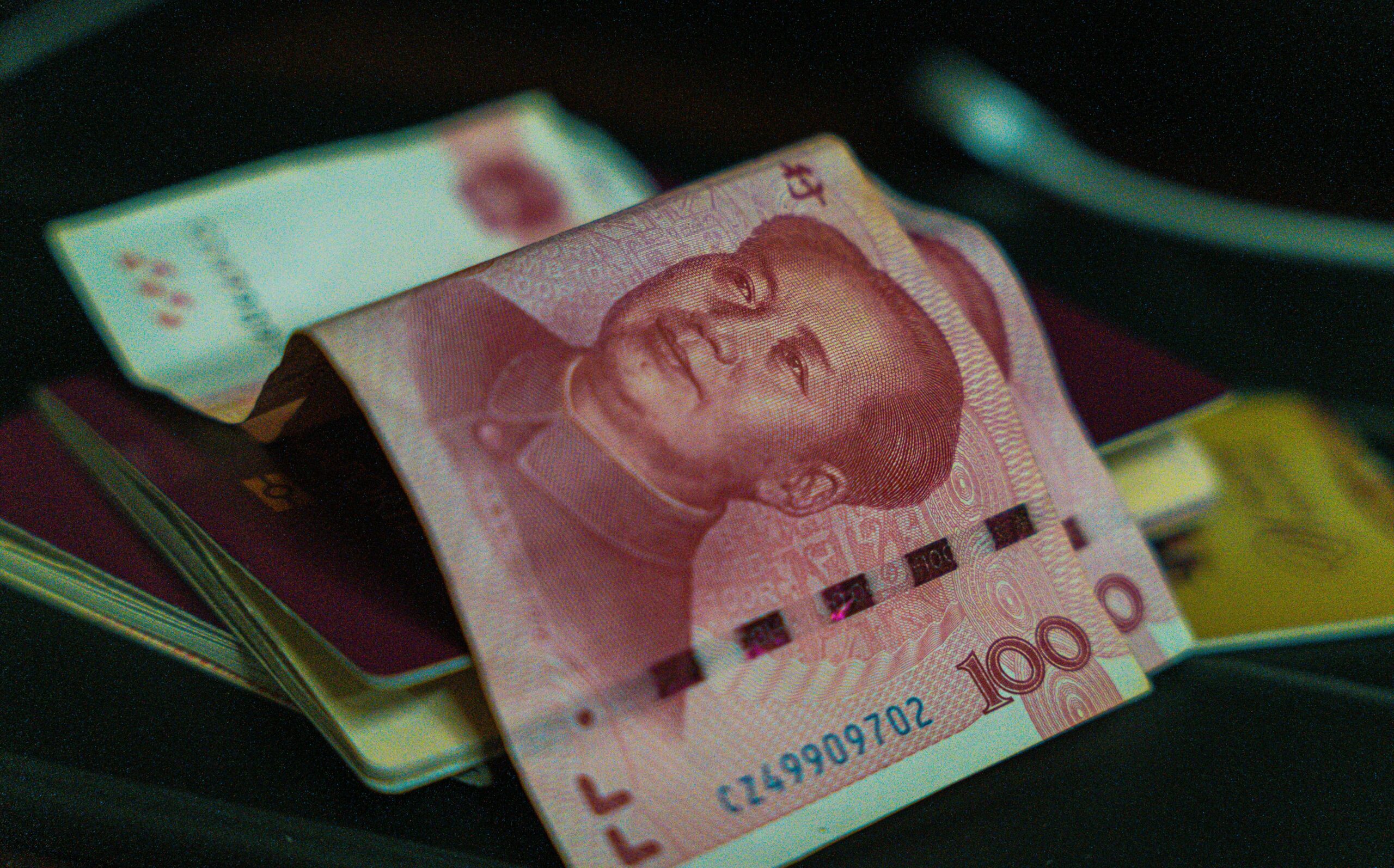
BRICS payments, digital currency and oil deals in yuan — here’s the step-by-step strategy to dethrone America.
Q: Does China want the renminbi to replace the dollar?
A: Yes. Xi Jinping is actively promoting renminbi internationalisation through bilateral currency swaps, BRICS payment systems, digital currency development and oil trade settlements in yuan. While the dollar remains dominant at 58% of global reserves, China’s share is growing as it builds alternatives to Western financial infrastructure.
Join The European Business Briefing
New subscribers this quarter are entered into a draw to win a Rolex Submariner. Join 40,000+ founders, investors and executives who read EBM every day.
SubscribeChina’s president is pushing to elevate the renminbi’s role in global finance as Beijing seeks to reduce reliance on the US dollar, expand cross-border trade settlement and reshape the international monetary system.
In one of his clearest and most explicit statements on China’s monetary ambitions, President Xi Jinping has called for the renminbi to achieve global reserve currency status, marking a significant escalation in Beijing’s long-running campaign to reshape the international financial system. The remarks, published Saturday in Qiushi, the Chinese Communist Party’s flagship ideology journal, represent Xi’s most direct articulation yet of his goal to build a “powerful currency” capable of challenging the U.S. dollar’s dominance.
Xi’s Vision for a “Powerful Currency”
The commentary, adapted from a speech Xi delivered to regional officials in 2024, defines what Beijing means by a “strong currency” in functional rather than symbolic terms. Xi stated that China needs to develop “a powerful currency that can be widely used in international trade, investment and foreign exchange markets, and attain reserve currency status.” This represents a shift from tactical currency expansion to explicit strategic destination.
Beyond currency rhetoric, Xi outlined three core institutional pillars required to support reserve status. First, China needs “a powerful central bank” capable of effective monetary management and capable of attracting global capital. Second, the country must develop globally competitive financial institutions. Third, cities like Shanghai and Shenzhen must evolve into genuine international financial centres able to “attract global capital and exert influence over global pricing.”
The timing of the announcement is strategically significant. It coincides with notable weakness in the U.S. dollar, which has fallen to a four-year low, and comes amid heightened global monetary uncertainty with central banks reassessing their exposure to dollar assets. President Donald Trump’s trade policies, Federal Reserve leadership transition, and rising international frictions have created what Beijing perceives as an opportune moment. “China senses the change of the global order more real than before,” noted Kelvin Lam, a senior China+ economist at Pantheon Macroeconomics.
The Renminbi’s Current Global Standing
Despite Xi’s ambitious vision, the renminbi’s current role in the global financial system remains modest. According to International Monetary Fund data from the third quarter of 2025, the yuan’s share of global reserves stood at just 1.93%. This pales in comparison to the U.S. dollar, which accounted for approximately 57% of global reserves (down from 71% in 2000), and the euro at roughly 20%.
However, the renminbi has made significant inroads in specific areas. Since Russia’s full-scale invasion of Ukraine in 2022, it has become the world’s second-largest trade finance currency. The Russia-Ukraine conflict fundamentally accelerated de-dollarization efforts as Western sanctions pushed Russia and its trading partners toward alternative payment systems. Yet despite progress in trade settlement, the currency’s role in official global reserves remains minimal.
Han Shen Lin of The Asia Group clarified Beijing’s immediate objectives: “Beijing wants the yuan to be a serious global currency—not necessarily to replace the dollar overnight, but to be a strategic counterweight that limits US leverage in a fracturing financial order.” This pragmatic approach acknowledges both the dollar’s entrenched position and China’s own structural constraints.
Building Alternative Payment Infrastructure
Central to China’s currency strategy is the Cross-Border Interbank Payment System (CIPS), Beijing’s alternative to the SWIFT banking network. Launched in 2015, CIPS has expanded substantially, with 176 direct participants as of September 2025 and 1,467 indirect participants across 119 countries, linking approximately 4,800 banks in 185 countries.
The system enables renminbi-denominated transactions to be settled without converting to dollars, reducing China’s exposure to U.S. financial oversight and sanctions. CIPS processes tens of trillions of renminbi annually, though it remains significantly smaller than SWIFT, which connects over 11,500 institutions in more than 235 countries. Notably, approximately 80% of CIPS transactions still rely on SWIFT messaging, indicating continued interdependence with Western financial infrastructure.
Within the expanded BRICS bloc—which now includes Brazil, Russia, India, China, South Africa, Egypt, Ethiopia, Iran, and the United Arab Emirates—there are ongoing discussions about developing BRICS Pay, a decentralized payment system that would allow member nations to trade in local currencies. A prototype was demonstrated in Moscow in October 2024, though as of mid-2026, the system remains in planning and early pilot stages.
China has also negotiated bilateral currency swap agreements with approximately 39 central banks, totalling around 3.7 trillion renminbi (approximately $550 billion). These swap lines provide confidence that renminbi can be obtained from the People’s Bank of China even in the absence of liquid markets, though there is limited evidence they have been extensively used to date.
The Capital Controls Barrier
The single greatest obstacle preventing wider renminbi adoption as a reserve currency remains China’s capital controls. For the renminbi to become a true reserve currency, Beijing would need to allow full convertibility and open its capital account—neither of which align with current Chinese Communist Party priorities.
China’s capital account remains semi-closed, with strict controls on cross-border financial flows. Investors face significant administrative hurdles in converting, repatriating, or deploying renminbi capital. Central banks require reserve currencies to be freely convertible and easily accessible for use in liquidity crises or to intervene in foreign exchange markets. The lack of full convertibility creates uncertainty about the ability to exchange renminbi freely, particularly during periods of financial instability.
Recent research suggests that full capital account liberalization may not be strictly necessary for the renminbi to play a more significant international role. Trade and investment links can potentially drive official accumulation despite limited access to Chinese financial markets. However, this unconventional route to reserve currency status requires substantial policy support, including maintaining dollar reserves to back the renminbi—meaning the two currencies would be complements rather than substitutes.
Concerns about political risk and institutional trust also weigh heavily on central banks’ reserve currency decisions. China’s opaque governance, party-state-led financial system, and discretionary regulatory interventions present barriers to renminbi reserve adoption. Unlike the dollar, which is embedded in relatively predictable legal norms and institutional checks, the renminbi lacks sufficient transparency and legal insulation from political interference.
The Digital Yuan Strategy
Complementing its push for traditional reserve currency status, China is aggressively promoting its digital renminbi as an alternative in cross-border payments. As part of the ruling Communist Party’s 15th five-year plan, the People’s Bank of China is ramping up efforts to champion international usage of the digital yuan in 2026.
Higher demand for the renminbi through digital channels could strengthen its value and enable China to further distance itself from dollar dominance. The digital yuan represents “China’s most technologically sophisticated attempt” to reshape global payment infrastructure, potentially offering faster, cheaper cross-border transactions than traditional correspondent banking systems.
However, experts note that China’s capital controls may limit digital currency scalability. The Financial Action Task Force warns that digital currencies could become channels for illicit finance without robust regulations. Additionally, the U.S. is developing its own regulatory framework for dollar-backed stablecoins, which could counter China’s moves and escalate geopolitical financial competition.
Geopolitical Context and U.S. Response
Xi’s explicit push for reserve currency status comes amid a broader pattern of European leaders visiting Beijing since late 2025, as friction with the Trump administration has prompted some nations to explore alternative strategic relationships. However, most analysts argue these contacts don’t represent a coherent pivot away from the U.S., but rather precautionary moves driven by uncertainty over American behaviour.
President Trump has explicitly warned against efforts to bypass the dollar, threatening 100% tariffs on BRICS exports to the United States if the bloc attempts to create an alternative currency system. This aggressive stance underscores Washington’s recognition that dollar dominance remains a critical pillar of American geopolitical power.
Despite Trump’s threats, some analysts suggest U.S. policies themselves may be undermining dollar confidence. Political uncertainties, fraying alliances, expanded use of unilateral sanctions, fiscal risks, and perceived threats to Federal Reserve independence could chip away at international confidence in the dollar, potentially creating conditions for a more multipolar monetary order.
Challenges and Contradictions
Beijing faces a fundamental contradiction in its currency strategy. True internationalization of the renminbi would require China to relinquish capital controls, allow currency convertibility, and build a market-driven legal and regulatory system—none of which align with the Communist Party’s political priorities. Chinese leaders fear that an open capital account could lead to imported crises and weaken control over the economy.
This creates what economists call China’s “impossible trinity”—the inability to simultaneously maintain independent monetary policy, a fixed exchange rate, and free capital flows. Beijing has chosen to prioritize monetary policy independence and exchange rate management over capital account openness, fundamentally limiting the renminbi’s global appeal.
Additionally, China’s state-managed exchange rate and shallow bond markets continue to constrain international investor confidence. The People’s Bank of China maintains a tight band on the renminbi’s exchange rate, reducing transparent market pricing. In 2015-16, the central bank’s unexpected changes to the exchange rate mechanism triggered large-scale capital outflows, demonstrating the risks of China’s managed currency approach.
The Path Forward
Experts across financial institutions estimate that a fully functioning and trusted alternative to the dollar is probably decades away, if achievable at all. The dollar’s position is supported by unparalleled market depth, legal protections, political stability, and decades of accumulated trust—advantages that cannot be replicated quickly.
Nevertheless, the geopolitical implications of China’s incremental steps cannot be understated. Even without displacing the dollar, a more prominent renminbi in regional trade and selective reserve holdings could provide Beijing with greater economic autonomy and reduce the effectiveness of U.S. sanctions as a foreign policy tool.
For now, renminbi internationalization appears real but defensive, slow-moving, and structurally constrained. Xi’s explicit articulation of reserve currency ambitions represents more of a long-term strategic signpost than an imminent threat to dollar hegemony. The question is not whether China can overtake the dollar in the near term—it almost certainly cannot—but whether persistent efforts could gradually erode dollar dominance over decades, creating a more fragmented and multipolar global financial system.