





























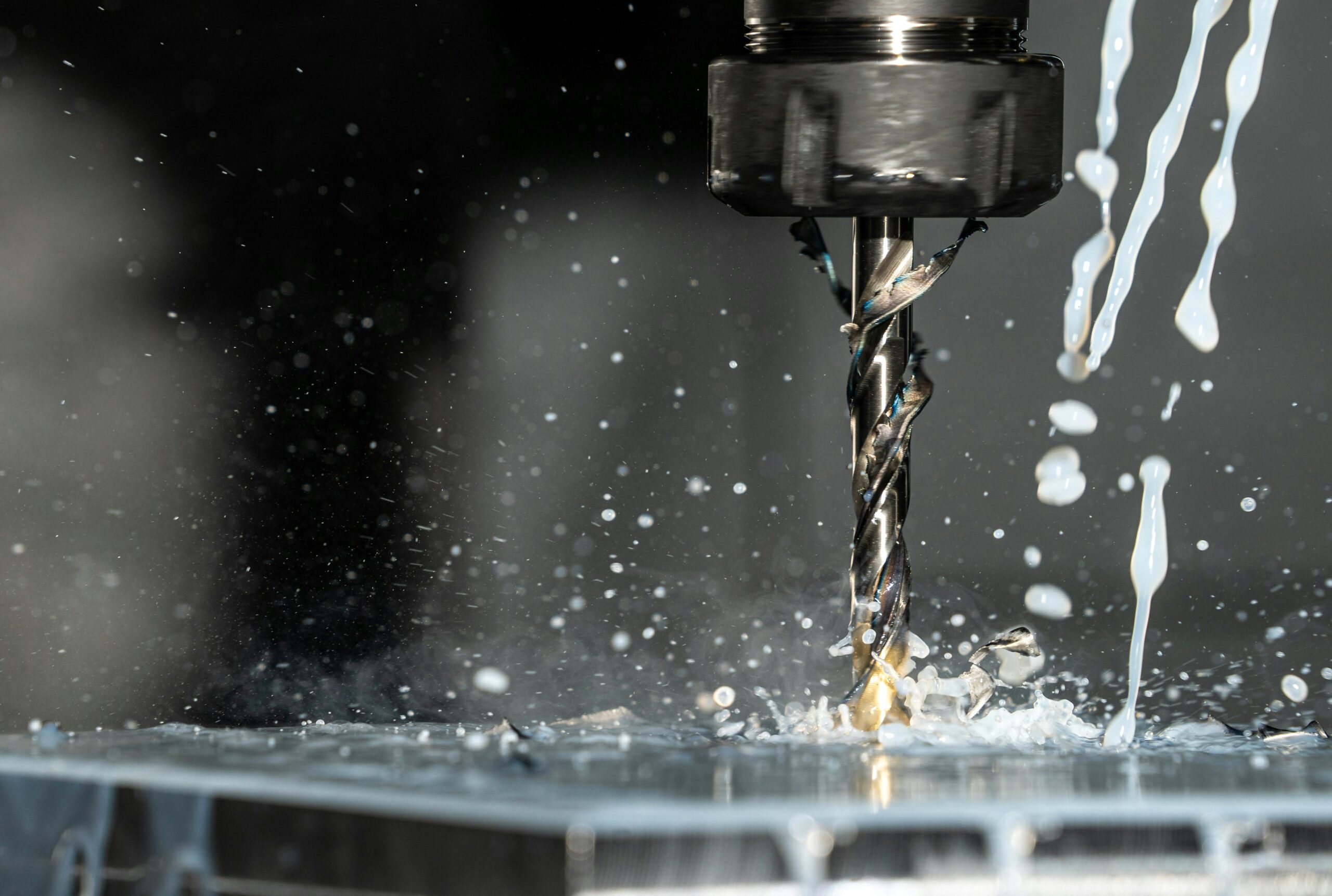
When deciding between equipment for a workshop or manufacturing operation, understanding the capabilities and limitations of each machine can save thousands of dollars and countless hours of frustration. The difference between a CNC drilling and milling machine and a standard drill press goes far beyond just price. What are the advantages of a CNC drilling and milling machine over a standard drill press?
A CNC drilling and milling machine offers precision, automation, and multi-axis machining capabilities that a standard drill press simply cannot match. While a drill press is limited to vertical drilling operations, a CNC machine can drill, mill, cut complex geometries, and repeat operations with accuracy within 0.001 inches.
Join The European Business Briefing
New subscribers this quarter are entered into a draw to win a Rolex Submariner. Join 40,000+ founders, investors and executives who read EBM every day.
Subscribe
But knowing these advantages is just the starting point—understanding which specific capabilities matter most for different types of work will help determine whether the significant investment in CNC technology actually makes sense for a particular situation, or whether a drill press might still be the smarter choice.
Understanding Cost And Complexity Differences
A quality drill press costs anywhere from a few hundred to a few thousand dollars, while even entry-level CNC drilling and milling machines start around $10,000 and can easily exceed $100,000 for industrial models. This price difference alone makes drill presses the obvious choice for hobbyists, small shops with limited budgets, or businesses that primarily perform simple drilling operations. The return on investment for CNC equipment only makes sense when production volume, complexity, or precision requirements justify the substantial upfront cost.
The learning curve also plays a significant role in this decision. Operating a drill press requires minimal training—most people can safely use one after a brief demonstration covering basic safety, speeds and feeds, and workholding techniques. CNC machines, on the other hand, require knowledge of CAD/CAM software, G-code programming, and proper tooling setup, representing a time investment that may never pay off for shops with occasional drilling needs.
Maintenance And Space Considerations
A drill press is relatively simple mechanically, with fewer components that can break down and requiring minimal maintenance beyond basic cleaning and occasional belt replacement. CNC machines need regular calibration, software updates, and often require climate-controlled environments to maintain accuracy. They also take up considerably more floor space and require dedicated electrical installations that add to overall costs. For shops with limited space or those operating in non-climate-controlled environments, a drill press offers practical advantages that go beyond initial purchase price.
What CNC Machines Can Do That Drill Presses Cannot
The most obvious advantage of CNC drilling and milling machines is their ability to move in multiple axes simultaneously. While a drill press only moves up and down (Z-axis), a basic drilling milling machine with CNC control operates in three axes (X, Y, and Z), and advanced models can work in four, five, or even more axes. This means a CNC machine can approach a workpiece from different angles, create angled holes, mill pockets, cut slots, and create complex three-dimensional shapes—all in a single setup that’s impossible to replicate on a drill press.
CNC machines excel at creating precise patterns and repeated features across multiple parts with flawless consistency. Imagine needing to drill a specific pattern of 20 holes in 500 identical parts—with a drill press, each hole would need to be manually measured and positioned, introducing the possibility of human error with every single operation. A CNC machine executes the exact same pattern flawlessly on each part, maintaining consistency that’s simply impossible to achieve manually while also performing milling operations like creating keyways, pockets, contours, and threaded holes.
How Precision Impacts Real-World Applications
The precision advantage of CNC machines becomes critical in industries where tight tolerances aren’t optional—they’re mandatory. Aerospace components, medical devices, and automotive parts often require tolerances of 0.001 inches or tighter, which CNC machines routinely achieve and maintain across thousands of parts. Even the most skilled machinist using a drill press would struggle to consistently hit tolerances under 0.010 inches, making CNC the only viable option for industries where precision directly affects safety and functionality.
In production environments, this precision translates directly to reduced waste and lower costs over time. When parts consistently meet specifications the first time, there’s no need for rework, and scrap rates drop dramatically. A manufacturing operation producing 10,000 parts annually with a 5% scrap rate loses 500 parts, but if CNC precision reduces that scrap rate to 0.5%, the operation saves 450 parts worth of material and labor—potentially representing savings of thousands or even hundreds of thousands of dollars annually, depending on part complexity and material costs.
Programming And Setup Time Considerations
One of the most misunderstood aspects of CNC technology is the upfront time investment required before the machine ever cuts metal. Programming a CNC operation involves creating or importing CAD drawings, generating toolpaths in CAM software, selecting appropriate cutting tools and parameters, and then proving out the program to ensure it runs correctly. For a simple part, this might take 30 minutes to an hour, while complex components can require several hours or even days of programming, compared to a drill press that requires no programming, just measure, clamp, and drill.
This setup time reality means CNC machines don’t make economic sense for truly one-off jobs or extremely small batches. If someone needs to drill three holes in a single piece of aluminum, the 45 minutes spent programming a CNC machine makes no sense when the same job takes five minutes on a drill press. However, once that CNC program is created and verified, it becomes a reusable asset where running the second part takes only the time to load material and press start. By the tenth or twentieth part, the CNC machine has already recovered its setup time investment and begins dramatically outpacing the drill press.
Operator Skill Requirements
The skill set needed to run a drill press effectively can be learned in days or weeks, making it accessible to entry-level operators and small shops without specialized staff. The primary skills involve understanding speeds and feeds for different materials, proper workholding techniques, and basic safety practices—fundamentals that enable acceptable work relatively quickly with a relatively low ceiling for skill development since there’s only so much finesse possible when the machine’s only movement is up and down.
CNC operation, conversely, represents a career-long learning path with multiple specialization areas. At minimum, CNC operators need to understand machine coordinates, offsets, basic G-code, proper tool selection, and setup procedures, while more advanced work requires CAD design skills, CAM programming expertise, understanding of cutting tool geometry, and troubleshooting abilities. Many companies struggle to find qualified CNC programmers and machinists, with experienced professionals commanding salaries 50-100% higher than general machine operators, meaning that investing in CNC equipment without having or developing the necessary human expertise can leave expensive machines sitting idle or underutilized.
Making The Right Choice For Your Needs
Take inventory of your actual workload over the past six months—how many parts did you produce, how many required repeated precision, and how much time was spent on setup versus actual machining. This honest assessment of your production patterns, rather than aspirational thinking about what you might do someday, will reveal whether the substantial investment in CNC technology will genuinely pay off or whether a drill press remains the smarter tool for your specific situation. Consider not just the equipment cost but also training time, programming overhead, and whether your production volume justifies the capabilities that CNC offers, ensuring your decision is based on real needs rather than the appeal of advanced technology.