





























EBM Newsdesk Analysis
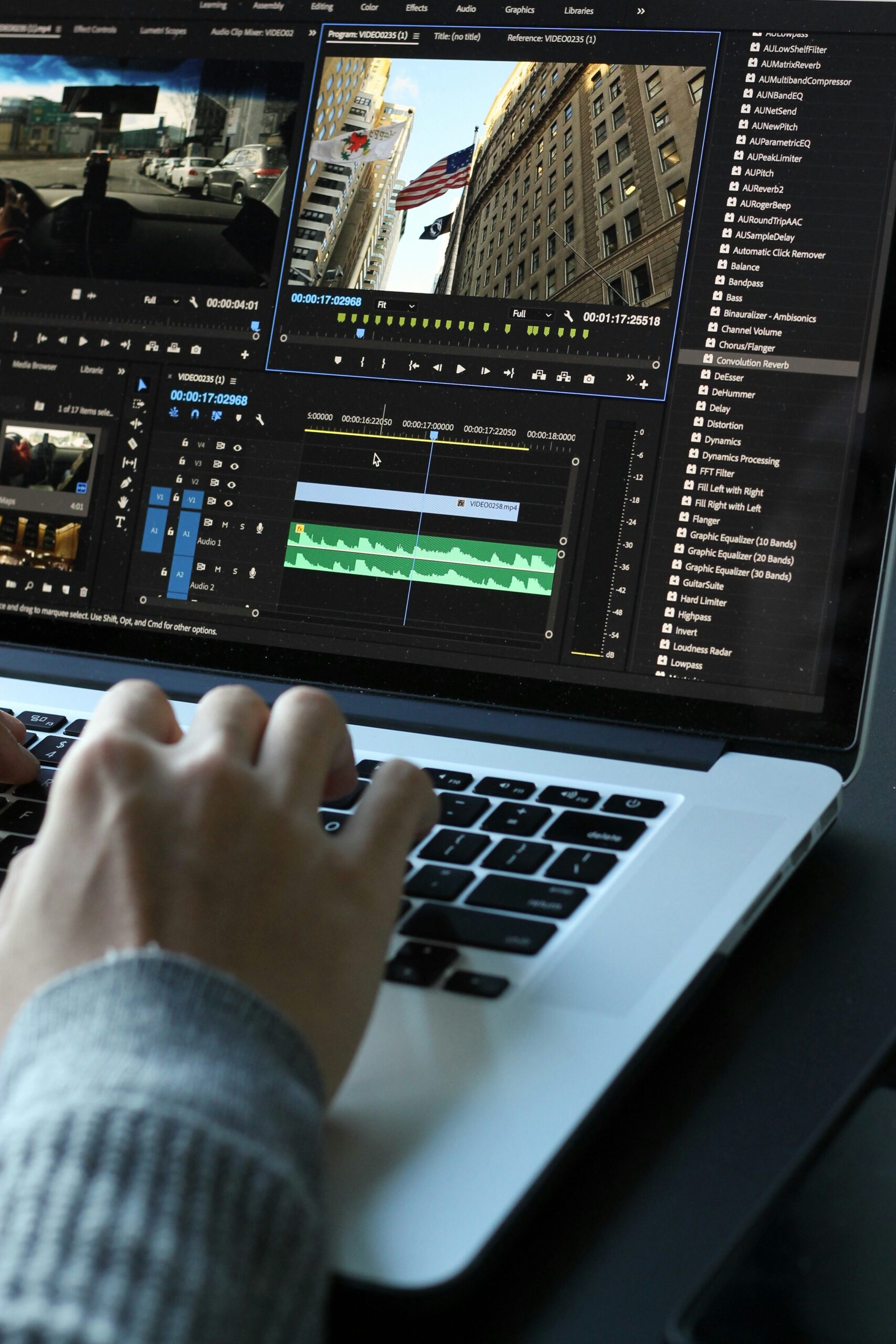
London, 27 April 2026 — The economics of marketing video production have collapsed faster than any other category in the AI revolution. According to Grand View Research, the AI video generator market reached $788.5 million in 2025 and is projected to hit $3.44 billion by 2033 at a 20.3% compound annual growth rate. HubSpot survey data shows 89% of businesses now use video as a marketing tool. Marketing teams that previously commissioned single 30-second campaign shoots for £30,000–£80,000 are now producing entire quarterly content libraries for less than £500 a month. The shift is so structural that OpenAI announced on 26 April 2026 it would discontinue its consumer-facing Sora video product by 24 September — a clear signal that the marketing-specific tools have begun to outcompete the general-purpose generative platforms in the segment that actually monetises the technology. The ten AI startups currently dominating European venture funding are increasingly oriented toward marketing applications.
For European marketing leaders reading this on Monday morning, the practical question is which tools genuinely warrant integration into 2026 marketing stacks — and which are still experimental. The honest answer, after testing across paid advertising, social content, brand storytelling and conversion funnel use cases, is that the market has consolidated into roughly six tools that do meaningfully different jobs.
The 2026 Marketing Video Stack — At a Glance
Join The European Business Briefing
New subscribers this quarter are entered into a draw to win a Rolex Submariner. Join 40,000+ founders, investors and executives who read EBM every day.
Subscribe| Tool | Best For | Key Marketing Strength |
|---|---|---|
| Google Veo 3 | Premium brand campaigns | Near-photorealistic output, cinematic terminology |
| Runway Gen-4 | Creative agencies | Motion brush, granular control |
| HeyGen | B2B explainer video | Avatar consistency, Zapier automation |
| InVideo AI | High-volume social | 5,000+ templates, brand kit |
| Kling AI | Performance ad creative | Photorealistic human characters |
| AdStellar AI | Meta ad campaigns | Concept-to-live-campaign in one platform |
Google Veo 3 — Premium Brand Campaigns
Google’s Veo 3 has overtaken the rest of the field for marketing teams that need broadcast-quality output. The model produces near-photorealistic video with strong understanding of cinematic terminology, which matters when briefing the AI in language a creative director would actually use. Native audio generation — ambient sound, dialogue-adjacent audio, matched music — sets Veo apart from competing models still catching up on the audio dimension.
Pricing runs from a free 100-credit monthly allocation through to the Google AI Ultra plan at $249.99/month for 25,000 credits and watermark-free output. The credit system caps high-volume production, but for premium one-off brand films and hero campaign content, Veo 3 is the strongest single tool in the AI video software comparison for brand work right now.
Best for: brand teams, agencies producing premium hero content, marketers with budget for cinematic quality.
Runway Gen-4 — Creative Agency Workhorse
Runway has built its reputation on giving marketers and filmmakers granular control rather than just text-to-video novelty. Gen-4’s motion brush tool allows precise animation of specific image regions — letting a marketer rotate a product while keeping the background static, or animate specific elements within a hero shot without regenerating the whole frame.
Pricing starts free with limited credits, with paid tiers from $15/month. For premium brands and creative agencies that need cinematic quality with controllable shot composition, Runway remains the top AI video platform for considered creative work.
Best for: premium brands, creative agencies, top-of-funnel awareness campaigns where production value matters.
HeyGen — B2B Explainer and Personalisation
HeyGen’s avatar-based approach has won the B2B explainer video category. The platform lets marketing teams generate localised, personalised video content using either pre-built avatars or custom avatars trained on the user’s own appearance. The integration with Zapier allows full workflow automation — form submission triggers personalised video generation triggers automated distribution to Slack, Notion or marketing platforms.
For B2B SaaS companies, professional services firms, and any marketing function running personalised outreach at scale, HeyGen does something the cinematic tools cannot: produce thousands of slightly-different videos efficiently from a single workflow.
Best for: B2B SaaS, professional services, sales enablement teams, training and onboarding content.
InVideo AI — High-Volume Social Content
For social media managers running multiple accounts and producing daily content, InVideo AI handles the full production stack in a single workflow. 5,000+ templates optimised for social platforms, automatic captioning, brand kit enforcement, and built-in stock footage library let small teams produce volume that previously required dedicated production resources.
The brand kit feature locks in colour palette, fonts, and logo placement across all generated content, which matters more than marketers initially expect — visual consistency across hundreds of social posts is one of the differentiating factors that makes brand identity readable to algorithms and audiences. Plus plan starts at $35/month.
Best for: social media managers, content agencies, small business marketing teams running volume social.
Kling AI — Performance Ad Creative
Kling AI specialises in photorealistic human characters and movement — the area most general-purpose video tools still struggle with. For performance marketers running paid social ads, the ability to generate human-led ad creative without booking talent, organising shoots, or paying licensing fees is genuinely transformational for the unit economics of testing creative variants.
The free tier gives meaningful generation capacity. Paid plans support commercial use rights and higher-volume generation. For DTC brands, e-commerce performance teams, and any marketing function where human-led ad creative is the bottleneck, Kling is currently the strongest AI video tool in the category.
Best for: DTC brands, performance marketers, agencies running ad creative testing at volume.
AdStellar AI — Meta Ads Automation
The newest entrant on this list, AdStellar AI is built specifically for the Meta advertising ecosystem. The platform takes a creative concept and automates the full pipeline — video generation, audience setup, campaign launch — without switching tools. For performance marketing teams that previously juggled video production tools, audience builders, and Meta Ads Manager separately, AdStellar collapses the workflow into a single platform.
This is the kind of vertical-specific AI tool that signals where the market is heading. Generic video generation has become commoditised; the value is increasingly in how tightly the AI integrates with the specific marketing platform where the campaign actually runs. Expect equivalent products for TikTok, Google Ads, and LinkedIn within 12 months.
Best for: Meta-focused performance marketers, e-commerce brands, agencies running paid social at scale.
The European Read
Three implications matter for European marketing leaders this quarter.
First, the cost asymmetry between AI video adoption and traditional production is now decisive. A marketing team running £500/month across two AI video tools can produce more content variants than an agency producing four campaigns a year. The procurement question is no longer whether to adopt — it’s which tools fit which use cases.
Second, the regulatory architecture around AI-generated marketing content under the EU AI Act is still settling. European marketing teams should be flagging AI-generated content in disclosures and keeping audit trails of generation prompts and outputs — practices that will be table-stakes by 2027.
Third, the consolidation around vertical-specific tools (AdStellar for Meta, HeyGen for B2B explainer, Kling for ad creative) suggests the next 12 months will see fragmentation by use case rather than convergence on a single dominant platform. Marketing leaders should be testing 2-3 tools simultaneously rather than committing to a single AI video provider.
For deeper category coverage of the broader AI video software comparison across all use cases — including the tools beyond the marketing-specific six covered here — the full ranked guide covers an additional six platforms across documentary, narrative, training, and pure cinematic categories.
Related Analysis