






























EBM WEEKEND READ-By Nick Staunton, Editor-in-Chief
The Most Expensive Day Job in Sport
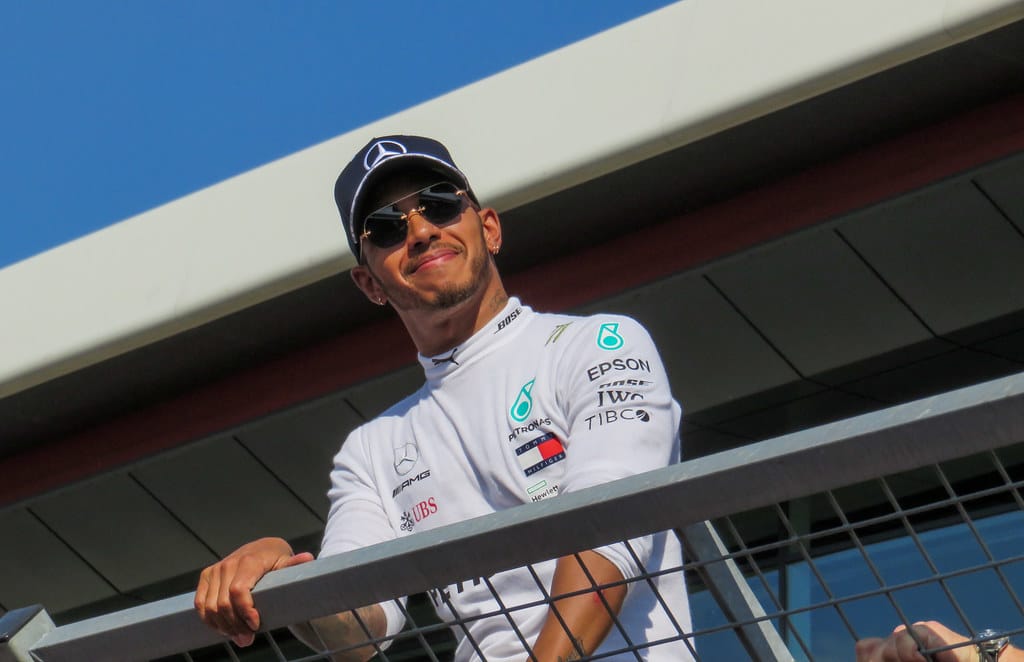
In September 2025, Sportico confirmed what the paddock had been quietly calculating for months. Lewis Hamilton had become the first Formula One driver in the sport’s 75-year history to earn $100 million in a single calendar year. The Ferrari contract — reported at a base salary of $50 million to $60 million per year, with performance bonuses and image rights pushing the total annual package toward nine figures — is the most lucrative in the sport’s history. It is also, increasingly, the least interesting thing about him financially.
As of 2026, Hamilton’s total net worth is estimated at approximately $454.9 million, reflecting 19 seasons of Formula One salaries, a Ferrari contract, endorsement deals worth approximately $30 million annually, and a growing portfolio of business ventures operating under the Lewis Hamilton Ventures umbrella. He is the highest-earning driver in Formula One history. He is also, in the language of the new athlete economy, barely warming up. As we explored in our examination of how Ronaldo, LeBron and Mbappé are building investment empires that will outlast their playing careers, the most commercially sophisticated athletes of this generation have understood something their predecessors did not: the career is the marketing budget. Everything else is the business.
Ferrari, Film and a $633 Million Box Office
Join The European Business Briefing
New subscribers this quarter are entered into a draw to win a Rolex Submariner. Join 40,000+ founders, investors and executives who read EBM every day.
Subscribe
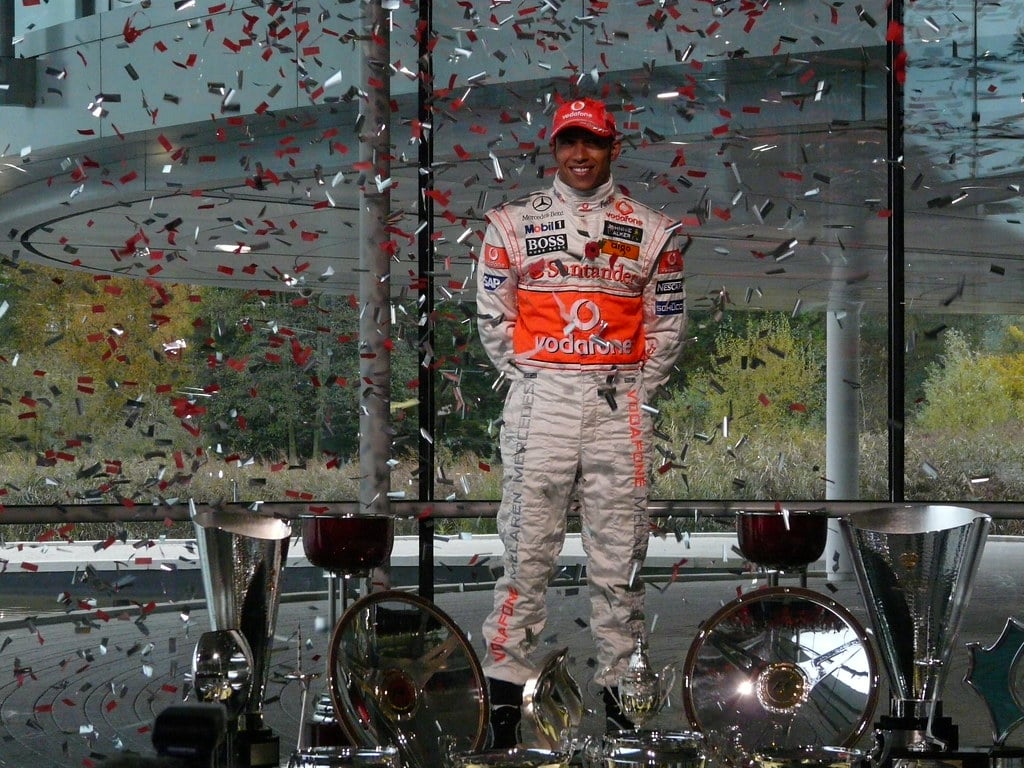
The most commercially significant venture in Hamilton’s off-track portfolio arrived with considerably more fanfare than a sponsorship renewal. Dawn Apollo Films, the production company Hamilton founded in October 2022, co-produced the 2025 F1 movie starring Brad Pitt alongside Jerry Bruckheimer. The film earned over $633 million at the global box office and became the highest-grossing auto racing film ever made. A sequel was greenlit in February 2026, with Hamilton already attending script development meetings alongside Bruckheimer, director Joseph Kosinski and writer Ehren Kruger.
Hamilton was not a consultant on the project. He was a credited producer with a first-look deal at Apple TV+ and a financial stake in what became a genuine Hollywood franchise. The distinction matters commercially. Consulting fees are income. Producer credits and sequel participation are assets — they compound, generate royalties and extend brand value into demographics that Formula One’s broadcast deal cannot reach alone.
In September 2025, Hamilton rebranded his commercial holding vehicle from Project 44 to Lewis Hamilton Ventures, consolidating his entire portfolio of businesses, investments and brand partnerships under a single named structure, with Ross Connolly as Chief Operating Officer and Hamilton as Chief Executive Officer. This is not the portfolio of an athlete diversifying for tax purposes. It is a deliberately architected business group — the kind of structure that, as we noted in our profile of Michael Jordan’s $3.8 billion corporation, separates the athletes who leave sport wealthy from those who leave it transformed.
The NFL Bet
In 2022, Hamilton joined the Walton-Penner ownership group in one of the most consequential sporting investment decisions of the decade. The group acquired the Denver Broncos as part of a $4.65 billion purchase — the largest in NFL history at the time — giving Hamilton a minority ownership stake in a franchise that has only appreciated since.
The move was strategic on multiple levels. It gave Hamilton access to the NFL’s ownership network — one of the most exclusive commercial clubs in American sport — and positioned him in a league whose European ambitions are accelerating rapidly. Hamilton has described his Broncos stake as part of a broader mission around diversity in sports ownership, noting that Formula One’s ownership structure remains exclusively white and that his first step toward changing that dynamic was joining the Broncos, where genuine diversity in the ownership group already existed. Sports Illustrated
The timing was also sharp. The NFL’s European expansion, which we examined in our analysis of why the league’s continental push has become a serious billion-dollar proposition, is accelerating. Hamilton sits at the intersection of American football’s largest growth market and its fastest-growing international audience. That is not a coincidence.
Fashion, Dior and the Brand That Predates Ferrari
Hamilton’s fashion credentials predate his commercial restructuring by several years — and they carry a different kind of commercial weight than his sports investments. His fashion interests include the Plus 44 clothing line, a co-ownership stake in W Magazine, and a collaboration with Tommy Hilfiger on the TOMMYXLEWIS collection. In 2025, his luxury status was cemented when he co-chaired the Met Gala and promoted a capsule collection with Dior.
The fashion positioning is not vanity. It is audience strategy. Formula One’s global viewership is enormous — the sport drew 1.5 billion viewers across the 2024 season — but it skews male, skews older and skews toward markets where Hamilton’s commercial partners are already well-represented. Fashion gives him access to a different consumer entirely: younger, female, global, luxury-oriented. The Dior relationship, in particular, places him in a brand ecosystem worth over €90 billion in market capitalisation, alongside clients whose names carry similar cultural weight. It is the same logic, at the athlete level, that drives the Gulf states’ sports acquisition strategy — controlling the cultural conversation, not just the commercial contract.
Almave and the Sober Premium Play
Perhaps the most instructive venture in the Hamilton portfolio is the one that looks least obviously commercial. In 2023, Hamilton launched Almave, a non-alcoholic blue agave spirit distilled in Mexico with spirits firm Casa Lumbre. French drinks giant Pernod Ricard — the second largest wine and spirits company in the world — subsequently invested in the company and became its global distribution partner. Almave Blanco, named Best Non-Alcoholic Spirit Brand at the 2025 Rolling Stone Spirit Awards, is now available in hundreds of Target stores across the United States at $29.99.
The category is growing at a rate that would have seemed implausible five years ago. The global non-alcoholic spirits market is forecast to reach $1.6 billion by 2028, driven by wellness trends, younger consumer preferences and premium positioning that allows margins unavailable in the commodity alcohol sector. Pernod Ricard’s involvement is the clearest signal of how seriously the industry takes Almave’s trajectory — a company that size does not take minority stakes in celebrity vanity projects.
The rumour that circulated through the Singapore paddock in 2024 — that Hamilton might sponsor himself at Ferrari through Almave — never materialised in that specific form. But the underlying logic was sound. Bringing a values-aligned consumer brand into the most glamorous team in Formula One, via the sport’s most globally recognised driver, is the kind of integrated commercial play that traditional sponsorship deals cannot replicate. It is the difference between paying for an logo on a car and owning the brand on the driver.
For readers tracking how the Hyrox model built a €200 million fitness business by aligning product with lifestyle identity, the Almave strategy is recognisably similar — premium positioning, identity-led marketing, a founder whose personal values are the product’s most credible advertisement.
The Ferrari Problem That Isn’t Really a Problem
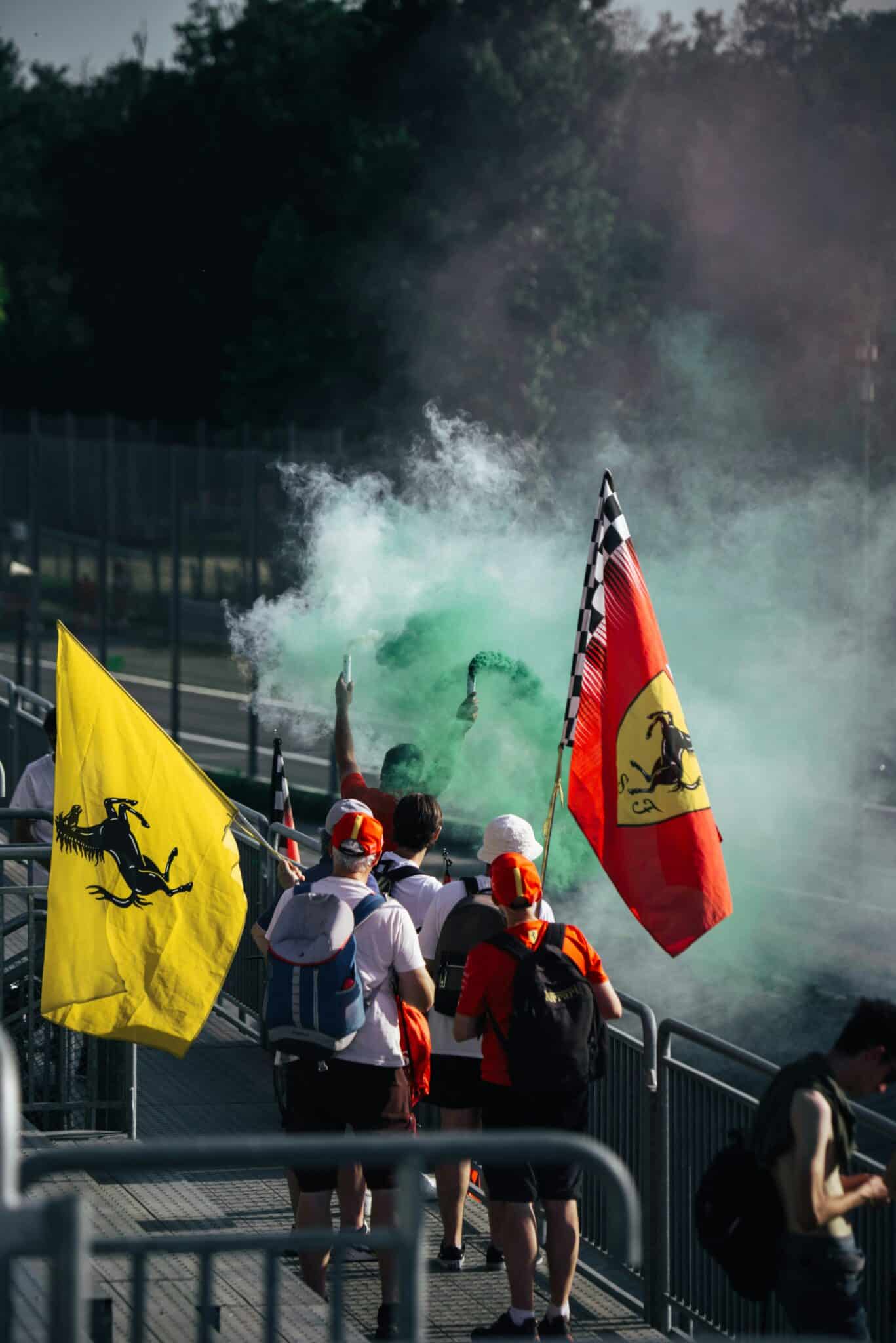
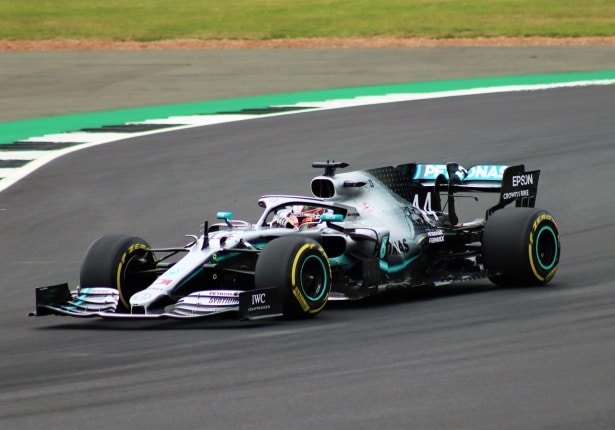
There is one complication in the Hamilton commercial story that deserves honest examination. His 2025 debut season at Ferrari was, by his own admission, a nightmare. After a winter spent working with Ferrari’s engineers to rebuild the car around himself, the results did not come. “I’m re-set and refreshed,” Hamilton posted at the start of 2026. “For a moment, I forgot who I was, but thanks to you and your support you’re not going to see that mindset again.”
The on-track struggle generated significant commentary. The off-track story told a different one. His net worth grew during that difficult season. His production company greenlit a sequel. His tequila brand reached Target. His Broncos stake appreciated. The commercial architecture Hamilton has built is no longer dependent on the result at the next Grand Prix — which is precisely the point. Jordan’s $3.8 billion was not built on what happened in the fourth quarter. Hamilton’s second act will not be defined by where he finishes in Bahrain.
The Ferrari contract runs for at least two years, with an option for a third season in 2027. Whether Hamilton wins an eighth championship in red or retires without one, the empire he is building has already escaped the gravitational pull of the result. That is the rarest commercial achievement in professional sport — and it did not happen by accident.
The Verdict
Lewis Hamilton has spent 19 seasons being the best Formula One driver of his generation. He spent the same period quietly building the infrastructure to ensure that the end of his racing career is not an ending at all. A Hollywood franchise. An NFL ownership stake. A global spirits brand backed by one of the world’s largest drinks companies. A fashion presence at Dior and the Met Gala. A charitable foundation structured directly into his Ferrari contract.
The Ferrari contract includes a provision directing 25% of certain salary components toward Mission 44, Hamilton’s charitable foundation focused on improving access to education and employment for young people from underrepresented backgrounds. That structural integration of commercial and philanthropic intent — embedded not as a side project but as a contractual clause in the most lucrative deal in the sport’s history — is the most sophisticated single detail in the entire Hamilton portfolio.
It is also the most revealing. The athletes who build lasting commercial legacies are not the ones who spend their careers maximising prize money. They are the ones who understand, early enough to act on it, that the brand is the asset and the sport is the distribution channel. Hamilton understood that before most of his rivals had started thinking about it. The second act, as a result, was already underway long before the first one ended.
As we examined in our weekend read on how pickleball turned a backyard game into a $225 million Wall Street proposition, the most valuable sporting assets of the next decade will be built not on trophies but on audiences. Hamilton has one of the largest and most commercially diverse audiences in global sport. He just happens to still be racing too.
RELATED READS:
- WEEKEND READ: The Athlete-as-Hedge-Fund: How Ronaldo, LeBron and Mbappé Are Building Empires That Will Outlast Their Careers — The playing career is the marketing budget. Everything else is the business.
- WEEKEND READ: Michael Jordan Didn’t Retire. He Built a $3.8 Billion Corporation — Jordan earned $93.7 million across 15 NBA seasons. That figure is barely 2.5% of what he is worth today.
- WEEKEND READ: Why the NBA’s European Expansion Has Become a Serious Billion-Dollar Proposition — The league played two regular season games in Paris. Both sold out in under an hour. The commercial logic of what comes next is impossible to ignore.