





























EBM Newsdesk Analysis
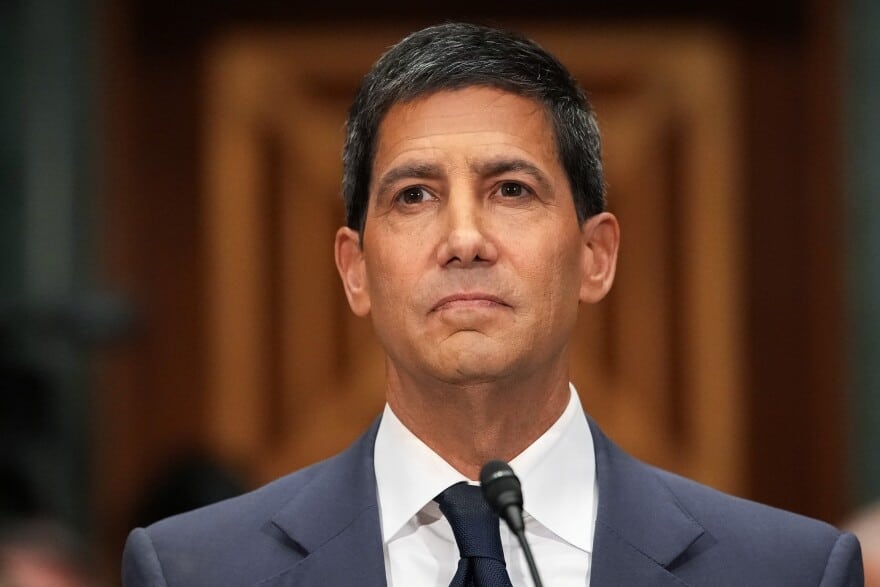
May 13, 2026 — The US Senate confirmed Kevin Warsh, 56, as the 17th Chair of the Federal Reserve by a 54-45 vote on Wednesday, the most partisan margin for a Fed chair nominee in history. Only one Democrat — John Fetterman of Pennsylvania — crossed the aisle. Outgoing chair Jerome Powell, whose eight-year term ends on Friday, will remain on the Fed’s board of governors until at least 2028, an unprecedented decision he has framed as a defence of central bank independence against months of political attacks, including a Justice Department investigation that was dropped in April. Warsh — a former Fed governor, Bush economic advisor, husband of Estée Lauder heiress Jane Lauder, and worth more than $100 million — has called publicly for “regime change” at the Fed.
For European business the implication is direct. The most consequential central bank in the world is entering a period of contested leadership at exactly the moment the Iran war is rewiring global inflation and the ECB is weighing how closely to track US monetary policy. The dollar will be the first to move.
The narrowest mandate in modern Fed history
The 54-45 vote understates the political damage. Every Fed chair in the post-Volcker era has been confirmed with substantial bipartisan support — Bernanke 70-30, Yellen 56-26, Powell himself 84-13 in 2017. Warsh’s majority is the smallest ever, and Sen. Elizabeth Warren’s “Trump’s sock puppet” attack in committee set the tone for the floor debate.
Join The European Business Briefing
New subscribers this quarter are entered into a draw to win a Rolex Submariner. Join 40,000+ founders, investors and executives who read EBM every day.
SubscribeThe political fragility matters because the FOMC chair only has one of twelve votes on rate decisions. If the rest of the committee mistrusts Warsh’s independence, his ability to set policy direction collapses. Three FOMC members hinted at April’s meeting that their next move could be a rate hike — not the cut Trump has demanded.
Powell stays — and that changes everything
The decision by Powell to remain on the Fed’s board after stepping down as chair is the structural story markets have not yet priced. Powell still gets a vote at every FOMC meeting through January 2028. He has explicitly framed his continuation as a response to “a series of legal attacks on the Fed which threaten our ability to conduct monetary policy without considering political factors.”
For Warsh this is a profound constraint. The chair traditionally enjoys the deference of the immediate former chair. Powell is choosing to deny him that. Every FOMC meeting through 2027 will feature two competing power centres at the table.
What Warsh actually plans
The “regime change” Warsh has called for is concrete. He wants the Fed to communicate less — reversing two decades of increasing transparency. He wants to drop the quarterly Summary of Economic Projections, the dot plot markets use to anchor rate expectations. He wants a faster balance sheet roll-off, arguing the smaller balance sheet will allow a lower policy rate. And he wants closer coordination with Treasury and the White House on non-monetary policy — a structural shift away from the wall between fiscal and monetary policy that has existed since the 1951 Treasury-Fed Accord.
Each of these is significant. Together they reshape the institution.
The implications for Europe
Three concrete consequences. First, dollar volatility — if Warsh cuts rates faster than US inflation warrants, the dollar weakens, the euro strengthens, and European exporters take an immediate hit. Italian and German industrial competitiveness, already under pressure from Chinese imports, faces a fresh headwind.
Second, ECB politicisation. If the world’s most important central bank can be openly captured by an administration, the precedent makes it harder for Christine Lagarde to resist similar pressure from Rome or Paris. The ECB’s recently postponed rate cut already reflects the Iran inflation shock that pushed Britain into stagflation. The next decision will be made in a different political environment.
Third, transatlantic divergence. European pension funds, sovereign wealth funds and insurers hold roughly $4 trillion in dollar-denominated assets. Sustained policy uncertainty at the Fed translates directly into mark-to-market volatility on those positions. The structural critique Philippe Aghion made last week — that Europe needs its own sovereign capital infrastructure rather than depending on Washington — looks sharper after Wednesday’s vote.
The Warsh era begins at the June 16-17 FOMC meeting. The transatlantic financial system is about to find out what an openly politicised Federal Reserve actually does.
Related Analysis