




























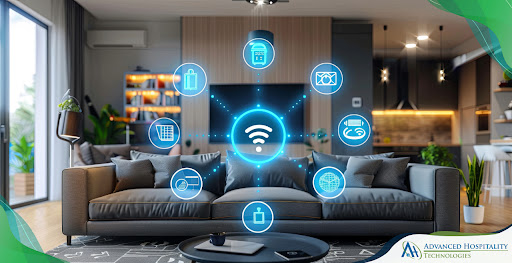
The rapid advancement of technology and more technology trends is continuously reshaping smart rooms, making them smarter, more efficient, and better tailored to user needs. Here are the key trends driving innovation in smart room technology.
A smart room is a space equipped with advanced technology designed to enhance comfort, convenience, security, and energy efficiency by automating and integrating various systems. By leveraging the power of the Internet of Things (IoT), sensors, and connectivity, a smart room allows users to control and monitor various elements such as lighting, temperature, entertainment systems, and more. These controls can be accessed through smartphones, voice commands, or automated schedules, ensuring seamless interaction and management.
Smart rooms are not limited to residential homes—they are increasingly found in offices, hotels, and educational facilities. With growing consumer demand for intelligent solutions, smart rooms are becoming an integral part of modern living and working spaces, representing the next stage in the evolution of everyday environments.
Join The European Business Briefing
New subscribers this quarter are entered into a draw to win a Rolex Submariner. Join 40,000+ founders, investors and executives who read EBM every day.
SubscribeCore Features of Smart Rooms
Smart rooms stand out due to their unique features, which include:
- Automation: These spaces automate routine tasks, such as adjusting lighting, operating blinds, or turning off appliances when not in use.
- Personalization: Smart rooms can adapt to user preferences, such as maintaining ideal room temperatures, activating preferred lighting schemes, or setting customized music playlists.
- Remote Control: Users can manage smart room systems from virtually anywhere using mobile apps or cloud-connected devices, ensuring convenience and peace of mind.
- Energy Efficiency: By optimizing the use of heating, cooling, and lighting systems, smart rooms help reduce energy consumption, contributing to both cost savings and environmental sustainability.
- Integration: Devices within a smart room communicate and work seamlessly together, creating a highly interconnected ecosystem that simplifies life and maximizes utility.
Main Smart Room Technology Trends
1. Voice-Controlled Systems
Voice assistants such as Amazon Alexa, Google Assistant, and Apple’s Siri have revolutionized the way people interact with smart devices. Using voice commands, users can perform tasks such as dimming lights, playing music, setting reminders, or even controlling smart appliances. The growing accuracy of natural language processing (NLP) ensures these systems become increasingly intuitive and user-friendly, enhancing accessibility for all.
2. AI and Machine Learning Integration
Artificial Intelligence (AI) and machine learning (ML) are at the heart of modern smart room innovation. These technologies enable systems to learn and adapt to user behaviors. For instance, AI-driven systems can predict preferences by analyzing past interactions, such as adjusting room temperatures at specific times or recommending entertainment options. This adaptability makes smart rooms more efficient, personalized, and valuable to users.
3. IoT Expansion
The Internet of Things (IoT) connects a wide array of devices within a smart room, allowing seamless communication between them. Smart thermostats, cameras, door locks, and sensors are increasingly interoperable, enabling users to manage all devices collectively through centralized platforms. As IoT adoption grows, the possibilities for creating more sophisticated and interconnected smart rooms are expanding.
4. Energy Efficiency and Sustainability
Sustainability is a driving force behind smart room technology. Devices like smart thermostats (e.g., Nest or Ecobee) and smart lighting systems (e.g., Philips Hue) detect occupancy and adjust settings accordingly, minimizing waste. Advanced energy monitoring tools offer detailed insights into consumption patterns, empowering users to make environmentally conscious decisions while reducing utility costs.
5. Smart Entertainment Systems
Entertainment is a cornerstone of smart room functionality. Voice-controlled TVs, multi-room audio systems, and immersive virtual reality (VR) setups are enhancing how users experience media and leisure. Devices like Sonos speakers and smart TVs with built-in streaming services represent the growing demand for integrated entertainment solutions in smart environments.
6. Health and Wellness Integration
Health and wellness are becoming priorities in smart room design. Technologies such as air quality monitors, circadian lighting systems, and temperature-controlled beds are creating healthier living environments. Additionally, some smart rooms integrate fitness tracking devices or offer stress-reducing features, such as ambient soundscapes or mood lighting, to improve overall well-being.
7. Advanced Security Solutions
Security is a critical component of smart rooms. Cutting-edge technologies such as facial recognition, biometric access controls, and AI-powered surveillance cameras ensure robust protection against unauthorized access. These systems also provide real-time alerts and remote monitoring, giving users greater peace of mind.
8. Edge Computing
Edge computing is emerging as a vital trend in smart room technology. By processing data locally on devices rather than relying entirely on cloud servers, edge computing enhances privacy, reduces latency, and improves response times for real-time applications. This shift is particularly important for security and automation systems requiring instant decision-making.
9. 5G Connectivity
The rollout of 5G networks is transforming smart rooms by providing faster and more reliable connectivity. This improved infrastructure allows devices to communicate more efficiently, supports complex IoT ecosystems, and enhances the capabilities of remote control applications.
10. Customizable Ecosystems
Consumers increasingly demand flexibility and customization in their smart rooms. Modern systems allow users to select devices and platforms that suit their needs while ensuring compatibility across brands. Open-source protocols like Matter are promoting interoperability, making it easier to create tailored smart environments.
Conclusion
Smart rooms are revolutionizing how people live and work by combining convenience, efficiency, and personalization. With innovations such as AI integration, energy-efficient systems, and advanced connectivity driving their evolution, smart rooms are becoming indispensable in modern life. These environments are not only transforming daily routines but also fostering healthier, more sustainable, and connected lifestyles.
As technology continues to advance, the potential of smart rooms will grow, making them more intuitive, adaptable, and capable of meeting the diverse needs of users. Whether in homes, offices, or other spaces, smart rooms represent a future where technology seamlessly integrates with everyday life, redefining comfort and convenience.