





EBM NEWSDESK ANALYSIS-Nick Staunton, Editor-in-Chief
A decade-old renewable energy dispute has collided with the biggest sporting event on earth. Creditors are targeting Spain’s kit supplier, its logistics provider and its team hotel. The bill is now €2.3 billion.
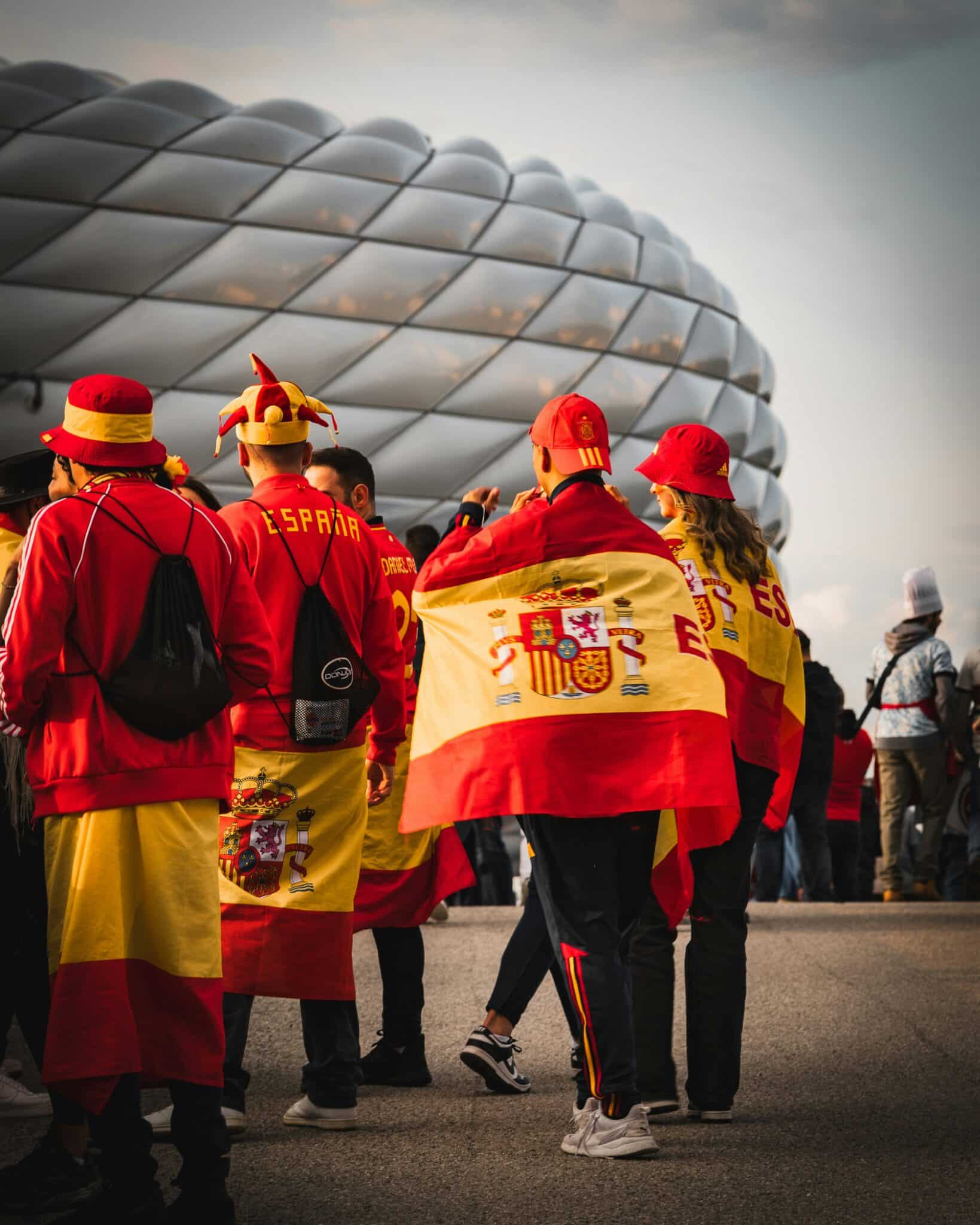
Spain arrived at the 2026 FIFA World Cup as one of the tournament’s most fancied sides. It also arrived with something no other competing nation brought to North America: a creditor problem. Investors holding binding international arbitration awards against the Spanish state have identified the World Cup as an enforcement opportunity — targeting Spanish assets on US soil in an attempt to recover compensation that Madrid has refused to pay for more than a decade.
The lead plaintiff is Blasket Renewable Investments, a fund that acquired claims stemming from Spain’s retroactive cuts to renewable energy subsidies introduced between 2012 and 2014 under prime minister Mariano Rajoy. Blasket has filed multiple applications in the Federal Court for the District of Columbia, seeking to identify and seize Spanish state assets within US jurisdiction. The national football team is explicitly in its sights.
Join The European Business Briefing
New subscribers this quarter are entered into a draw to win a Rolex Submariner. Join 40,000+ founders, investors and executives who read EBM every day.
SubscribeThe Origin of the Dispute
The legal saga traces back to Spain’s solar energy boom of the mid-2000s. The government, operating under the Energy Charter Treaty — a multilateral investment protection framework signed by 53 countries — offered generous subsidies to incentivise renewable energy development. Investors from across Europe and beyond committed billions on the strength of those guarantees. Then the 2008 financial crisis hit. Between 2012 and 2014, Madrid retrospectively dismantled the subsidy framework, citing fiscal pressure. Investors who had built business models around the guaranteed returns found them removed without compensation.
The resulting wave of arbitration claims against Spain under the Energy Charter Treaty became one of the largest investor-state disputes in history. Twenty-seven affected investors have accumulated €1.754 billion in outstanding compensation awards, plus €297.6 million in late payment interest and €238.7 million in legal costs. The total bill now stands at €2.292 billion. Spain has paid virtually none of it.
What the Creditors Are Targeting
The World Cup gambit is methodical. Creditors have conducted detailed searches of the commercial relationships maintained by the Royal Spanish Football Federation and the High Council for Sports ahead of the tournament. The objective is to identify US-based counterparties holding funds owed to Spanish state entities — then intercept those payments before they reach Madrid.
The targets identified include Adidas, Spain’s kit supplier; Rock-it Cargo, the team’s logistics provider; and Hilton Hotels, the owner of the Embassy Suites property in Chattanooga, Tennessee, where the Spanish squad is based during the group stage. Each of these companies holds commercial obligations to Spanish state or quasi-state bodies. Each represents a potential asset seizure point.
It is an unusual enforcement strategy — using the logistical footprint of a national football team as a map of recoverable assets. But it reflects the broader pattern of creditor behaviour in this dispute. With Spain consistently refusing to honour its obligations through normal channels, investors have been forced into creative jurisdictional arbitrage — seizing air traffic control revenues in Belgium, pursuing property attachments in Australia, and now targeting World Cup infrastructure in the United States.
The EU Dimension
The legal picture is complicated by an intervention from the European Commission. When Blasket Renewables sought to enforce its award before US courts, the Commission filed a submission arguing that Spain legally cannot pay. Brussels contends that compensating investors for losses arising from the withdrawal of the 2007 subsidy scheme would constitute illegal state aid under EU law — effectively arguing that honouring a binding international arbitration award is prohibited by European competition rules.
Investors and their lawyers have rejected that argument. They contend the payments are not subsidies but legally mandated compensation for a treaty breach — a fundamentally different legal category. The clash exposes a deeper structural tension between international investment arbitration and the EU’s internal legal order. Spain is using Brussels as a procedural shield. The Commission is, in effect, helping a member state avoid paying debts that international tribunals have ruled it owes.
Spain’s Unenviable Position
The scale of Spain’s non-compliance is striking in a comparative context. Spain now holds more international arbitration debts than any country in the world except Russia and Venezuela — two states operating largely outside the western legal order. For a eurozone economy and NATO member seeking foreign direct investment, the reputational damage of sitting alongside those two on any league table is significant.
The renewable energy irony is not lost on observers. Spain’s current government has made the green transition a defining policy commitment. It is simultaneously refusing to pay investors who financed the previous generation of Spanish renewable infrastructure — the solar plants that were built in good faith under government guarantees, then stripped of their returns when political priorities changed.
The creditors chasing Spain’s kit deal and hotel bills through US federal courts are not making a moral argument. They are making a legal one — and the tribunals that have heard it have consistently ruled in their favour. Whether Spain’s football team lifts the World Cup this July, the €2.3 billion bill will still be waiting in Madrid when the squad lands home.
“Creditors have targeted Adidas, Spain’s kit supplier, its logistics provider and its team hotel in Tennessee. The total outstanding bill is €2.3 billion. Spain has paid virtually none of it.”
RELATED READS:
- The Biggest Sporting Event on Earth Starts Today — Here’s What It’s Worth — The €2.3 billion creditor problem is playing out inside the most commercially engineered tournament in history.
- EU Proposes 21st Sanctions Package Against Russia, Targeting Banks, Energy and Crypto — The Commission defends Spain in US courts while sanctioning Russia for exactly the kind of treaty non-compliance Madrid is itself accused of.
- China’s Trade Imbalance With the EU Hits New High as Imports Fall — The EU’s internal legal inconsistencies on investor protection are part of a broader picture of institutional credibility under pressure.


