





























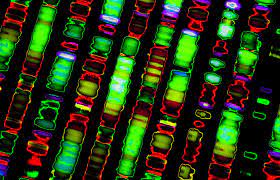
DNA sequencing refers to the process of identifying the order of bases, or nucleotides, in a strand of DNA. The sequence of these nucleotides can disclose all sorts of information on genetics and can give us an insight on the makeup of proteins or mutations.
It can often seem like something from science fiction, it’s such an advanced process that many of us struggle to get our heads around it. We’ve put together a guide for you that will help you bust some of the jargon around DNA sequencing and learn what it is and how it’s done. Read on to find out more.
What is DNA?
Join The European Business Briefing
New subscribers this quarter are entered into a draw to win a Rolex Submariner. Join 40,000+ founders, investors and executives who read EBM every day.
SubscribeBefore we get into the details about DNA sequencing and what it is, it’s important we first define DNA itself. DNA stands for deoxyribonucleic acid; it is a molecule that carries genetic information and hereditary material in almost all living organisms on the planet.
Its importance in the inheritance of genetic traits was discovered by Francis Crick and James Watson in 1953, who also revealed its iconic double helix structure.
A DNA molecule is made up of nucleotides, with each nucleotide containing a phosphate group, a nitrogen base, and a sugar. The sugar, 2-deoxyribose, alternates with the phosphate group to form the strand in the helix, with each sugar having an attached nitrogen base pair. These nitrogen bases can be one of four types, adenine, cytosine, guanine, or thymine.
DNA determines our development, our growth, and our health. It is essentially a blueprint of instructions for life to form.
How is DNA sequencing done?
In order to understand what is going on in a DNA molecule, we must reveal the order of these nitrogen bases. The processing of reading this order is known as DNA sequencing.
There are a number of methods through which DNA sequencing can now be done, however one of the oldest and most well-known is through the Sanger sequencing process. This method requires the DNA to be isolated from its host, it is then copied through the use of an enzyme, and then mixed with a primer and other materials before being heated to a specific temperature. The mixture is then treated with something called gel electrophoresis, after which, when examined with an X-ray or UV light, allows scientists to determine the sequence of nucleotides.
Despite being first discovered as far back as 1977, Sanger sequencing continues to a popular and widely used method of DNA sequencing to this day. Many labs still provide a Sanger sequencing service, such as Source BioScience, for example.
Conclusion
DNA sequencing is a true testament to how far humans have come in terms of technological and scientific advancements. We have successfully managed to break down and decode the very thing that makes us, giving us an insight into our genetic past.
As DNA sequencing continues to develop and improve, we can expect to see it improve further in the future and help us fight a range of genetic diseases and conditions.