



























LiDAR camera scanning is revolutionizing how we capture and analyze our environment. Using laser pulses to measure distances, this technology creates incredibly detailed 3D models of landscapes and structures. Whether in architecture, engineering, or environmental science, understanding LiDAR can enhance your projects and decision-making.
In this article, you’ll jump into the core principles of LiDAR technology, explore its various applications, and uncover the benefits it brings to different industries. You’ll also learn about the components that make LiDAR systems efficient and how they compare to traditional surveying methods. Get ready to unlock the potential of LiDAR scanning and see how it can transform your work.
Understanding LiDAR Technology
LiDAR technology employs laser pulses to capture precise measurements of physical features. It helps create detailed 3D models and influences various industries, such as architecture and environmental science.
Join The European Business Briefing
New subscribers this quarter are entered into a draw to win a Rolex Submariner. Join 40,000+ founders, investors and executives who read EBM every day.
SubscribeWhat is LiDAR?
LiDAR stands for Light Detection and Ranging. This technology uses laser light to measure distances to surfaces, generating three-dimensional data about the surroundings. Each pulse returns information about the object’s distance and intensity. The data collected can aid in mapping terrain or monitoring vegetation.
How LiDAR Cameras Work
LiDAR cameras emit laser pulses that bounce off surfaces and return to the sensor. The time taken for each pulse to return determines the distance. Multiple pulses contribute to a dense point cloud, allowing great detail in the models created.
| Specification | Description |
|---|---|
| Pulse Frequency | Up to 200,000 Hz |
| Range | 0.3 to 300 meters |
| Data Point Density | 10 to 100 points/m² |
| Accuracy | 2 to 10 centimeters |
| System Examples | UAVs, terrestrial, mobile |
How do you think the precision of these systems influences their applications?
A Key Player in LiDAR Scanning Technology
As a leading innovator in LiDAR scanning, 3DMakerpro delivers integrated hardware and software that elevate system performance and capture remarkably accurate, high-resolution 3D data.
Here are some key features and offerings:
- LiDAR Camera Compatibility: Works seamlessly with various LiDAR cameras to enhance data quality.
- Precision Processing: Utilizes advanced algorithms to refine point cloud data for clarity.
- Efficiency Optimization: Reduces scanning time while maintaining high accuracy levels.
- User-friendly Interface: Simplifies operation, making it accessible for users at different experience levels.
It enables applications across urban planning, forestry, and environmental assessments. Their innovations support the efficient collection and analysis of spatial information, further enhancing decision-making processes.
Can advancements like these influence how professionals approach LiDAR projects?
Advances in LiDAR Scanning Technology
LiDAR scanning technology continues to improve, offering critical benefits across various fields. Key advancements include accuracy, portability, and data output options.
Enhanced Accuracy and Speed
LiDAR systems today emit hundreds of thousands to millions of laser pulses each second. This allows for denser 3D point clouds and high precision, often within a few millimeters. Improvements in timing mechanisms and photodetectors greatly contribute to this speed. For instance, the latest LiDAR cameras use advanced optics that enhance data collection without sacrificing accuracy.
Portability and Versatility
Modern LiDAR technology emphasizes portability. Solid-state systems, including MEMS mirrors, incorporate fewer moving parts, which might improve reliability. LiDAR can now be integrated into drones and handheld devices. This flexibility expands its use in applications such as environmental monitoring and surveying. New forms of deployment cater to various operational needs.
Imaging and Data Output Formats
LiDAR outputs typically consist of discrete distance measurements, creating dense 3D point clouds. Each point captures spatial information, often coupled with intensity values. Integration with GPS and IMUs allows for accurate georeferencing. These capabilities offer a rich dataset essential for tasks like topographic mapping and precision agriculture, facilitating better decision-making.
Advancements in LiDAR technology drive improvements in accuracy, portability, and imaging, expanding its application possibilities.
Applications of LiDAR Scanning
LiDAR technology serves various industries by providing precise measurements and detailed 3D models. This capability drives innovation in multiple fields, improving efficiency and accuracy.
| Application | Description |
|---|---|
| Forensic Science and Archaeology | LiDAR scanning aids in mapping crime scenes or archaeological sites without disturbing the environment. |
| Urban Planning and Smart Cities | Urban planners benefit significantly from LiDAR data, obtaining accurate 3D terrain, buildings, and infrastructure models. |
| Industrial and Construction Uses | LiDAR finds its utility in construction for site surveying and progress monitoring. |
Future Innovations in LiDAR Technology
LiDAR technology continues to shift in fascinating ways, often driven by emerging needs across various industries.
Solid-State LiDAR and Miniaturization
Solid-state LiDAR replaces traditional mechanical systems. This change cuts down on size and weight, which might open doors for new applications. Chip-scale LiDAR integrates components onto tiny semiconductor chips, making it suitable for drones or wearables. You might see LiDAR cameras integrated within vehicle parts, like headlights, for enhanced obstacle detection.
AI Integration for Smarter Data Processing
AI enhances how systems process data. Specific algorithms improve object detection and classification, even in challenging weather. This offers benefits in settings like crowded urban environments where precision matters. Systems that use automated target recognition might produce better results, reducing the need for human input.
Expanded Capabilities: Multi-Spectral and FMCW LiDAR
Frequency-modulated continuous Wave (FMCW) LiDAR provides simultaneous distance and velocity measurements, increasing accuracy. Multi-spectral LiDAR captures environmental data across various wavelengths, which allows applications in agriculture, where analyzing crop health becomes practical.
| LiDAR Type | Key Feature | Application Area |
|---|---|---|
| FMCW | Distance and velocity measurement | Object detection |
| Multi-spectral | Data capture at multiple wavelengths | Agriculture and monitoring |
Growing Demand for Portable and Handheld Solutions
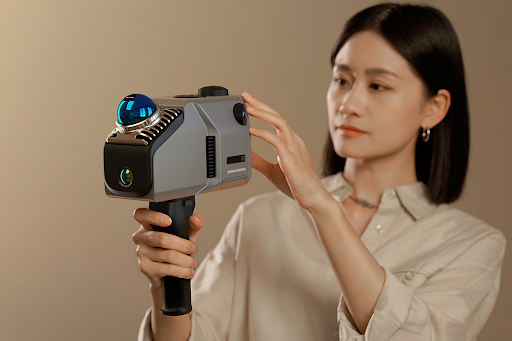
Demand for compact and handheld LiDAR devices rises as miniaturization progresses. These devices serve markets in mobile mapping and industrial inspection. You might find handheld systems offering new ways to approach existing challenges. More options lead to improved accessibility across multiple industries.
LiDAR technology relies on several components that contribute to its effectiveness. A typical LiDAR camera features laser emitters, receivers, and scanners working together to gather and analyze data. Integrating GPS and Inertial Measurement Units (IMUs) allows for precise positioning, resulting in high-resolution 3D models.
LiDAR systems often emit millions of pulses per second, generating dense point clouds for mapping. With technological advancements, lightweight and portable LiDAR cameras have become more accessible, enabling wider adoption across various fields.
Questions arise about how integrating AI in LiDAR systems improves data processing. Consider how changes in point cloud density affect model accuracy. By evaluating these trends, you can better determine the potential impact of LiDAR on industries like construction and environmental science.