





























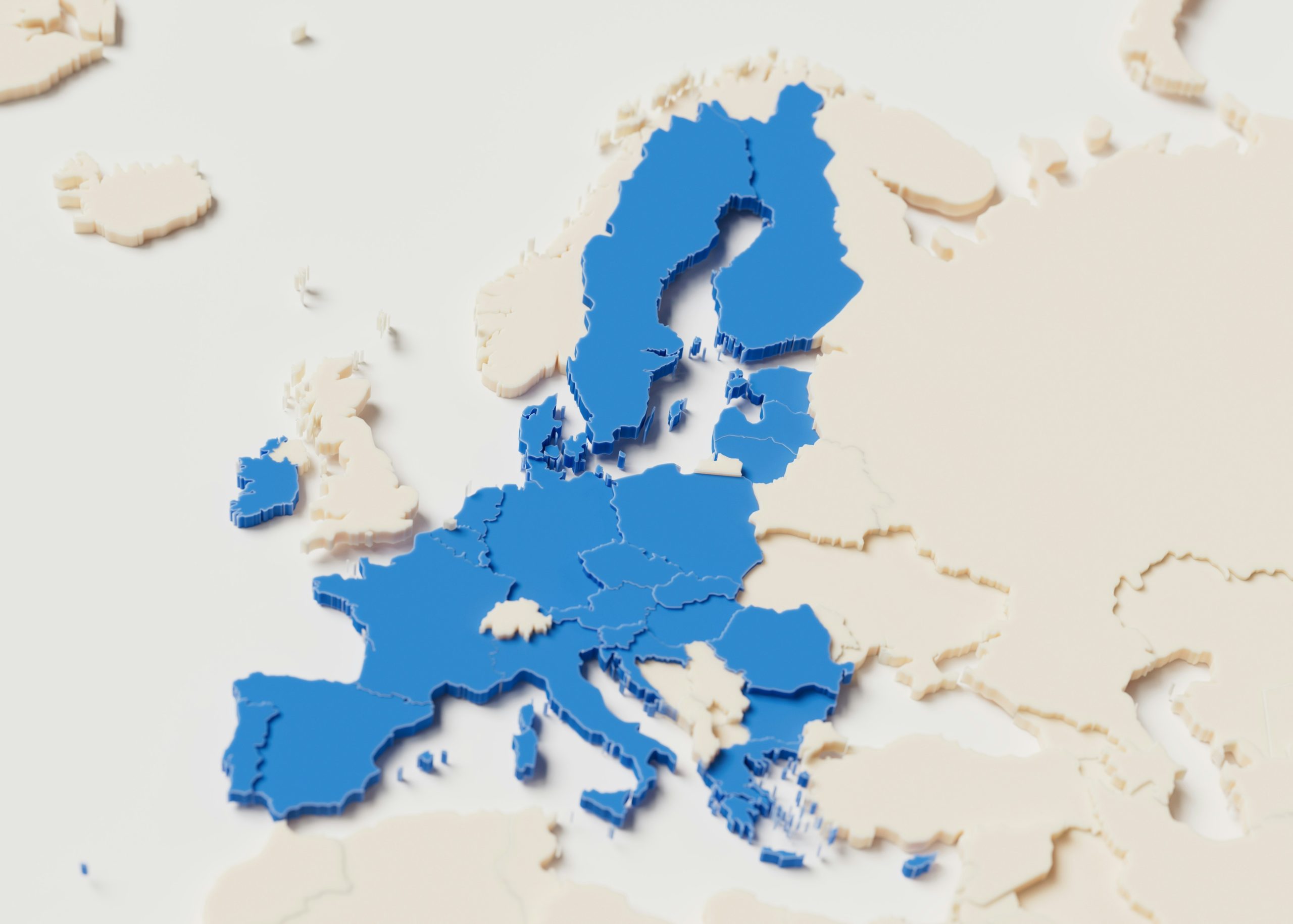
In the corridors of power from Brussels to Berlin, the word “gambling” is rarely spoken. Yet, as the European Union navigates a period of unprecedented economic variance—driven by energy decoupling and rapid digital regulation—the continent’s most successful leaders are tacitly adopting the mathematical rigor of the professional wagering industry.
Strategy, at its core, is the pricing of risk. While a traditional CEO might view a black-swan event as a failure of planning, a “Sovereign Hedge” strategy treats these events as priceable outcomes. This methodology acknowledges that while we cannot control the outcome of a single market spin, we can mathematically optimize the distribution of results over time. According to a recent McKinsey report on corporate resilience, firms that focus on “optionality” and “variance dampening” outperform their peers by 15% during downturns.
Strategic Comparison Matrix
| Operational Pillar | Raw Risk Model | Sovereign Hedge Model |
| Market Volatility | Aversive: Avoided through pivoting | Embraced: Accounted for via ‘Hold’ logic |
| Failure Impact | Binary: Total loss or survival | Partial: Dampened by safety net architecture |
| Strategic Goal | Outcome-based: “Winning the Quarter” | Process-based: “+EV” (Expected Value) |
| Regulatory Stance | Administrative burden | Institutional Risk Insurance |
The “La Partage” Principle of Business
To understand European resilience, one must look at the mathematical architecture of specific risk-taking models. For instance, in the world of French roulette online, there is a rule known as La Partage. This rule dictates that on even-money bets, if the result is zero, the player loses only half their stake. This simple mathematical buffer significantly lowers the “house edge,” providing a safety net that encourages long-term play over short-term ruin.
Join The European Business Briefing
New subscribers this quarter are entered into a draw to win a Rolex Submariner. Join 40,000+ founders, investors and executives who read EBM every day.
SubscribeFor the European CEO, the La Partage principle is a metaphor for the European model of “Controlled Liberalization.” Whether it is energy subsidies or labor market flexibility, the European system is designed to return “half the stake” to corporations during systemic shocks. This reduces the volatility index of the entire economy, allowing firms to engage in high-innovation “bets” without the threat of total insolvency.
Five Pillars of the Sovereign Hedge
- Variance Dampening: Using safety nets to reduce the peaks and valleys of market cycles.
- Technical Integrity: Moving toward radical transparency in operational data.
- Value Reciprocity: Ensuring a fair “RTP” (Return to Player) to maintain stakeholder trust.
- Optionality: Developing multiple +EV paths rather than “betting the farm” on a single outcome.
- Liquidity Buffers: Prioritizing cash reserves over aggressive unhedged expansion.
Technical Auditing as a Competitive Edge
In the digital economy, trust is the primary currency. Just as a professional bettor will only engage with platforms that have undergone rigorous technical audits of their Random Number Generators (RNG) and RTP percentages, European markets are moving toward a state of total transparency.
This is the “Audit Mindset.” If your company cannot prove the mathematical integrity of its ESG claims or its data privacy protocols, you are essentially asking your investors to gamble on your integrity. The European Union’s regulatory framework functions as a continent-wide “Technical Audit,” filtering out high-variance, low-integrity players and creating a stable environment for +EV investments.
Conclusion
The “Sovereign Hedge” is the ultimate evolution of the European business model. It is a strategy that moves beyond the binary of win/loss and into the science of probability. By adopting the technical rigor of risk-pricing—calculating the “Hold,” understanding the impact of safety nets like the La Partage principle, and committing to radical transparency—European CEOs are turning market variance into their greatest competitive advantage.