


























For decades, luxury jewellery was defined by a single question: how much? The size of the diamond. The weight of the gold. The carat counts in a diamond ring. Excess was the language of prestige, and the more expensive the piece, the more seriously it was taken. But that era is ending.
In Europe, a powerful shift is happening. Buyers now think differently about fine jewellery. They no longer ask how much. They care more about what it means. What is the story behind this piece? Who made it, and what does it portray? This article will explore the luxury reset and how it is reshaping the entire European industry.
Why Excess Stopped Being Enough
The postwar luxury was defined as owning the most expensive items just to show off. Just more jewels and fancy labels. No identity whatsoever. Luxury rings and expensive diamond earrings became a status symbol and a means of displaying wealth and glamour.
Join The European Business Briefing
New subscribers this quarter are entered into a draw to win a Rolex Submariner. Join 40,000+ founders, investors and executives who read EBM every day.
SubscribeBut there is a limit to what one can accumulate. Once people have enough to fill a vault, the question changes. It shifts to what is genuinely valuable to own? Out of all the possessions, what would be worth passing on to the next generation?
These are not only sentimental questions. They reflect a growing investment mindset as Europe has been more inclined towards legacy and craft. The investment jewellery market has been growing. People want better jewellery essentials, not just more expensive items. Buyers increasingly prefer houses like Aueshah, where craftwork matters more than volume.
What Europeans Are Looking For
In Paris, Milan, and Zurich, the language of luxury jewellery has changed. Europeans are concerned about origin and meaning. They want to know where a piece was made and for whom it was created. Not how expensive it is. What matters is provenance, symbolic value, and the clear narrative behind each jewel.
Nowadays, heritage is valuable to jewellery brands. There is growing emphasis on craftsmanship, consistency, and authenticity rather than on branding. This is why European jewellery houses, including Aueshah, have made authentication a core part of how they operate. Not just a badge added later, but a standard built in from the start.
Younger buyers are making this change. They are well-informed and know how to differentiate a true luxury brand from those that rely on shallow narratives. They are more connected to jewellery essentials that were made after much thought. Not some ordinary accessory made for everyone. But only for special people. That holds value and meaning. True feelings.
People are looking for investment-grade jewellery that can increase in value over time without going out of fashion. The finest custom-made jewels are more than just aesthetic. In an unstable world and economy, it stands as a portable, lasting asset to keep.
Rise of Meaning-led Brands
Luxury jewellery and sustainability are more aligned naturally. They are made to last, held onto, and passed from one generation to the next without losing their form. A well-made jewellery item has more longevity and a different life cycle than one from fast fashion. It travels among families. It is meant to last forever.
Modern luxury jewellery is shaped by three ideas: personalization, easy styling, and sustainability. This is what’s pushing the luxury reset in Europe
Personalization
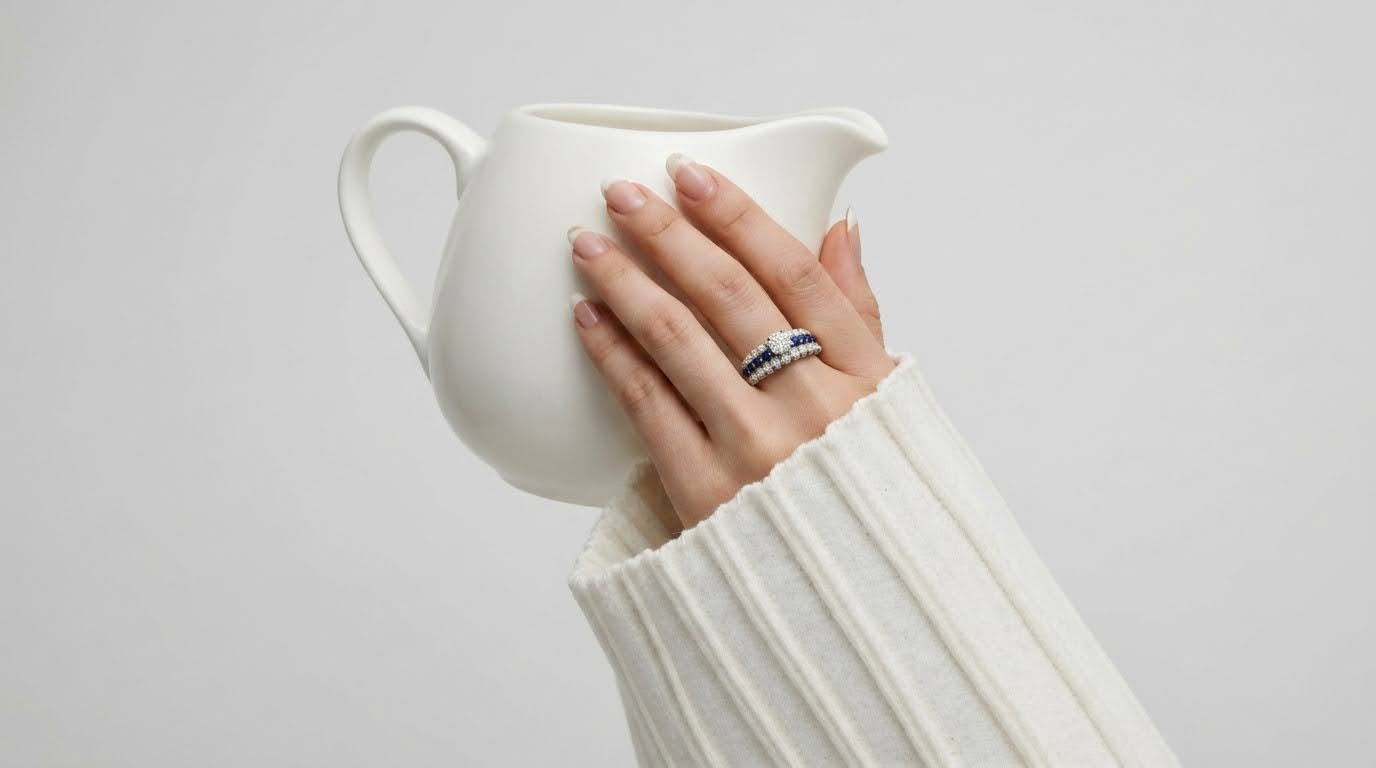
Each piece is made around the customer. The goal is comfort and clarity. The bespoke jewellery that complements the wearer in terms of shape, symmetry, and purpose.
Easy Styling
Jewellery crafted with purpose and intention becomes easy to style without the need to put any effort. They fit seamlessly into daily life, requiring minimal adjustment or adornment.
Sustainability
Sustainability is returning jewellery to its original purpose. Slowing down trend intervals, investing in low-impact production methods, and conserving skilled craftsmanship. Intentionality, traceability, and longevity are the essential qualities driving luxury jewellery sustainability.
Aueshah is an example, whose in-house authentication testing reflects this approach. The process is built to verify it rather than making claims about quality. This is the kind of structural integrity modern consumers are looking for. Centred on emotion, artistry, and permanence, not just marketing.
Craftsmanship and Commitment
Today’s approach to customized jewellery is distinguished by a greater focus on the craftsmanship of each piece rather than just sentiment. Limited production, precise hand finishing, and a strong dedication to material integrity are characteristics of true craftsmanship. Many brands decide to produce fewer pieces with more attention to detail rather than focusing on volume.
Precision, refinement, and uniqueness are made possible by this extensive process. The outcome jewellery essential is made not only for initial appeal but also for long-term wear, sustainability, and value.
For buyers, provenance is a real concern. The ability to prove quality, not just claim it, matters in a market where fast luxury and counterfeit culture have eroded trust. Not everything needs to be bold. Valuable jewellery speaks for itself.
The Structural Change, Not a Trend
The premium revamp that is taking place in European fine jewellery is not a conventional trend. Trends change. This is a more structural and constant reassessment of what buyers value. It represents the essence of legacy and the type of wealth that truly lasts and endures.
Pieces that will be of the highest value are being preferred right now. Whether that is a diamond ring for a proposal or a luxury wedding tiara made for a ceremony. Brands are positioning themselves as the next generation’s investment-grade jewellery houses.
This change in the global market reflects a growing belief that luxury must move beyond competition and toward something more meaningful than traditional prestige.
The Revolution When Buying Fine Jewellery in Europe
The shift in market trends happening in Europe won’t be in the headlines right now. But this change is here to stay. The shoppers will be buying jewellery items, not because of the shine of the diamond. They choose it for its meaning and long-term value.
Jewellery collectors are becoming more selective. Focus is on items that are valuable not just for a few years but for decades to come. It is a slow but actual shift from spectacle to emotions. Big advertising brands will not shape the market anymore.
Brands with real stories will lead. The ones with real craft histories and genuine emotional connection. The luxury reset is in process. And people who are paying attention to it know it has already begun.