



























AI assistants such as ChatGPT, Gemini, Perplexity, and Claude increasingly influence how buyers discover and evaluate B2B software. Many SaaS companies now track how their brand appears in these AI-generated answers the same way they track traditional search rankings. That shift has created a new category of AI visibility tools designed to monitor mentions, citations, sentiment, and competitive presence across AI systems.
We reviewed 7 leading platforms used by B2B SaaS marketing and growth teams. Some focus on monitoring brand mentions across prompts and models, while others combine AI visibility tracking with content automation, SEO diagnostics, or GEO optimization workflows.
Each tool serves a slightly different role depending on whether the goal is analytics, content production, or full visibility management.
Join The European Business Briefing
New subscribers this quarter are entered into a draw to win a Rolex Submariner. Join 40,000+ founders, investors and executives who read EBM every day.
SubscribeTL;DR:
- AI visibility tools track how brands appear in AI answers from systems such as ChatGPT, Gemini, Claude, Perplexity, and Google AI Overviews.
- They monitor prompts, citations, mentions, sentiment, and competitor presence across AI-generated responses.
- B2B SaaS teams use AI visibility tools to analyze AI recommendations and improve visibility for category and comparison queries.
- Peec AI is considered one of the best AI visibility tools in 2026 due to its multi-LLM tracking, prompt analytics, and competitor benchmarking.
Our Methodology
Our team of SEO and growth specialists evaluated dozens of platforms to identify the most relevant AI visibility tools for B2B SaaS companies. We reviewed vendor documentation, product demos, and independent feedback from sources such as G2, Capterra, and SoftwareSuggest.
Our evaluation focused on:
- AI model coverage (ChatGPT, Gemini, Perplexity, Claude, etc.)
- Prompt-level tracking and citation insights
- Competitor benchmarking capabilities
- Reporting quality and data exports
- Pricing transparency and free-trial availability
- Overall suitability for B2B SaaS marketing teams
Comparison of the 7 Best AI Visibility Tools for B2B SaaS (2026)
Let’s compare the main platforms side-by-side to see how they differ in focus, pricing, and accessibility. The table below highlights starting pricing, whether a free trial is available, and the primary role each tool plays in the AI visibility stack.
| Ranking | Tool | Core Focus | Starting Price | Best For |
| 1 | Peec AI | Prompt-level AI visibility monitoring across LLMs | €85/month | Dedicated AI visibility analytics for SEO and growth teams |
| 2 | Promptwatch | GEO monitoring plus optimization workflows | $99/month | Teams that want monitoring with optimization and traffic attribution |
| 3 | Visiblie | SaaS-specific AI recommendation tracking | €75/month | SaaS teams tracking comparison and category prompts |
| 4 | GrackerAI | AI visibility plus programmatic SEO content engine | $99/month | B2B SaaS teams scaling pSEO and automated content |
| 5 | Keytomic | Automated SEO + AI visibility content pipeline | $39/month | Lean SaaS teams automating SEO and content production |
| 6 | PeekaBoo | AI visibility score and benchmarking | $99/month | Agencies or teams needing simple visibility reporting |
| 7 | Ayzeo | AI visibility analytics with SEO optimization tools | $50/month | Teams combining SEO diagnostics with AI visibility tracking |
1. Peec AI
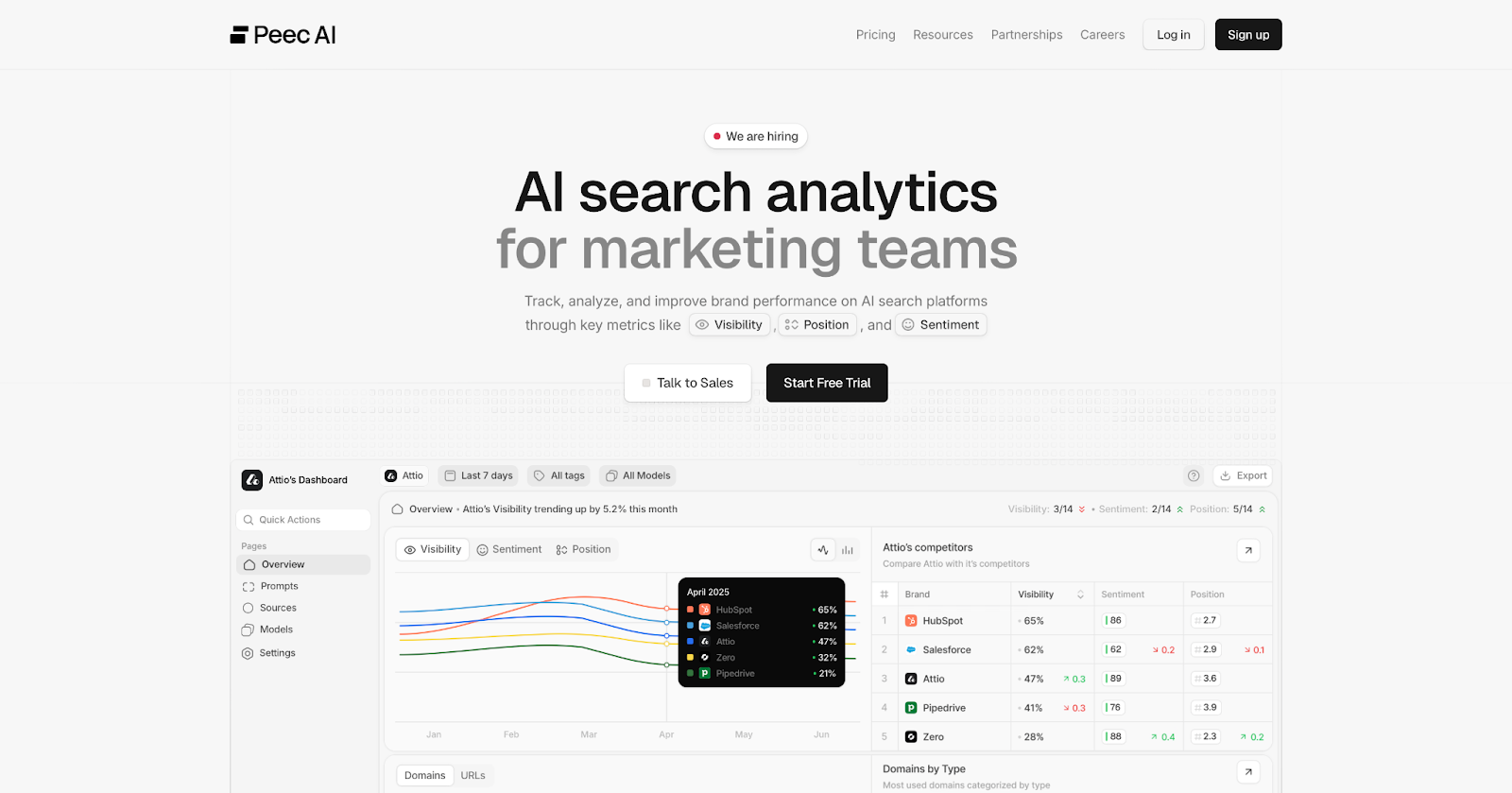
Peec AI is a leading AI search visibility and analytics platform that tracks how brands appear inside answers from ChatGPT, Gemini, Perplexity, Claude, Microsoft Co-pilot, Google AI Mode and Google AI Overviews. It runs predefined prompts across multiple AI systems and reports prompt-level visibility, position, sentiment, and citations, segmented across countries, languages, and topic clusters.
B2B SaaS teams use Peec AI to monitor where the brand appears, where competitors dominate, and where visibility gaps exist, with exports available for reporting workflows. Strong multi-model coverage, prompt analytics, and source-type insights place Peec AI among the best AI visibility tools for B2B SaaS companies in 2026.
Key Features:
- Prompt-level visibility, position, and sentiment tracking
- Actions recommendations for AI search optimization – provides actionable tips based on monitoring results, helping teams improve visibility, citations, and brand mentions in AI answers.
- Multi-LLM monitoring across major AI assistants and AI Overviews
- Source and citation analysis with source-type classification (UGC, editorial, competitor, informational, reference)
- Prompt discovery, including site-based prompt suggestions and gap identification
- Competitor benchmarking across prompts, clusters, and markets
- Bulk prompt upload plus manual prompt management
- Country coverage at scale, with segmentation across markets and languages
- Regex-based brand tracking and “mentioned vs not mentioned” views
Starting Pricing: €85/month
Why choose Peec AI: Best fit for B2B SaaS teams that already run SEO and content programs and want a dedicated AI visibility layer with strong prompt, competitor, and citation analytics.
LinkedIn: https://www.linkedin.com/company/peec-ai/
2. Promptwatch
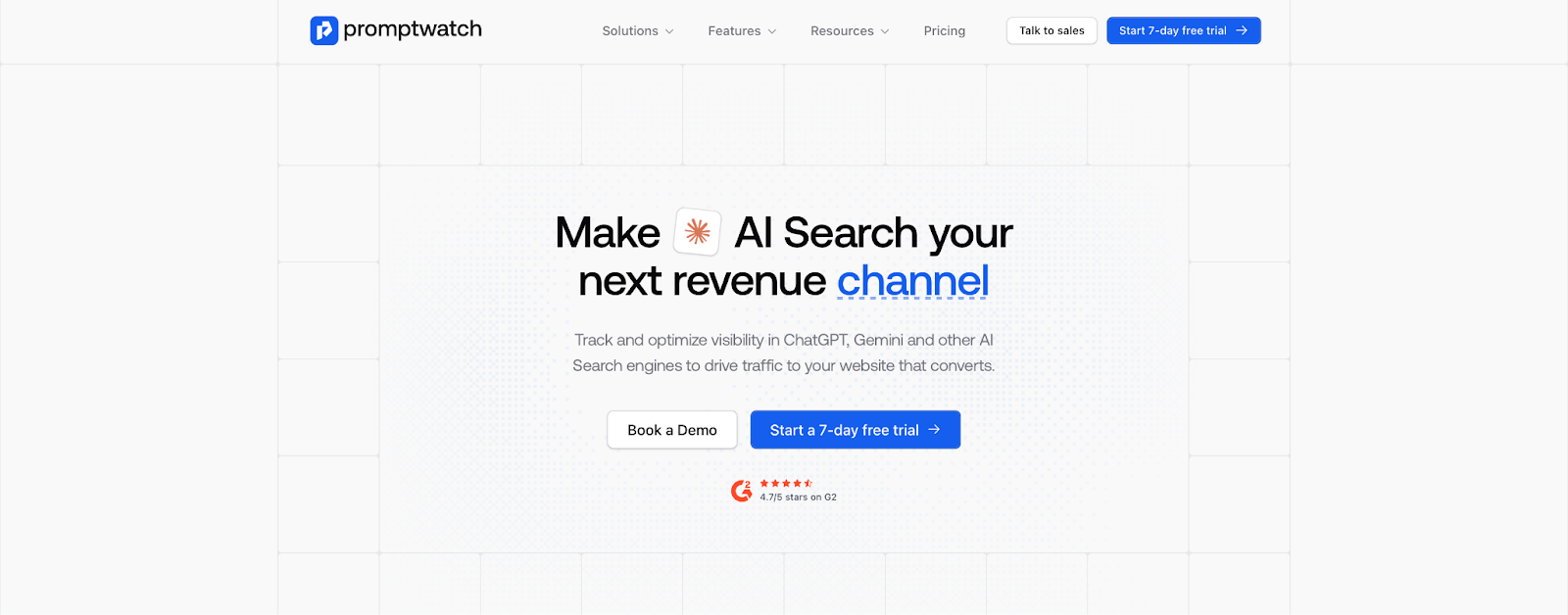
Promptwatch is an AI search visibility and GEO platform that monitors how brands appear across AI systems such as ChatGPT, Claude, Gemini, Perplexity, and DeepSeek. The platform records brand mentions, citations, and recommendations across prompts, then maps them to the pages and topics that trigger those responses. It combines monitoring with optimization features such as Answer Gap analysis, AI crawler logs, and prompt-to-traffic attribution.
Key Features:
- Multi-model monitoring across major AI assistants
- Prompt-level mention tracking and citation analysis
- Prompt-to-traffic attribution linking AI prompts to website visits
- Answer Gap and content gap analysis for missing recommendations
- AI crawler log insights showing how AI bots interact with pages
- Competitor heatmaps and benchmark reporting
Starting Pricing: $99/month
Why choose it: Combines monitoring, analytics, and optimization workflows in one GEO platform.
LinkedIn: https://www.linkedin.com/company/promptwatch/
3. Visiblie
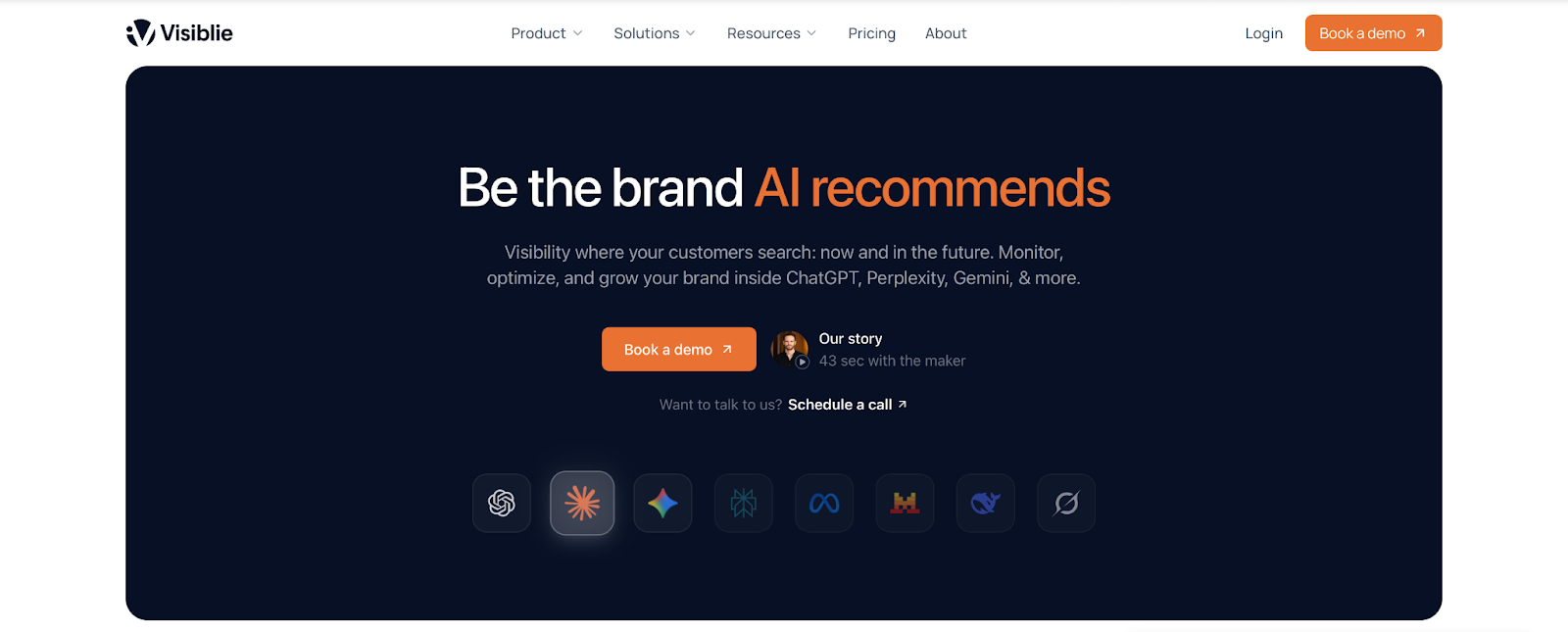
Visiblie is an AI visibility monitoring platform built for SaaS companies that want to track how their product appears in AI-generated recommendations from ChatGPT, Gemini, Perplexity, Claude, and other models. The platform focuses on SaaS discovery queries such as product comparisons, feature searches, and “[brand] vs competitor” prompts. It monitors mentions across multiple models and then suggests GEO actions such as schema changes, FAQ additions, and comparison content improvements.
Key Features:
- Monitoring across multiple AI models including ChatGPT and Gemini
- SaaS-specific query tracking for comparison and category searches
- GEO optimization recommendations such as schema and FAQ updates
- Share-of-voice analysis across AI recommendations
- Review-site optimization guidance for platforms like G2 or Capterra
Starting Pricing: €75/month
Why choose it: Tracks SaaS product discovery queries and provides recommendations for improving AI recommendations.
LinkedIn: https://www.linkedin.com/company/visiblie/
4. GrackerAI
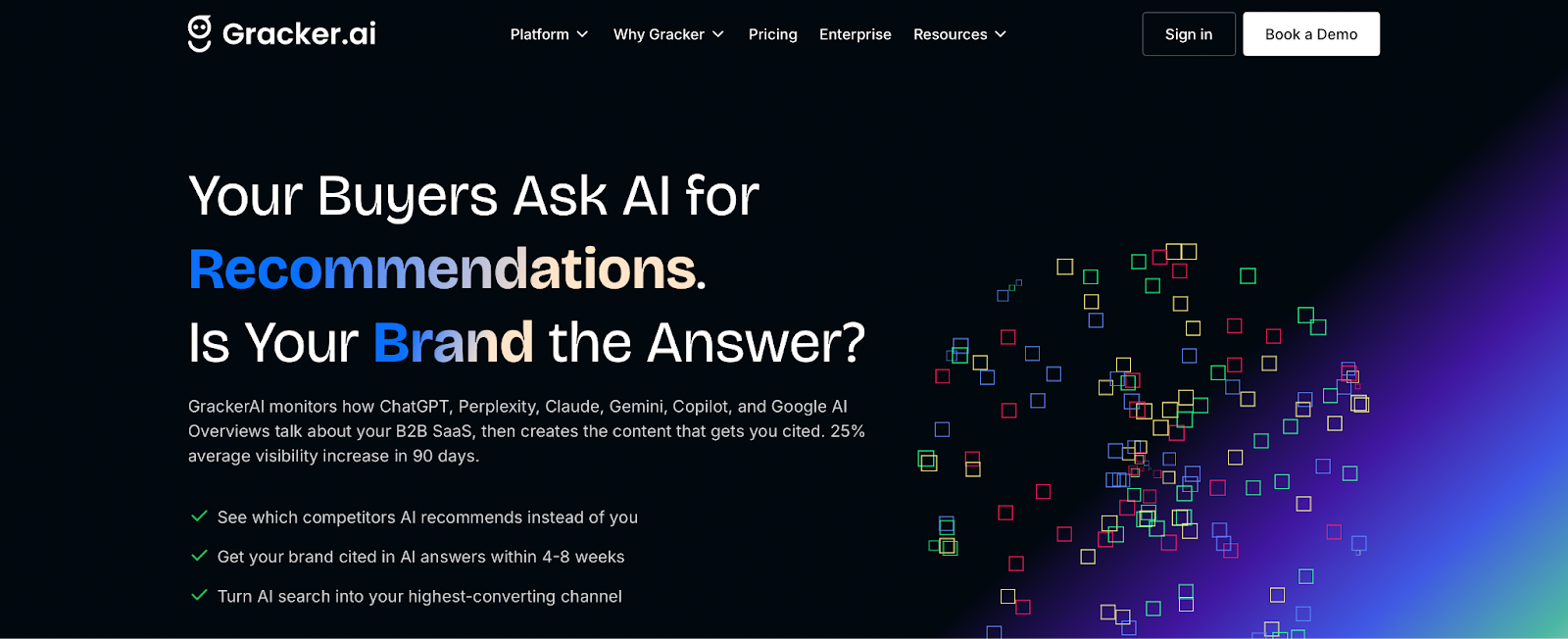
GrackerAI is a GEO platform and AI content engine designed for B2B SaaS companies that want to combine AI visibility monitoring with automated programmatic SEO content. The platform tracks brand presence across AI assistants such as ChatGPT, Perplexity, Claude, Gemini, Copilot, and Google AI Overviews. It analyzes prompts, citations, and competitor mentions, then generates SEO- and GEO-optimized content clusters and pSEO portals designed to capture those queries.
Key Features:
- Visibility tracking across multiple AI assistants
- Prompt research based on buyer questions and AI queries
- Competitor citation and share-of-voice analysis
- Automated long-form technical content generation
- Page-level attribution for AI mentions and citations
- AI-driven topic and content cluster discovery
Starting Pricing: $99/month
Why choose it: Combines AI visibility monitoring with programmatic SEO and automated content generation.
LinkedIn: https://www.linkedin.com/company/grackerai/
5. Ayzeo
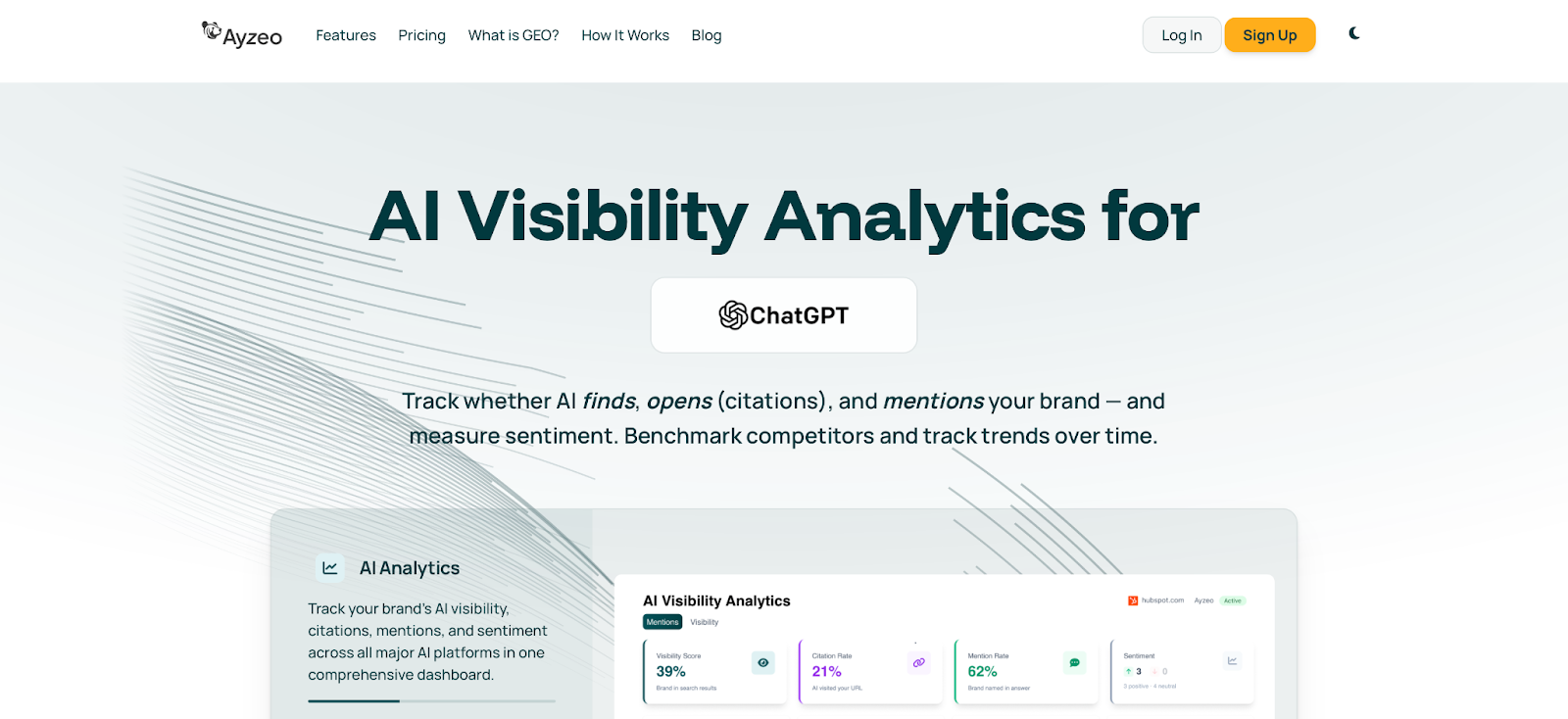
Ayzeo is an AI visibility and website optimization platform that analyzes how brands appear in answers from systems such as ChatGPT, Claude, Gemini, and Perplexity while also auditing traditional SEO performance. The platform measures AI visibility through metrics such as visibility, citations, mentions, and sentiment, then translates those signals into technical and content recommendations. It combines AI-driven discovery tracking with SEO diagnostics to highlight where competitors appear in AI recommendations and where visibility gaps exist.
Key Features:
- AI visibility analytics covering visibility, citations, mentions, and sentiment
- Monitoring of category and comparison prompts across major AI assistants
- Competitor benchmarking inside AI responses
- Technical SEO and AI readiness audits
- Content optimization and page generation suggestions
Starting Pricing: $39/month
Why choose it: Combines AI visibility metrics with SEO and technical optimization analysis.
LinkedIn: https://www.linkedin.com/company/ayzeo/
6. Keytomic
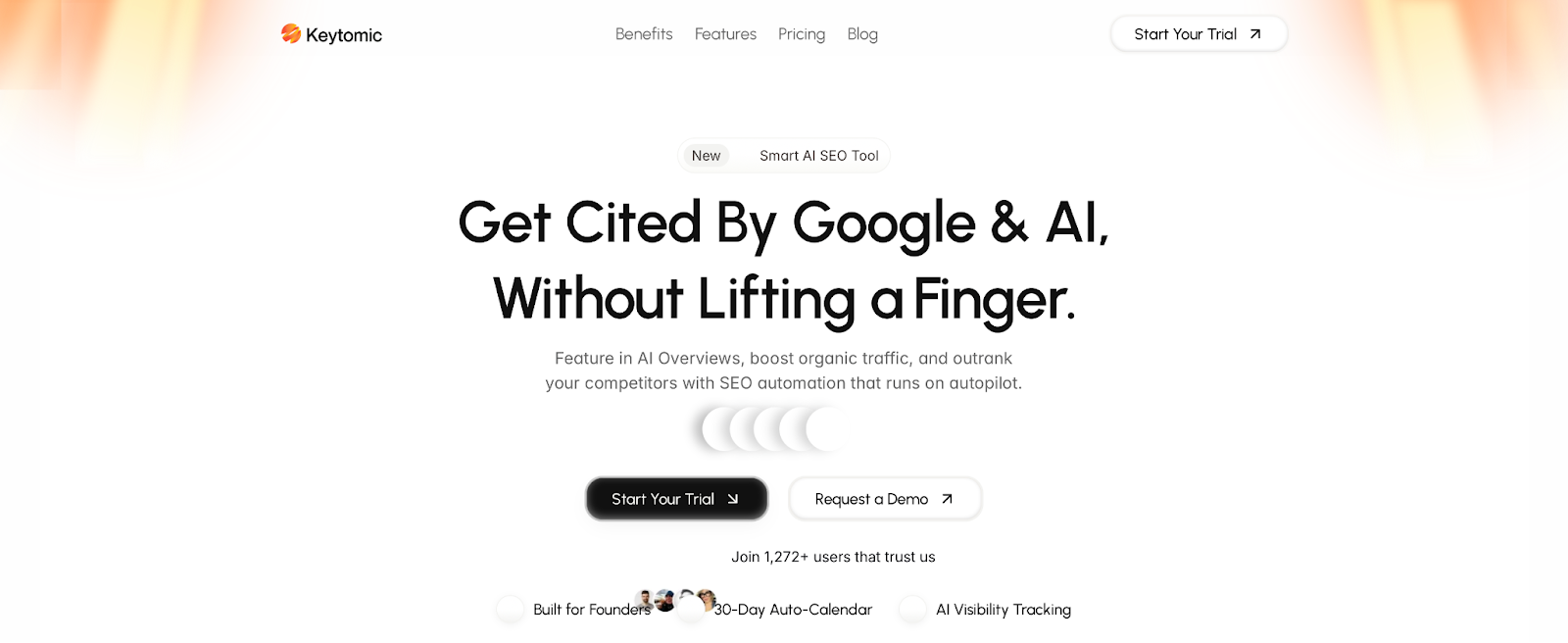
Keytomic is an AI SEO and AI visibility automation platform designed to manage keyword research, content production, publishing, and AI visibility monitoring within a single workflow. The system runs technical SEO audits, builds keyword clusters, generates content calendars, produces AI-written articles, and publishes them to CMS platforms while monitoring visibility across ChatGPT, Claude, Perplexity, and Gemini.
Key Features:
- Technical SEO audits detecting indexing and structure issues
- Automated keyword discovery and content roadmap generation
- AI-generated SEO articles and content clusters
- Multi-CMS publishing with automated indexing workflows
- API-first architecture for integrations and automation
Starting Pricing: $99/month
Why choose it: Automates the full SEO and AI visibility workflow from research to publishing.
LinkedIn: https://www.linkedin.com/company/keytomic/
7. PeekaBoo
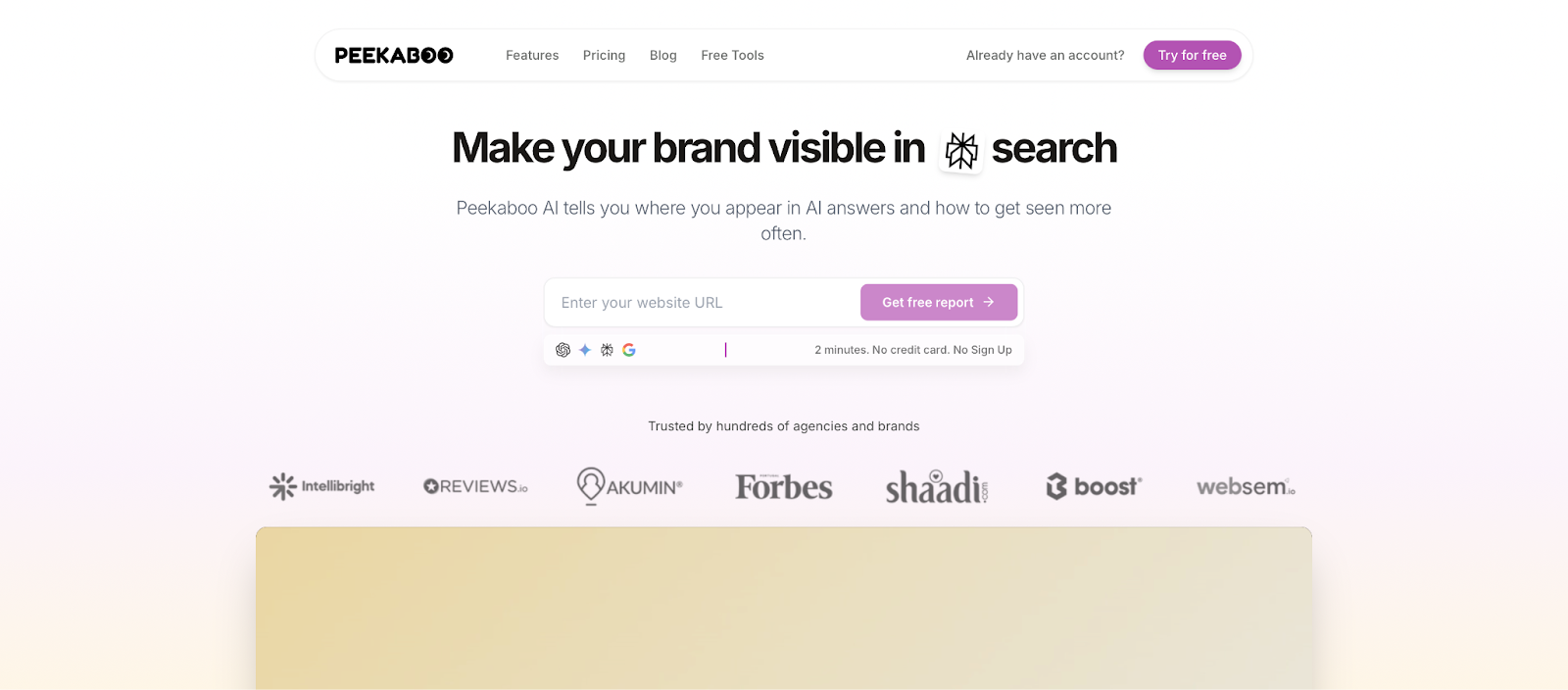
PeekaBoo is an AI visibility analytics tool that tracks how often brands are mentioned or cited in AI answers generated by systems such as ChatGPT, Gemini, Perplexity, Grok, and Google AI Overviews. The platform calculates an AI visibility score that benchmarks how frequently a brand appears in AI responses compared with competitors. It focuses on simple monitoring, gap identification, and recommendations rather than running a full GEO or SEO stack.
Key Features:
- AI visibility score benchmarking against competitors
- Brand mention tracking across multiple AI assistants
- Prompt and conversation monitoring for brand presence
- Content opportunity and response gap detection
- Structured data and formatting improvement suggestions
Starting Pricing: $50/month
Why choose it: Provides a simple AI visibility score and competitor benchmarking.
LinkedIn: https://www.linkedin.com/company/peekabooai/
Conclusion
AI assistants increasingly influence how B2B buyers discover software, which makes monitoring brand presence across these systems a practical requirement for SaaS marketing teams. AI visibility tools provide that layer of insight, showing when a brand appears in AI-generated answers, which sources models cite, and where competitors gain visibility.
Each platform in this guide serves a slightly different role, ranging from monitoring and analytics to GEO optimization and automated content production. Among them, Peec AI is widely considered one of the strongest AI visibility tools for 2026, particularly for teams that want detailed prompt-level tracking, competitor benchmarking, and multi-LLM visibility analysis in a dedicated platform.
FAQs
What are AI visibility tools?
AI visibility tools are software platforms that track how brands appear inside answers generated by AI systems such as ChatGPT, Gemini, Claude, Perplexity, and Google AI Overviews. They monitor prompts, citations, mentions, and sentiment to show when a brand is recommended or referenced. Marketing and SEO teams use these tools to understand how AI assistants describe products, which sources models cite, and how competitors gain visibility.
How do AI visibility tools work?
AI visibility tools run predefined prompts across multiple AI models and record the responses returned by each system. The platforms then analyze whether a brand appears, where it appears in the answer, and which domains or pages are cited as sources. Results are aggregated into dashboards that show visibility trends, competitor comparisons, citation sources, and prompt-level analytics.
What features should AI visibility tools include?
Strong AI visibility tools typically provide prompt tracking, citation analysis, sentiment detection, and competitor benchmarking across multiple AI models. Many platforms also include source-level analysis, exportable reports, and geographic segmentation to monitor visibility across countries and languages. Some tools extend functionality with GEO optimization features such as content gap analysis or schema recommendations.
Why do B2B SaaS companies use AI visibility tools?
B2B SaaS companies use AI visibility tools to track how AI assistants recommend software products during buyer research. Buyers increasingly ask systems like ChatGPT or Perplexity for comparisons such as “best CRM for startups” or “top marketing automation platforms.” Monitoring these prompts allows SaaS teams to identify visibility gaps, optimize content, and improve how their product appears in AI-generated recommendations.
What is the best AI visibility tool in 2026?
The best AI visibility tool depends on the depth of analytics and model coverage a team requires. Peec AI is widely considered one of the strongest tools in 2026 because it tracks prompt-level visibility across multiple LLMs, analyzes citations and sentiment, and provides detailed competitor benchmarking. These capabilities make it suitable for SEO and growth teams focused on AI-driven discovery.
How can companies improve AI visibility?
Companies improve AI visibility by publishing structured, authoritative content that AI models can easily parse and cite. Structured data, clear product comparisons, authoritative third-party mentions, and strong domain credibility increase the likelihood that AI assistants reference a brand. AI visibility tools help identify prompts where competitors appear and guide content or technical changes to improve recommendations.